
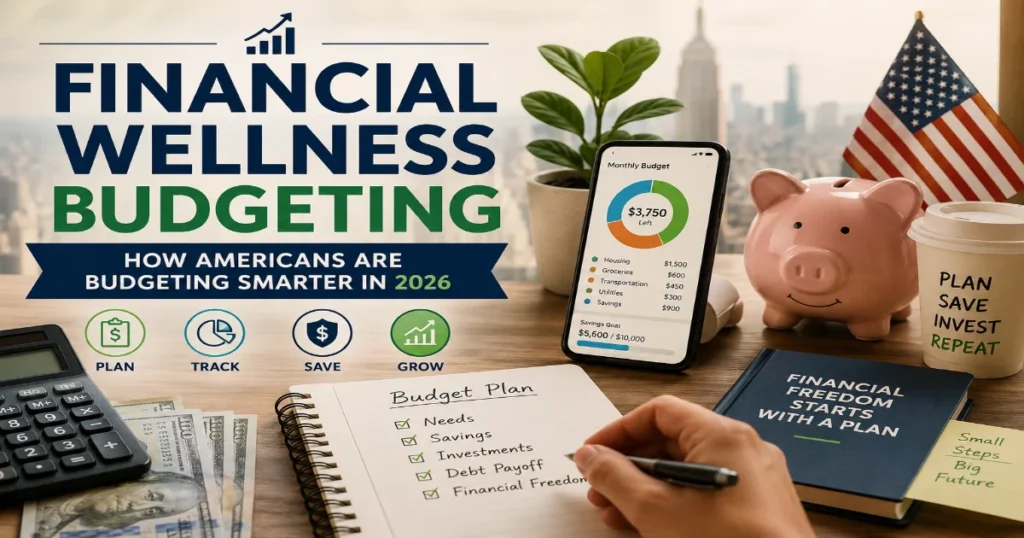
Financial wellness budgeting is reshaping how American households handle money in 2026. Money stress touches nearly every household, but the way people manage that stress has changed. Across the United States, budgeting is no longer about restriction alone — it has become a wellness practice tied directly to mental health, relationships, and long-term security. This shift blends traditional money management with habits borrowed from health and mindfulness culture.
This article breaks down what financial wellness budgeting actually means, why more Americans are prioritizing it, and the practical budgeting strategies driving real results in 2026.
What Financial Wellness Budgeting Really Means
Financial wellness is the state of being in control of day-to-day finances while having the confidence to meet both short-term needs and long-term goals. It is broader than simply having a budget spreadsheet. It includes:
- Feeling secure about covering monthly expenses without constant anxiety
- Having a plan for emergencies, not just hoping nothing goes wrong
- Making progress toward goals like homeownership, retirement, or debt freedom
- Understanding where money goes without guilt or avoidance
Unlike strict frugality, financial wellness treats money management as sustainable — something a person can maintain for years, not just during a crisis month.
Why More Americans Are Focusing on It Now
Several forces have pushed budgeting from a background task to a front-and-center priority.
- Inflation fatigue. Years of elevated prices on groceries, rent, and insurance have made every dollar feel tighter, pushing households to track spending more closely.
- Wage stagnation versus cost of living. Even where incomes have grown, they haven’t always kept pace with essential expenses, forcing more deliberate trade-offs.
- Social media transparency. Creators openly sharing salaries, debt payoff journeys, and budgeting templates have normalized talking about money.
- Mental health awareness. Financial stress is now widely recognized as a driver of anxiety and sleep problems, which has pushed people to treat budgeting as self-care rather than punishment.
- Access to free tools. Budgeting apps, bank-linked trackers, and spreadsheet templates have lowered the barrier to entry for people who once avoided the topic entirely.
The Budgeting Methods Gaining Popularity
Not everyone budgets the same way, and that’s part of the shift — people are choosing methods that match their personality instead of forcing themselves into a single rigid system.
| Method | How It Works | Best For |
|---|---|---|
| 50/30/20 Rule | 50% needs, 30% wants, 20% savings/debt | Beginners who want a simple split |
| Zero-Based Budgeting | Every dollar assigned a job until balance hits zero | People who want full control and detail |
| Cash Envelope System | Physical or digital “envelopes” per spending category | Those prone to overspending on cards |
| Pay-Yourself-First | Savings and investments deducted before anything else | Long-term wealth builders |
| Values-Based Budgeting | Spending aligned to personal priorities rather than categories | People rebuilding their relationship with money |
Many households now blend two or more of these approaches — for example, pay-yourself-first for savings combined with a 50/30/20 split for the remaining spending.
Practical Habits Behind Smarter Budgeting
Beyond choosing a method, the day-to-day habits matter most. Common patterns among people who report better financial wellness include:
- Weekly money check-ins instead of only reviewing finances once a month
- Automating transfers to savings or retirement accounts so saving isn’t a decision made daily
- Tracking subscriptions to catch forgotten or duplicate recurring charges
- Building a “starter” emergency fund of one month’s expenses before tackling other goals
- Separating “want” spending into its own account to avoid guilt around small purchases
- Reviewing bills annually for insurance, phone plans, and internet to renegotiate or switch providers
The Role of Budgeting Apps and Technology
Digital tools have made real-time tracking far easier than the spreadsheet-only era. Bank-linked apps that categorize spending automatically, round-up savings tools, and AI-based spending alerts have all contributed to more consistent budgeting habits. The key benefit isn’t the technology itself — it’s that automation removes the friction of manual tracking, which is often the reason people abandon a budget within the first few weeks.
Common Budgeting Mistakes to Avoid
- Setting a budget too strict to realistically follow, leading to early burnout
- Ignoring irregular expenses like annual insurance premiums or holiday spending
- Focusing only on cutting costs while ignoring opportunities to increase income
- Comparing personal progress to unrealistic standards seen on social media
- Treating a single bad month as a reason to abandon the entire system
Building Long-Term Financial Wellness
Sustainable budgeting isn’t a one-time fix — it’s an ongoing relationship with money that adjusts as life changes. A few principles that support this long-term view:
- Revisit your budget every few months, not just when something breaks
- Set goals with real deadlines instead of vague intentions
- Celebrate progress, not just the final milestone
- Keep the plan flexible enough to survive an unexpected expense without collapsing entirely
- Treat financial check-ins as routine, similar to a regular health checkup
Final Thoughts
The shift toward financial wellness reflects a broader cultural change: money management is being treated as part of overall well-being rather than a chore reserved for tax season. Americans are budgeting smarter not by working harder, but by choosing systems that fit their lifestyle, automating what they can, and building habits that hold up over time. For anyone looking to start, the best approach is the one that can realistically be maintained — not the one that looks the most impressive on paper.