When it comes to choosing the right soap, many people focus on fragrance, color, or brand, often ignoring a critical factor: TFM. Knowing what TFM is and why it matters can help you select soaps that are not only cleansing but also protect and nourish your skin.
What is TFM in Soap?
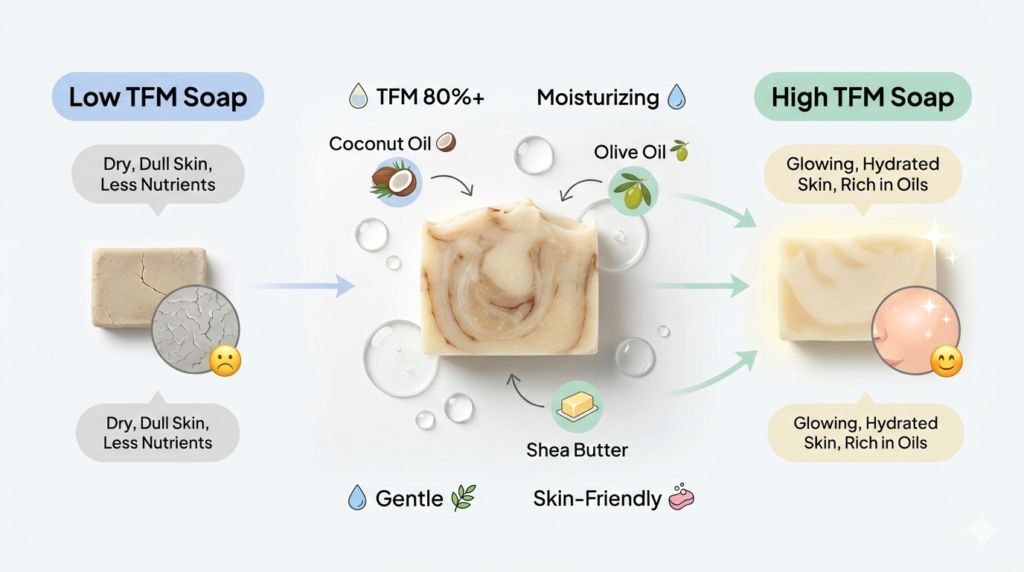
TFM stands for Total Fatty Matter. It is a measurement of the total amount of fatty substances (oils and fats) in soap, expressed as a percentage. These fatty substances come from natural oils like coconut, olive, palm, and shea butter.
A higher TFM means the soap has more natural fats, while a lower TFM often indicates the presence of fillers, detergents, or synthetic chemicals.
Key Points About TFM:
- TFM is directly linked to soap quality.
- Natural fats in soap help maintain skin moisture and elasticity.
- A higher TFM is usually associated with premium soaps, whereas low TFM soaps are often cheap, chemical-heavy, and harsh.
Why TFM is Critical for Skin Health
Your skin has a natural barrier made of oils and fats that protect against dryness, pollutants, and irritants. Using soap with a low TFM can strip away these oils, leading to:
- Dryness and flakiness
- Irritation and itching
- Increased sensitivity to allergens
- Premature aging
On the other hand, soaps with a high TFM help retain the skin’s natural oils and provide gentle cleansing, making them ideal for all skin types, especially sensitive or dry skin.
TFM and Soap Quality
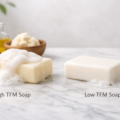
| 🌟 Aspect | 📌 Low TFM Soap | 📌 High TFM Soap |
|---|---|---|
| 💧 Moisturization | Poor – may leave skin dry | Excellent – maintains softness |
| 🧼 Cleaning Ability | Can be harsh or require extra lather | Gentle and effective cleaning |
| 🧴 Skin Friendliness | May cause irritation | Safe for sensitive skin |
| 🌿 Ingredients | Often contains fillers & detergents | Rich in natural oils & fats |
| 💰 Longevity | Dissolves quickly, short lifespan | Long-lasting, better value |
🔑 Tip: Soaps with TFM above 70% are considered good quality for daily skin care.
How TFM Influences Skin Health
1. Moisture Retention
High TFM soaps contain natural fats that trap water in the skin, preventing dryness and roughness.
2. Gentle Cleansing
Soaps with more fatty matter clean without stripping essential oils, leaving your skin soft and hydrated.
3. Nourishment and Protection
Oils in high TFM soaps provide vitamins, antioxidants, and fatty acids, which support the skin’s natural barrier.
4. Reduced Chemical Exposure
Low TFM soaps rely on synthetic detergents to produce lather, which can irritate skin over time. High TFM soaps are safer and more natural.
Ideal TFM Levels for Different Soap Types
| 🧼 Soap Type | 🔹 TFM Range (%) | 🔹 Best Use |
|---|---|---|
| Luxury / Bath Soap | 75% – 90% | Sensitive, dry, or mature skin |
| Everyday Soap | 60% – 75% | Normal skin, daily use |
| Industrial / Laundry Soap | 35% – 50% | Not suitable for skin, mainly for cleaning clothes or floors |
✅ Pro Tip: Always check the TFM label before purchasing. Soaps with 80%+ TFM are premium and ideal for healthy skin.
How to Choose the Right Soap Based on TFM
- Know your skin type: For dry and sensitive skin, choose soaps with a high TFM content (75%–90%). Normal skin can manage with 60%-75%.
- Check the ingredients: Natural oils like coconut, olive, and shea butter indicate higher TFM and better skin nourishment.
- Avoid overly cheap soaps: Soaps with TFM below 50% are likely to contain detergents, fillers, and chemicals.
- Consider the purpose: Daily cleansing? Go for higher TFM soap. Laundry or industrial cleaning? Low TFM is sufficient, but not for skin.
Common Misconceptions About TFM
| ❌ Myth | ✅ Fact |
|---|---|
| “Foam equals quality.” | Lather comes from detergents, not fatty matter. High TFM soaps may foam less but are gentler. |
| “Cheap soaps are fine if they smell good.” | Fragrance doesn’t indicate skin benefits. Low TFM soaps may dry and irritate skin. |
| “High TFM soaps are greasy.” | Properly formulated high TFM soaps cleanse without leaving a greasy feel. |
TFM is the true measure of soap quality. Choosing soaps with higher TFM ensures:
- Hydrated and nourished skin
- Gentle, non-irritating cleansing
- Long-lasting and cost-effective soap use
When shopping for soap, don’t be fooled by bright colors or strong fragrances. Look for the TFM percentage and the type of oils used.
💡 Final Tip: A soap with TFM 75% or above is considered luxurious, gentle, and skin-friendly. For families, investing in high TFM soaps reduces dryness, irritation, and helps maintain healthy, glowing skin naturally.
Frequently Asked Questions
What does TFM mean in soap? ➕
TFM stands for Total Fatty Matter, which measures the amount of natural oils and fats in soap. Higher TFM soaps are more moisturizing and gentle on skin.
Why is higher TFM soap better for skin? ➕
High TFM soaps retain natural skin oils, provide hydration, and prevent dryness and irritation compared to low TFM soaps.
What is the ideal TFM percentage for daily use soap? ➕
For everyday skin care, a soap with TFM above 70% is recommended. Luxury soaps may have 75–90% TFM for sensitive or dry skin.
Does TFM affect soap’s lather or fragrance? ➕
TFM affects moisturizing and skin benefits, not fragrance. High TFM soaps may foam less but are gentler and more nourishing.
Can low TFM soaps harm my skin? ➕
Frequent use of low TFM soaps can dry out skin and weaken its natural barrier. High TFM soaps are safer for long-term use.