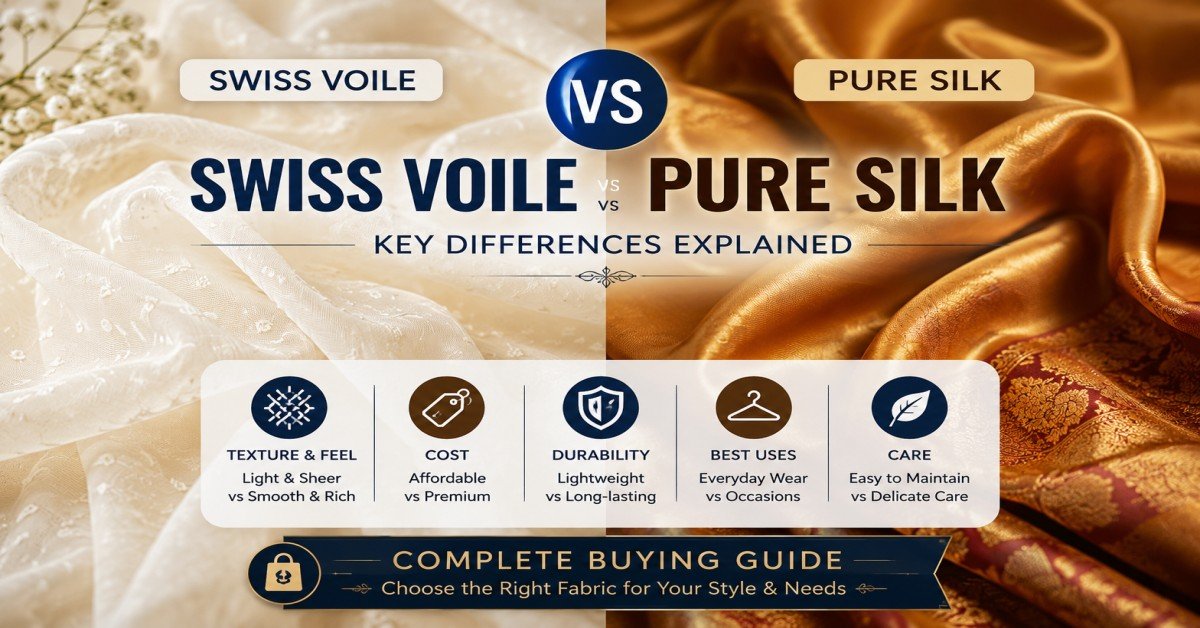
When it comes to choosing the perfect fabric for clothing, home décor, or special occasion wear, two names consistently top the list of premium textile choices: Swiss Voile and Pure Silk. Both fabrics have earned a reputation for elegance, but they serve very different purposes, come from entirely different origins, and suit different climates, budgets, and style preferences. Whether you’re a fashion designer, a tailor, a bridal wear shopper, or simply someone trying to pick the right material for your next outfit, understanding the real differences between Swiss Voile and Pure Silk can save you money, time, and disappointment.
This guide breaks down everything you need to know — from fiber composition and manufacturing process to comfort, durability, cost, and best use cases — so you can make an informed decision.
What Is Swiss Voile?
Swiss Voile is a lightweight, semi-sheer cotton fabric known for its crisp texture, fine weave, and delicate embroidery work. Despite its name, genuine Swiss Voile is traditionally manufactured in Switzerland and Austria using high-quality combed cotton yarns, though many variations are now produced in India, Nigeria, and other textile hubs to meet global demand, especially in West African and South Asian fashion markets.
The fabric gets its name from the plain weave technique called “voile,” a French word meaning “veil,” which refers to the fabric’s light, translucent quality. Swiss Voile is often embellished with intricate lace-like embroidery, cutwork, and stone or sequin detailing, making it a popular choice for traditional attire such as agbada, kaftans, and formal ethnic wear in Nigeria, Ghana, Senegal, and other African countries, as well as for South Asian kurtas and shalwar kameez.
Key Characteristics of Swiss Voile
- Composition: Typically 100% cotton, though blends with polyester exist in lower-grade versions
- Texture: Crisp, slightly stiff, with a papery hand-feel
- Weight: Lightweight to medium-weight
- Transparency: Semi-sheer, allowing gentle light to pass through
- Embellishment: Often features embroidery, lace trims, or stone work
- Breathability: Highly breathable due to its open, plain weave structure
What Is Pure Silk?
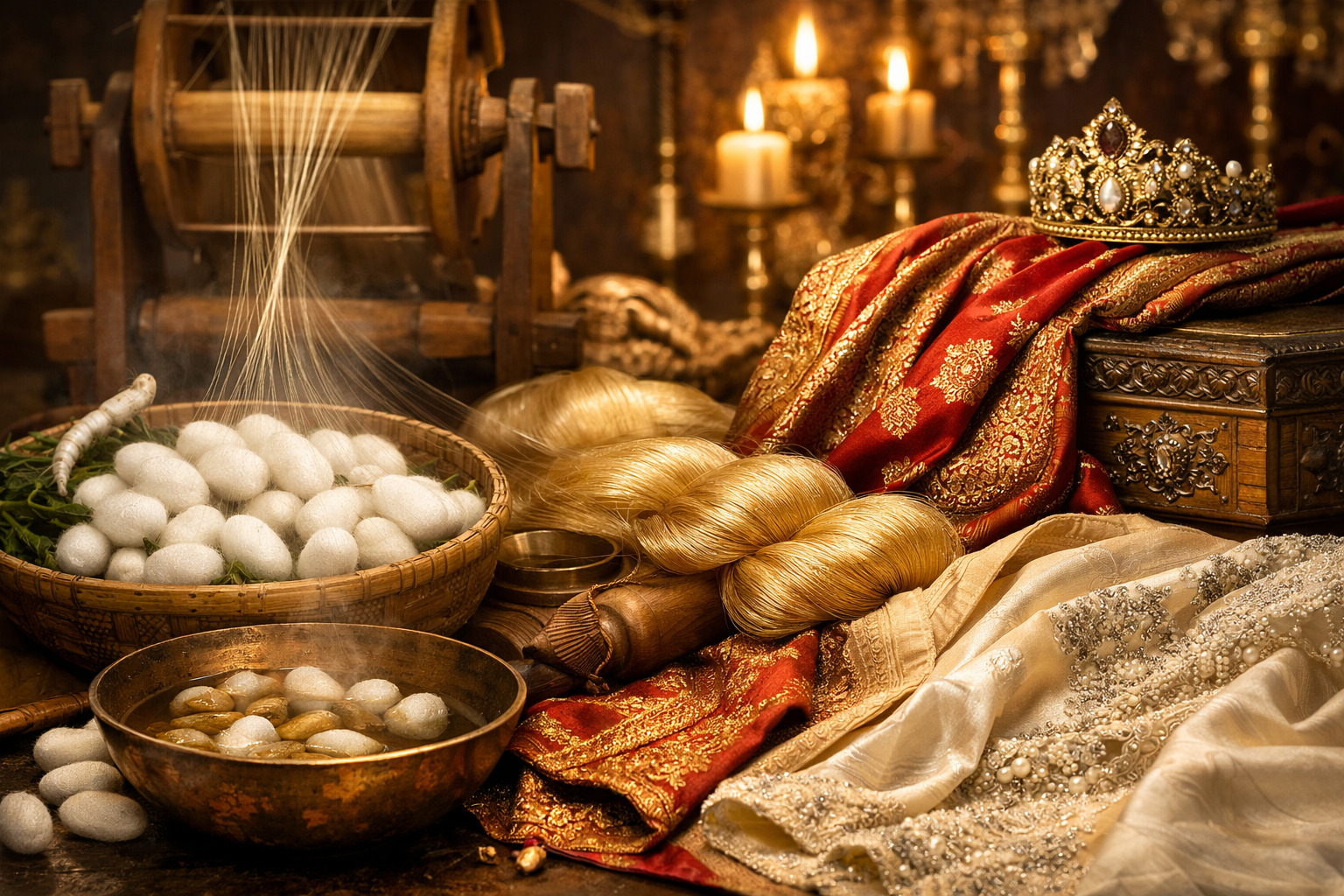
Pure Silk is a natural protein fiber produced by silkworms, primarily the Bombyx mori species, during the cocoon-spinning stage of their life cycle. It has been prized for over 5,000 years, dating back to ancient China, where silk production (sericulture) was a closely guarded secret for centuries before spreading along the Silk Road to the rest of the world.
Silk is renowned for its natural sheen, smooth texture, and remarkable strength relative to its thinness. Unlike synthetic alternatives, pure silk is biodegradable, hypoallergenic, and has natural temperature-regulating properties, making it comfortable in both warm and cool climates. It is widely used for sarees, wedding gowns, scarves, ties, bedding, and luxury home furnishings.
Key Characteristics of Pure Silk
- Composition: 100% natural silk fiber, derived from silkworm cocoons
- Texture: Smooth, soft, and lustrous with a distinctive sheen
- Weight: Varies from lightweight (chiffon silk) to heavier weaves (silk brocade, dupioni)
- Transparency: Ranges from opaque to sheer, depending on the weave
- Breathability: Excellent breathability and natural moisture-wicking properties
- Durability: Strong yet delicate; requires gentle care
Swiss Voile vs Pure Silk: Detailed Comparison
1. Origin and Manufacturing Process
Swiss Voile is a woven cotton textile created through mechanized looms, primarily using combed cotton yarn spun into a fine, tight weave. The manufacturing process focuses on achieving a smooth, lightweight fabric that can hold embroidery well without puckering.
Pure Silk, on the other hand, involves a much more labor-intensive and biologically dependent process. Silkworms spin cocoons made of a single continuous silk thread that can stretch up to 1,000 meters in length. These cocoons are boiled to loosen the sericin (a natural gum), and the silk threads are carefully unwound, twisted, and woven into fabric. This process, called sericulture, is time-consuming and explains why pure silk commands a higher price than most other textiles.
2. Texture and Feel
One of the most immediate differences you’ll notice is texture. Swiss Voile has a crisp, almost paper-like feel with a slight stiffness that helps it hold its shape, especially useful for structured garments and embroidery work. It doesn’t cling to the body and has a somewhat cool, dry touch.
Pure Silk feels entirely different — soft, smooth, and slippery against the skin, with a natural luster that catches light beautifully. Silk has a fluid drape that makes it ideal for flowing garments, while its smoothness gives it a luxurious, almost cooling sensation when worn.
3. Breathability and Comfort
Both fabrics are breathable, but for different reasons. Swiss Voile’s open, plain weave allows air to circulate freely, making it a popular choice in hot, humid climates across West Africa and South Asia. It doesn’t trap heat and dries relatively quickly.
Pure Silk is naturally breathable and has excellent thermoregulating properties — it keeps you cool in summer and warm in winter due to its unique protein fiber structure. Silk is also moisture-wicking, pulling sweat away from the skin, which is why it’s often recommended for people with sensitive skin or allergies.
4. Durability and Longevity
Swiss Voile is fairly durable for everyday wear, especially the higher-grade cotton versions. However, because it’s often embellished with delicate embroidery, cutwork, or stones, it requires careful handling to prevent snagging or thread pulls. With proper care, a good quality Swiss Voile outfit can last several years.
Pure Silk is deceptively strong — its tensile strength is comparable to some synthetic fibers — but it is sensitive to friction, sunlight, and perspiration, which can weaken the fibers over time. Silk garments generally require dry cleaning or very gentle hand washing to maintain their quality and appearance for years.
5. Cost and Affordability
This is where the two fabrics diverge significantly. Swiss Voile is generally more affordable and accessible, making it a popular choice for both everyday and special occasion wear, particularly in African and South Asian fashion markets. Prices vary based on the quality of embroidery and cotton grade, but it remains budget-friendly compared to silk.
Pure Silk is one of the most expensive natural fabrics in the world due to the labor-intensive production process, limited silk-producing regions, and the sheer amount of raw material needed (it takes thousands of silkworm cocoons to produce just one meter of silk fabric). This cost is reflected in the final price of silk garments, which are often considered luxury investment pieces.
6. Common Uses
Swiss Voile is predominantly used for:
- Traditional African attire (agbada, kaftans, boubous)
- South Asian ethnic wear (kurtas, shalwar kameez)
- Embroidered blouses and formal shirts
- Headscarves and hijabs in warmer climates
Pure Silk is commonly used for:
- Wedding gowns and bridal wear
- Sarees, lehengas, and formal ethnic wear
- Scarves, ties, and pocket squares
- Luxury bedding, pillowcases, and home décor
- High-end evening wear and lingerie
7. Care and Maintenance
Swiss Voile is relatively low-maintenance. It can typically be machine washed on a gentle cycle or hand washed with mild detergent, and it dries quickly due to its lightweight nature. Ironing on a moderate setting helps maintain its crisp look, though care should be taken around embroidered or embellished areas.
Pure Silk demands more attention. Dry cleaning is often recommended, though many silk garments can be hand washed in cold water with a silk-specific or mild detergent. Silk should never be wrung out, should be dried away from direct sunlight, and ironed on a low, silk-appropriate setting, ideally with a protective cloth in between.
8. Environmental and Ethical Considerations
Swiss Voile, being a cotton-based fabric, has an environmental footprint tied to cotton farming, which can be water-intensive depending on the growing region. However, it is biodegradable and doesn’t involve animal-derived materials.
Pure Silk production has sparked ethical debates, particularly around traditional sericulture methods, which typically involve boiling silkworm cocoons with the larvae still inside. This has led to the rise of “peace silk” or “Ahimsa silk,” an alternative method that allows the moth to emerge naturally before the cocoon is processed, offering a more ethical option for conscious consumers.
Which Fabric Should You Choose?
The right choice ultimately depends on your specific needs:
Choose Swiss Voile if:
- You want an affordable, breathable fabric for hot climates
- You’re looking for traditional African or South Asian embroidered attire
- You need a fabric that’s easy to maintain and machine washable
- You want a crisp, structured look for your garment
Choose Pure Silk if:
- You’re shopping for bridal wear, formal events, or luxury occasions
- You prioritize a soft, smooth feel and natural sheen
- You don’t mind investing more and following specific care instructions
- You want a fabric with natural temperature-regulating properties
Both Swiss Voile and Pure Silk have carved out their own niches in the fashion and textile world, and neither is objectively “better” — they simply serve different purposes, price points, and style preferences. Understanding their unique properties helps you make a smarter, more satisfying purchase, whether you’re dressing for a wedding, a cultural celebration, or everyday elegance.
Frequently Asked Questions (FAQs)
1. Is Swiss Voile the same as cotton lace?
Not exactly. Swiss Voile is a lightweight woven cotton fabric, while cotton lace typically refers to fabric with an openwork, netted design. However, many Swiss Voile fabrics feature lace-like embroidery, which can make them look similar at first glance.
2. Which fabric is better for hot, humid weather?
Swiss Voile is generally more breathable in extremely humid climates due to its open weave, though pure silk also performs well thanks to its natural moisture-wicking properties.
3. Does pure silk fade or lose its shine over time?
Yes, prolonged exposure to sunlight, sweat, and harsh detergents can cause silk to lose its natural sheen. Proper storage and gentle care help preserve its luster for years.
4. Can Swiss Voile be worn for weddings?
Absolutely. Heavily embroidered, high-quality Swiss Voile is a popular choice for weddings and formal events, especially in African and South Asian cultures, often paired with beadwork or stone embellishments.
5. Is pure silk hypoallergenic?
Yes, pure silk is naturally hypoallergenic and resistant to dust mites, making it a good option for people with sensitive skin or allergies.
6. How can I tell if silk is genuine or synthetic?
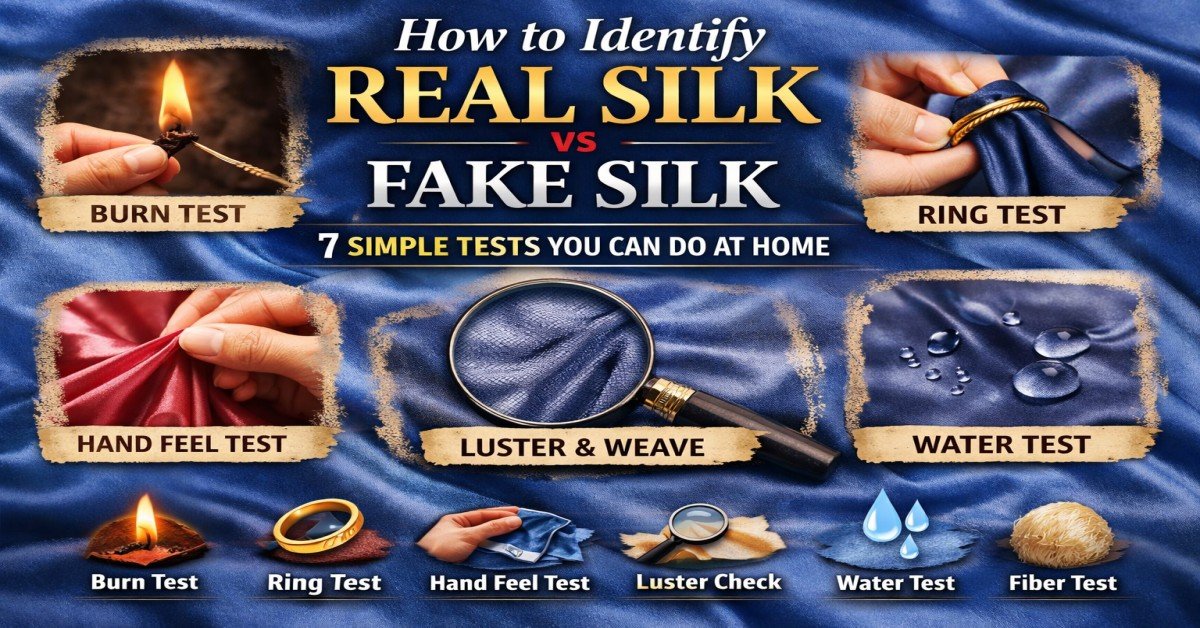
A simple burn test can help: genuine silk burns slowly and smells like burning hair, leaving a crumbly ash, while synthetic fabrics like polyester melt and smell like burning plastic. Feel and price are also strong indicators, as pure silk feels warm to the touch and rarely comes at a very low price.