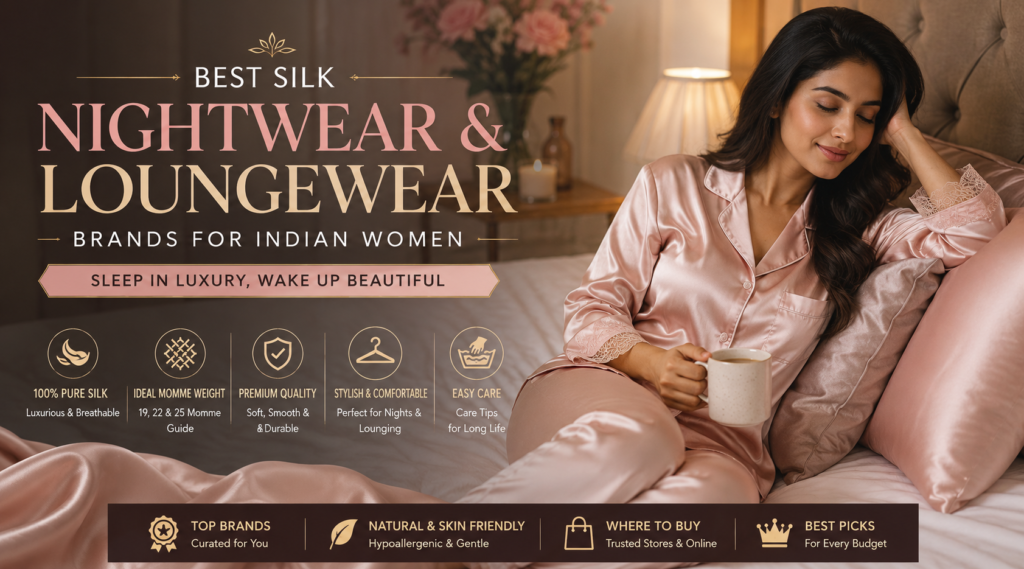
There’s something quietly transformative about slipping into pure silk after a long day. It’s not just about luxury — silk nightwear genuinely changes how you sleep, how your skin feels in the morning, and how “put together” you feel even while lounging at home. For Indian women navigating hot summers, humid monsoons, and mild winters, choosing the right silk nightwear brand can make the difference between a fabric that feels indulgent and one that feels impractical.
This comprehensive guide walks you through everything you need to know about silk nightwear and loungewear — its history and relevance in India, why it’s worth the investment, what to look for before you buy, which brands are worth your attention in 2026, how to style it, and how to make it last for years.
A Quick Word on Silk’s Place in Indian Culture
India has one of the oldest and richest silk traditions in the world, home to varieties like Mulberry silk (Karnataka), Tussar silk (Jharkhand, Chhattisgarh), Eri silk (Assam), and Muga silk (Assam), each with distinct textures and production methods. For centuries, silk in India has been associated with sarees, wedding trousseaus, and festive wear rather than everyday loungewear. What’s changed in recent years is a shift in mindset — Indian women are increasingly viewing silk as something to wear for themselves, at home, rather than reserving it purely for occasions when others are watching. This cultural shift is precisely why the silk nightwear and loungewear category has grown so quickly, with both homegrown Indian labels and international silk specialists now competing for attention.
Why Choose Silk Nightwear Over Cotton or Synthetic Options?
Before diving into brands, it helps to understand why silk has earned its premium reputation in the sleepwear world, and why it consistently outperforms cotton and synthetic alternatives in several key areas.
Temperature regulation: Pure mulberry silk is naturally thermoregulating — it keeps you cool during humid Indian summers and comfortably warm during cooler winter nights in North India. This dual capability is rare among natural fabrics, and it’s one of the primary reasons silk sleepwear works well across India’s varied climate zones, from the coastal humidity of Mumbai and Chennai to the drier winters of Delhi and Punjab.
Skin and hair benefits: Silk has a smooth, low-friction surface that reduces creasing on skin and prevents hair breakage and frizz overnight, which is why dermatologists and hairstylists often recommend silk over cotton for nightwear and pillowcases. Cotton fibers can absorb moisture from skin and hair, leaving both drier by morning, whereas silk’s smoother surface allows hair to glide rather than snag.
Moisture-wicking: Unlike synthetic satin, genuine silk pulls moisture away from the body rather than trapping it, making it a better choice for humid climates and for women who experience night sweats, hormonal temperature fluctuations, or hot flashes.
Hypoallergenic properties: Silk is naturally resistant to dust mites and other allergens, making it a gentler option for those with sensitive skin, eczema, or allergies. This is particularly relevant for Indian households where dust and pollution levels can aggravate skin sensitivity.
Durability with proper care: Despite its delicate feel, silk fiber is remarkably strong — its tensile strength is often compared favorably to certain synthetic fibers. With correct washing and storage, a good silk nightwear set can last for years without losing its sheen or shape, making it a genuinely worthwhile long-term investment rather than a one-season indulgence.
A quiet psychological lift: There’s also an underrated emotional benefit — silk nightwear tends to make women feel more relaxed and “cared for” at the end of the day. Loungewear has increasingly become a form of self-care rather than an afterthought, and silk plays directly into that shift.
Silk vs Satin: A Crucial Distinction Before You Shop
One of the most common mistakes buyers make is confusing silk with satin. Satin is a weave, not a fiber — it can be made from silk, polyester, or a blend of both. Genuine “pure silk” or “mulberry silk” nightwear is made from natural silkworm fiber, while “satin” nightwear (unless specifically labeled as silk satin) is usually polyester dressed up to look and feel similar, at a fraction of the price, but without silk’s breathability, moisture-wicking ability, or skin benefits.
Here’s a simple way to tell them apart before you buy:
- Check the label: Look for terms like “100% mulberry silk,” “6A grade silk,” or a stated momme weight. If the label simply says “satin” with no fiber content mentioned, it is very likely polyester.
- Feel the temperature: Genuine silk feels cool to the touch initially and warms quickly with body heat. Polyester satin tends to feel the same temperature as the surrounding air.
- Price as an indicator: Pure silk nightwear is significantly more expensive to produce than polyester satin, given the labor-intensive sericulture process. Extremely low prices for “silk” sleepwear are a red flag.
- The burn test (for loose fabric swatches only): Genuine silk burns slowly and smells like burning hair, leaving behind a crumbly ash, while polyester melts and smells distinctly like burning plastic.
What to Look for When Buying Silk Nightwear
- Momme weight: Look for 19–25 momme for the ideal balance of durability and softness in sleepwear. Momme (mm) measures the density of silk — higher momme generally means thicker, more durable fabric, though very high momme can also feel heavier and less breathable.
- Grade of silk: 6A grade indicates the highest quality, long-fiber mulberry silk with minimal impurities and a superior natural sheen compared to lower grades.
- Certifications: OEKO-TEX certification confirms the fabric and dyes are free from harmful chemicals and safe for skin contact — an important consideration for nightwear worn directly against the skin for hours.
- Stitching and finish: French seams and properly finished edges indicate better craftsmanship and longer garment life, since silk can fray easily along raw edges.
- Washability: Some modern silk nightwear is specially treated to be machine-washable, which is a major convenience factor for everyday use, especially for buyers who find traditional silk care requirements intimidating.
- Fit and cut: Silk drapes differently from cotton or synthetic fabrics — it tends to cling less structurally and flow more. Choosing the right cut (relaxed pyjama sets versus fitted camisole styles) matters more with silk than with stiffer fabrics.
Best Brands for Silk Nightwear & Loungewear
1. Homegrown Indian Loungewear Labels
India’s loungewear and nightwear market has grown significantly over the past few years, with several Indian brands now offering silk and silk-blend options alongside their more familiar cotton and satin ranges.
Masha Sleepwear has positioned itself as one of India’s premium sleepwear labels, known for combining comfort with elegant detailing such as embroidery and tailored fits, catering to women looking for a more elevated nightwear experience rather than purely functional sleepwear.
Private Lives is a well-established Indian nightwear brand offering a wide range of styles including nightgowns, babydolls, and pyjama sets, using fabrics like satin, silk, and lace across its collections, with designs aimed at a broad range of ages and occasions.
LuxeLiv has emerged as a notable Indian luxury sleepwear label offering silk and satin loungewear sets, nightgowns, and co-ords, often featuring contemporary prints and detailing aimed at younger, fashion-conscious buyers who want their loungewear to double as at-home “occasion wear.”
Zivame and Clovia, while primarily known for lingerie, also stock nightwear ranges that include silk and satin options across different price points, making them accessible starting points for those new to silk sleepwear who want to test the fabric before committing to a specialist brand.
Dandelion India is recognized for blending comfort with premium fabric choices in its nightwear lines, appealing to women who want quality materials without an overly formal or “dressed up” look.
Feathers Closet, while primarily known for breathable cotton loungewear suited to Indian summers, is representative of a broader category of homegrown labels that occasionally introduce silk or silk-blend pieces into seasonal collections, worth checking for those who prefer supporting Indian-origin brands across fabric types.
2. Global Silk Specialists Available to Indian Shoppers
For buyers specifically seeking certified, high-grade mulberry silk, several international silk-focused brands ship to India or are increasingly available through Indian retail partners and online marketplaces.
SilkSilky specializes exclusively in 100% pure mulberry silk garments, sourcing 6A-grade long-fiber silk and using OEKO-TEX and ECOCERT-certified dyes, with a strong focus on both woven silk nightwear and silk-knit loungewear for added stretch and comfort. Their direct-to-consumer model is designed to make pure silk more affordable than traditional luxury retail pricing.
THXSILK is known for its frictionless, breathable mulberry silk pajama sets and nightgowns, positioning silk sleepwear as both a comfort upgrade and a skin-care ritual, particularly for those dealing with overheating, night sweats, or hormonal temperature changes.
Jasmine Silk and Jasmisilk both focus on 100% mulberry silk pyjama sets across a range of classic colors and relaxed fits, emphasizing breathability and temperature regulation as their core selling points, with collections designed for both sleep and casual lounging.
MommeSilk offers washable, naturally dyed pure silk pajama sets, which is particularly useful for buyers concerned about the maintenance demands typically associated with silk garments, removing one of the biggest psychological barriers to buying silk.
3. Boutique and Ethical Silk Labels
If sustainability and ethical sourcing matter to you, a smaller but growing category of brands focuses specifically on responsibly produced silk.
The Ethical Silk Company works with fair-trade tailors in Jaipur to produce sustainable silk sleepwear and robes, blending Indian craftsmanship with eco-conscious sourcing practices — a good option for buyers who want their silk nightwear tied to ethical, India-based production rather than mass manufacturing.
Several international sustainable fashion directories also highlight brands offering “peace silk” or Ahimsa silk, an alternative to conventional sericulture that allows the silk moth to emerge naturally before the cocoon is processed, appealing to buyers who want the luxury of silk without the ethical concerns associated with traditional production methods that involve boiling cocoons with the larvae still inside.
Silk Nightwear Styles to Consider
Not all silk nightwear looks the same, and choosing the right style depends on your body type, climate, and how you plan to use the garment.
Camisole and shorts sets: Lightweight and ideal for hot climates or air-conditioned bedrooms, these are among the most popular silk nightwear styles for younger buyers.
Full-length pyjama sets: A classic collared top paired with full-length trousers, offering more coverage and a slightly more “put together” look for those who lounge in common areas of the house rather than just the bedroom.
Silk nightgowns and slip dresses: A single-piece option that tends to feel the most luxurious against the skin, though it offers less coverage than a two-piece set, making it better suited to private, climate-controlled spaces.
Silk robes: Often bought as a companion piece to a nightwear set, silk robes add a layer of warmth for cooler mornings or evenings and are frequently gifted as bridal or anniversary presents.
Silk co-ord loungewear: A newer category blending sleepwear with daywear aesthetics, designed to be worn comfortably at home during the day, on video calls, or even for a quick step outside, blurring the line between nightwear and loungewear entirely.
How to Choose the Right Brand for You
Your ideal silk nightwear brand depends on a few personal factors, and there’s no single “best” answer — only the best fit for your priorities.
If you want affordable entry-level silk: Start with Indian brands like Zivame, Clovia, or Dandelion India, which offer silk-blend or satin options at accessible price points before you commit to pure silk investment pieces.
If you want certified, high-grade pure silk: Look toward specialist brands like SilkSilky, THXSILK, or Jasmine Silk, which explicitly state silk grade, momme weight, and certification details on every product page, giving you more confidence in what you’re actually buying.
If you prioritize Indian craftsmanship and design sensibility: Masha Sleepwear, Private Lives, and LuxeLiv offer styles tailored to Indian aesthetic preferences, including embroidery, regional color palettes, and fits suited to Indian body types and climate.
If ethical sourcing is a priority: Seek out brands explicitly using peace silk, Ahimsa silk, or fair-trade certified manufacturing partners, and don’t hesitate to ask brands directly about their sourcing practices before purchasing.
If you’re buying for a gift: Silk nightwear and robes make popular wedding, anniversary, and self-care gifts. Consider well-packaged sets from established brands, as presentation matters as much as fabric quality for gifting occasions.
Common Myths About Silk Nightwear
“Silk is too high-maintenance for everyday use.” While traditional silk does require gentler care than cotton, many modern brands now offer machine-washable silk specifically to address this concern, making it far more practical for daily wear than most people assume.
“All silk feels the same.” Silk quality varies significantly based on grade, momme weight, and weave. A low-grade, thin silk can feel noticeably different — and less luxurious — than a well-made 6A-grade silk garment.
“Silk is only for winter or only for summer.” In reality, silk’s thermoregulating properties make it one of the few fabrics genuinely suited to both hot and cool conditions, which is precisely why it works well across India’s diverse climate.
“Cheap silk-satin blends are just as good.” Blends and pure polyester satin lack silk’s breathability and moisture-wicking properties entirely, even though they may look similar at first glance.
Caring for Your Silk Nightwear
Regardless of which brand you choose, proper care determines how long your silk nightwear retains its luxurious feel and appearance.
- Hand wash in cold water using a mild, pH-neutral or silk-specific detergent rather than regular laundry detergent, which can strip silk’s natural proteins.
- Avoid wringing the fabric; instead, gently press out excess water between two towels.
- Dry away from direct sunlight, ideally flat or on a padded hanger, as prolonged sun exposure can cause discoloration and weaken fibers over time.
- Iron on the lowest heat setting, ideally while the fabric is still slightly damp, with a protective cloth placed between the iron and the silk to prevent direct heat contact.
- Store in a breathable fabric bag rather than a plastic one to prevent moisture buildup, which can lead to mildew or fabric damage over time.
- Avoid spraying perfume or deodorant directly onto silk garments, as the alcohol content can weaken and discolor the fibers.
Budgeting for Silk Nightwear
Silk nightwear spans a wide price range depending on silk grade, brand positioning, and craftsmanship. Entry-level silk-blend or lower-momme silk pieces from mainstream Indian nightwear brands tend to sit at the more accessible end of the market, while certified 6A-grade mulberry silk sets from specialist brands command a noticeably higher price due to the cost of raw silk and labor-intensive production. It’s worth treating a first silk nightwear purchase as a trial — starting with one versatile piece, such as a camisole set or a single nightgown, before expanding your collection once you’ve confirmed the fit, feel, and care routine work for your lifestyle.
Final Thoughts
Silk nightwear is no longer reserved for special occasions or bridal trousseaus — it has become an everyday luxury that Indian women are increasingly investing in for the genuine comfort, skin benefits, and quiet elegance it offers. Whether you choose an emerging Indian label focused on contemporary design, a specialist international brand offering certified mulberry silk, or a boutique ethical silk maker, the key is verifying fabric authenticity, checking momme weight and grade, and choosing a brand whose care requirements realistically fit into your routine. Approached thoughtfully, silk nightwear isn’t just a purchase — it’s a small, recurring act of comfort built into the end of every day.
Frequently Asked Questions (FAQs)
1. Is silk nightwear suitable for Indian summers?
Yes. Pure mulberry silk is naturally breathable and moisture-wicking, making it comfortable even in hot, humid conditions, unlike synthetic satin which tends to trap heat against the skin.
2. What’s the difference between silk and satin nightwear?
Silk is a natural fiber, while satin refers to a weave style that can be made from silk or synthetic materials like polyester. Always check the label for “100% mulberry silk” to confirm authenticity rather than assuming a satin finish means real silk.
3. Can silk nightwear be machine washed?
Traditional silk generally requires hand washing or dry cleaning, though some modern brands now offer specially treated, machine-washable silk garments — always check the specific care label before washing.
4. What momme weight is best for silk nightwear?
A momme weight between 19 and 25 is generally considered ideal for sleepwear, offering a good balance between softness, durability, and breathability without feeling too heavy.
5. Is silk nightwear a good option for sensitive skin?
Yes, silk is naturally hypoallergenic and resistant to dust mites, making it gentler on sensitive skin and hair compared to many synthetic fabrics.
6. Are Indian silk nightwear brands as good as international ones?
Many Indian brands now offer high-quality silk and silk-blend nightwear with designs tailored to Indian preferences and climate, though for certified high-grade pure mulberry silk, specialist international labels often provide more detailed fabric transparency, including stated silk grade and momme weight.