
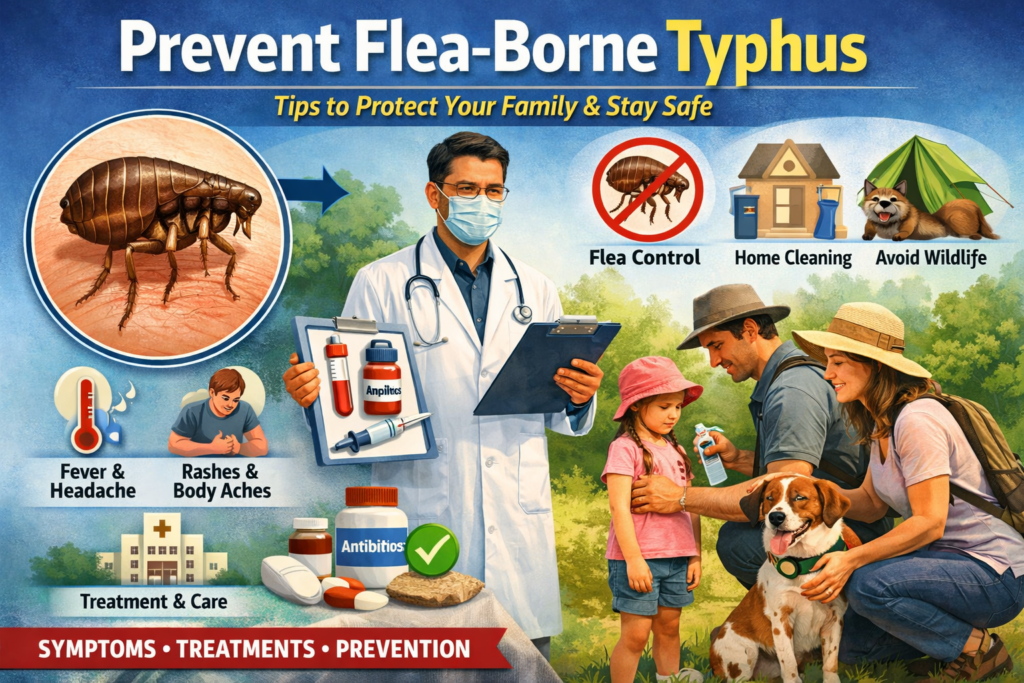
Flea-borne typhus, also known as murine typhus, is a bacterial infection caused by Rickettsia typhi — a microscopic pathogen transmitted through the feces of infected fleas. While it may sound like a disease from the past, flea-borne typhus remains an active public health concern in the United States, particularly in states like California, Texas, and Hawaii, where warm climates create ideal breeding conditions for fleas.
According to the Centers for Disease Control and Prevention (CDC), cases of flea-borne typhus have been on a steady rise over the past decade. Unlike many vector-borne diseases, typhus does not spread through a flea bite alone — infection occurs when flea feces (droppings) enter the body through scratched skin, eyes, or mucous membranes. This subtle transmission mechanism makes prevention both critical and often overlooked.
If left untreated, flea-borne typhus can cause severe complications including organ failure, neurological damage, and in rare cases, death. However, the encouraging truth is that this disease is almost entirely preventable with the right knowledge and proactive measures.
This in-depth guide delivers 10 expert-backed, actionable tips to protect yourself, your family, and your pets from flea-borne typhus — whether you live in a high-risk zone or simply want to take control of your household health.
Understanding Flea-Borne Typhus Before You Prevent It
Before diving into prevention strategies, it is important to understand how the disease operates.
The Transmission Cycle: Fleas typically become infected by feeding on wild animals such as rats, opossums, and stray cats. Once infected, the flea carries Rickettsia typhi bacteria in its gut. When an infected flea bites a human or animal host, it simultaneously defecates near the bite area. The act of scratching the bite drives the infected feces into the open wound — this is the primary mode of human infection.
Common Symptoms Include:
- Sudden high fever (often above 102°F)
- Severe headaches
- Body aches and chills
- Nausea and vomiting
- A rash that typically begins on the torso and spreads outward
Symptoms usually appear 1–2 weeks after exposure. Early antibiotic treatment with doxycycline is highly effective, but delayed diagnosis can lead to serious complications.
Now, let’s explore the 10 expert tips that will keep you and your loved ones protected.
Tip 1: Apply EPA-Approved Flea Repellents Consistently
One of the most direct and effective ways to prevent flea-borne typhus is using insect repellents that are specifically registered and approved by the U.S. Environmental Protection Agency (EPA).
What to look for: DEET (N,N-Diethyl-meta-toluamide) remains one of the most studied and proven repellents available. Products containing 20–30% DEET provide strong protection for adults and children over two months old. For a more natural alternative, picaridin-based repellents have shown comparable efficacy without the strong chemical odor associated with DEET.
How to apply effectively:
- Apply repellent to all exposed skin before going outdoors, especially in wooded, grassy, or high-wildlife areas
- Reapply every 4–6 hours or after swimming and sweating
- Never apply repellent under clothing; always apply to skin and outer clothing surfaces
- For children, apply repellent on your own hands first, then transfer to their skin — avoid contact with their eyes, mouth, and hands
Pro Insight: Permethrin-treated clothing offers an added layer of defense. Permethrin is an insecticide that kills fleas on contact with fabric, making it particularly effective for outdoor workers, hikers, and pet owners.
Tip 2: Protect Your Pets with Veterinarian-Approved Flea Control
Your pets — especially cats and dogs — are among the most common conduits for fleas entering your home. Animals that roam outdoors regularly can pick up fleas from infested environments and carry them directly into your living space.
Recommended flea prevention products for pets:
- Topical flea treatments (applied monthly to the back of the neck, such as Frontline or Advantage)
- Oral flea prevention medications prescribed by your veterinarian
- Flea collars (newer versions contain imidacloprid or flumethrin and are far more effective than older models)
- Flea-repellent shampoos for regular bathing
Important practices:
- Schedule consistent flea checks with your veterinarian — at minimum, twice per year
- After your pet returns from outdoors, inspect their fur with a fine-toothed flea comb before they enter the home
- Wash pet bedding in hot water (at least 130°F) weekly during peak flea season (spring through fall)
A common misconception: Many pet owners believe indoor-only pets are safe from fleas. However, fleas can enter homes through open windows, on clothing, or on visitors. Treating indoor pets remains an important safeguard.
Tip 3: Eliminate Wildlife Attractants Around Your Property
Wild animals such as rats, opossums, squirrels, and feral cats are the primary reservoir hosts of Rickettsia typhi. When these animals inhabit or pass through your yard, they shed infected fleas into your outdoor environment — creating a direct risk for both humans and domestic pets.
Practical steps to deter wildlife:
Secure your food sources:
- Store trash in sealed, animal-proof containers with locking lids
- Never leave pet food or water bowls outdoors overnight
- Clean up fallen fruit from trees promptly — rotting fruit is a powerful attractant for rodents
Eliminate harborage sites:
- Clear brush, woodpiles, leaf piles, and dense vegetation from around the perimeter of your home
- Seal openings under decks, porches, and crawl spaces with hardware cloth or galvanized mesh
- Fix damaged vents, gaps around pipes, and cracks in foundation walls that could allow rodent entry
Remove food waste promptly:
- Compost bins should be sealed and located away from the home
- Bird feeders inadvertently attract rodents; if you use them, clean up seed spillage daily and position feeders away from the house
Professional insight: If you notice signs of rat or rodent activity — such as droppings, gnaw marks, or burrows — contact a licensed pest control professional immediately. Do not attempt to trap or handle rodents yourself, as this increases your direct exposure risk.
Tip 4: Maintain a Flea-Hostile Yard Through Smart Landscaping
Your backyard can be either a breeding haven or a hostile environment for fleas. Fleas thrive in warm, moist, shaded areas with organic debris. Proactive yard management disrupts their lifecycle and significantly reduces infestation risk.
Landscaping strategies that deter fleas:
- Keep grass short: Mow your lawn regularly to a height of no more than 3 inches. Tall grass creates the humid microclimate fleas need to survive
- Reduce moisture: Avoid overwatering your lawn. Fix leaky faucets and ensure proper yard drainage to eliminate standing moisture near the home
- Create gravel or wood chip barriers: A 3-foot-wide strip of gravel, cedar mulch, or wood chips between your lawn and wooded areas acts as a natural deterrent — fleas dislike crossing dry, sun-exposed zones
- Prune trees and shrubs: Increase sunlight penetration throughout your yard by trimming dense vegetation. Sun exposure dries out the environment, making it inhospitable to fleas
- Plant flea-repelling plants: Certain plants naturally repel fleas, including lavender, rosemary, spearmint, eucalyptus, and chrysanthemums. Incorporating these into garden borders adds a chemical-free layer of protection
Seasonal note: Flea populations peak in late spring through summer. Intensify your yard maintenance efforts during April through September for maximum effectiveness.
Tip 5: Conduct Regular and Thorough Home Inspections
The interior of your home is not automatically safe from fleas. Infestations can establish quickly, especially if pets have access to the outdoors. Fleas lay up to 50 eggs per day, meaning even a small undetected population can explode within weeks.
How to conduct a home flea inspection:
The white sock test: Pull a pair of tall white socks over your pants legs and walk slowly through each room, particularly carpeted areas, pet sleeping spots, and along baseboards. Fleas are attracted to warmth and movement; they will jump onto the socks and be visible against the white fabric.
Areas that require special attention:
- Under and around pet bedding and furniture
- Along baseboards and in carpet edges
- In cracks and gaps in hardwood or tile flooring
- Dark, undisturbed areas like beneath sofas and beds
Inspection frequency:
- During peak flea season (spring–fall): inspect weekly
- During cooler months: monthly inspections are generally sufficient
- Always inspect after outdoor gatherings, camping trips, or bringing new animals into the home
Red flags to watch for:
- Small dark specks on pet fur or bedding (flea dirt — actually flea feces containing digested blood)
- Excessive scratching or grooming in pets
- Small, red, itchy bite clusters on your ankles or lower legs
Tip 6: Vacuum Aggressively and Wash Fabrics in Hot Water
Vacuuming is one of the most powerful non-chemical tools available for flea control. Research published in entomology studies has demonstrated that vacuum suction kills fleas at every stage of their lifecycle — eggs, larvae, pupae, and adults — with a success rate exceeding 95%.
Vacuuming best practices:
- Vacuum all carpets, rugs, and upholstered furniture thoroughly at least twice per week during active flea season
- Use a vacuum with a HEPA filter to prevent microscopic allergens and flea debris from recirculating into the air
- Pay special attention to corners, under furniture, along baseboards, and in cracks between floorboards
- Immediately after vacuuming, seal the vacuum bag or canister contents in a plastic bag and dispose of it in an outdoor trash bin — flea eggs and larvae can survive and re-emerge from vacuums left unattended
Hot water laundering: Wash all bedding — human and pet — in water heated to at least 130°F (54°C). This temperature is lethal to fleas at all lifecycle stages. Dry on the highest heat setting for at least 30 minutes.
Items to regularly launder:
- Pet blankets and beds
- Human bed linens, pillowcases, and throw blankets
- Couch cushion covers
- Area rugs (if machine washable)
Tip 7: Apply Safe Indoor and Outdoor Insecticides Strategically
When prevention alone is insufficient — particularly in areas with confirmed flea activity — targeted insecticide application becomes necessary. The goal is to use products that disrupt the flea lifecycle without creating unnecessary chemical exposure for your family or pets.
Indoor insecticide options:
- Insect Growth Regulators (IGRs): Products containing methoprene or pyriproxyfen are highly effective IGRs. They prevent flea eggs and larvae from developing into adults, breaking the reproductive cycle without the broad toxicity of traditional insecticides. These are available as sprays, foggers, and flea collars
- Diatomaceous Earth (Food Grade): A natural, non-toxic powder made from fossilized algae. When sprinkled along baseboards, under furniture, and in carpeted areas, it damages the exoskeleton of fleas, causing fatal dehydration. It is safe around humans and pets when used as directed
- Indoor sprays: EPA-registered products containing pyrethrin or permethrin are effective for treating carpet edges, pet resting areas, and floor cracks
Outdoor insecticide application:
- Focus treatments on shaded, moist areas where fleas concentrate — under decks, along fence lines, beneath shrubs
- Granular yard treatments containing bifenthrin or fipronil provide residual protection for 4–8 weeks
- Always follow label instructions precisely and keep pets and children off treated surfaces until fully dry
Safety first: Consult a licensed pest control professional for severe infestations. Never use outdoor-strength insecticides indoors.
Tip 8: Wear Protective Clothing in High-Risk Environments
Physical barriers are a simple, zero-cost prevention strategy that is consistently underutilized. Appropriate clothing choices can significantly reduce flea exposure when working outdoors, hiking, camping, or in areas known to harbor wildlife.
Clothing guidelines for flea prevention:
- Wear long pants and long-sleeved shirts when working in gardens, wooded areas, or locations with tall grass
- Tuck pants into socks to eliminate the exposed ankle gap that fleas most commonly target
- Choose light-colored clothing — fleas are easier to spot and remove from light fabrics before they have a chance to bite
- Treat clothing with permethrin: Permethrin-treated clothing provides active flea-killing protection. You can purchase pre-treated outdoor apparel from brands specializing in outdoor gear, or treat your own clothing using permethrin spray kits available at outdoor retailers. Treated clothing retains its effectiveness through multiple washes
Post-outdoor routine: Immediately upon returning indoors:
- Remove outdoor shoes at the door
- Change out of outdoor clothing and place it directly into a sealed laundry hamper
- Shower promptly and inspect your body, particularly legs, ankles, waistline, and armpits
- Run worn clothing through a hot wash cycle
Tip 9: Recognize Early Symptoms and Seek Prompt Medical Attention
Prevention is most effective when paired with disease literacy. Knowing what flea-borne typhus looks and feels like in its earliest stages empowers you to seek treatment before complications develop. Doxycycline — the primary antibiotic used to treat typhus — is dramatically more effective when administered within the first few days of symptom onset.
Early warning signs of flea-borne typhus (typically appearing 1–2 weeks post-exposure):
- Sudden onset of fever, often spiking above 102–104°F
- Severe and persistent headaches
- Muscle aches and chills
- Nausea, loss of appetite, and vomiting
- A characteristic rash developing around days 3–5, usually beginning on the trunk and spreading to the arms and legs (notably sparing the palms and soles in most cases)
When to seek immediate medical care:
- Any combination of fever, headache, and rash should be treated as a medical emergency, especially after known exposure to fleas or wildlife
- Do not wait for all symptoms to develop before consulting a physician
- Inform your doctor about potential flea exposure and geographic risk factors — this information is critical for accurate diagnosis
Diagnostic note: Flea-borne typhus is often misdiagnosed as influenza or other viral illnesses in early stages due to overlapping symptoms. Advocating for yourself and providing a complete exposure history ensures appropriate testing and treatment.
Tip 10: Stay Informed About Local Flea-Borne Typhus Outbreaks
Public health awareness is an often-overlooked dimension of personal prevention. Flea-borne typhus is a reportable disease in the United States, meaning local health departments track and publish outbreak data that can directly inform your prevention strategy.
How to stay informed:
- Monitor your local health department website: Most county and state health departments publish regular disease surveillance bulletins. Residents in high-risk states such as California, Texas, and Hawaii should subscribe to alert systems
- Follow the CDC’s Vector-Borne Disease page: The CDC maintains up-to-date resources on murine typhus cases, outbreak patterns, and geographic risk maps
- Communicate with your veterinarian: Veterinary professionals are often among the first to detect increased flea activity in a region. Regular check-ins keep you ahead of seasonal surges
High-risk communities in the U.S.:
- Urban areas with dense rat populations (particularly port cities)
- Communities with high populations of feral cats and opossums
- Regions experiencing drought, as wildlife displacement increases human–animal proximity
- Neighborhoods undergoing construction or demolition, which disturbs rodent habitats
Travel awareness: If traveling abroad, particularly to developing regions in Asia, Africa, Latin America, or the Mediterranean, research flea and louse-borne typhus risks before your trip. The typhus strains found internationally may differ from the North American murine variety, and preventive measures may need to be adapted accordingly.
Bonus Section: Flea-Borne Typhus vs. Other Flea-Transmitted Diseases
Understanding the difference between flea-borne illnesses helps prioritize your prevention approach:
| Disease | Pathogen | Transmission | Primary Risk |
|---|---|---|---|
| Flea-Borne Typhus | Rickettsia typhi | Flea feces in wound | Rodents, opossums |
| Bubonic Plague | Yersinia pestis | Flea bite | Rodents (Western U.S.) |
| Cat Scratch Disease | Bartonella henselae | Flea feces → cat scratch | Cats/kittens |
| Tapeworm Infection | Dipylidium caninum | Accidental ingestion of flea | Pets, young children |
While all of these conditions are serious, the prevention strategies outlined in this article offer broad cross-protection against the majority of flea-transmitted health threats.
Flea-borne typhus is a genuine public health threat that continues to affect thousands of Americans each year — yet it is overwhelmingly preventable. The 10 strategies outlined in this guide work best not in isolation, but as part of an integrated, year-round prevention routine.
Quick-reference prevention checklist:
- Apply EPA-approved flea repellents before outdoor activities
- Maintain consistent, veterinarian-approved flea control for all pets
- Remove wildlife attractants and seal entry points around your home
- Manage your yard to eliminate flea-friendly environments
- Conduct regular home flea inspections using proven techniques
- Vacuum frequently and launder fabrics at high heat
- Use targeted insecticides responsibly and strategically
- Wear protective, treated clothing in high-risk settings
- Learn and recognize early typhus symptoms — act immediately
- Stay connected to local public health updates and outbreak alerts
By incorporating these measures into your lifestyle, you are not just protecting yourself — you are contributing to a community-wide reduction in flea-borne disease transmission. Knowledge, consistency, and early action are your most powerful tools.