
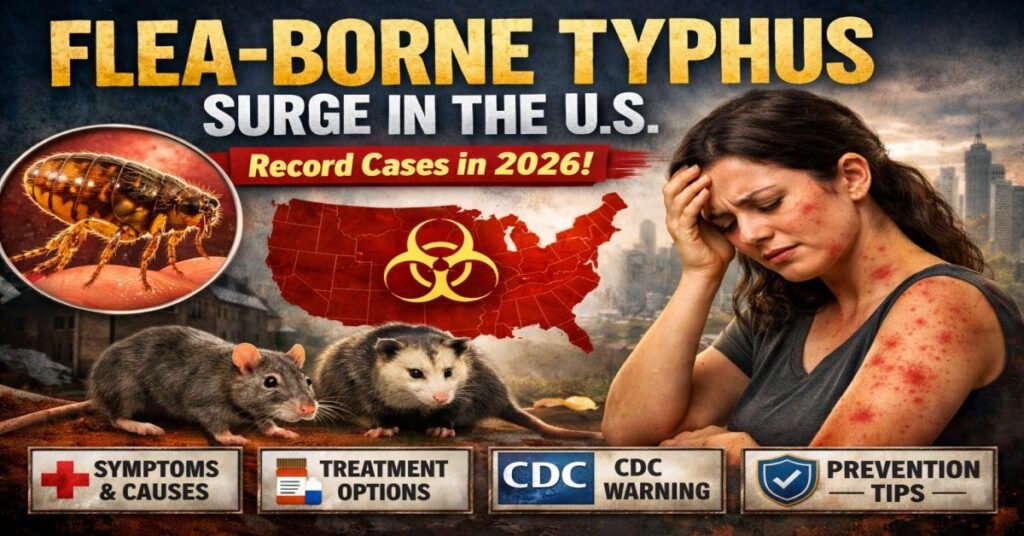
A bacterial infection once thought to be a relic of poor sanitation and pre-war America is quietly resurging across the United States in 2026. Flea-borne typhus — also known as murine typhus or endemic typhus — is spreading at record rates, particularly across Southern California, Texas, and Hawaii, alarming public health officials and medical experts nationwide.
Los Angeles County’s Department of Public Health confirmed 220 cases of flea-borne typhus in 2025 — the highest number ever recorded in the county’s history. Even more alarming, nearly 9 out of 10 infected individuals required hospitalization, underscoring just how serious this disease can become when not caught early.
This is not just a California problem. Across the United States, this once-rare illness is re-emerging as a genuine public health threat, fueled by urban rodent populations, stray animals, rising temperatures, and the expansion of homeless encampments in major cities.
If you live in the American South, Southwest, or along coastal regions — or if you own pets that go outdoors — you need to understand flea-borne typhus. This guide covers everything: what it is, how it spreads, what symptoms to watch for, how it is treated, and most importantly, how to protect yourself and your family right now.
What Is Flea-Borne Typhus?
Flea-borne typhus, also called murine typhus or endemic typhus, is a bacterial disease caused by the organism Rickettsia typhi. People contract it through contact with infected fleas — most commonly the Oriental rat flea (Xenopsylla cheopsis) and the common cat flea (Ctenocephalides felis).
Despite its name, flea-borne typhus is entirely different from epidemic typhus, which is louse-borne and historically linked to war, famine, and mass displacement. Flea-borne typhus circulates persistently within animal populations in certain regions and is considered endemic rather than epidemic.
During the 1930s and 1940s, thousands of cases were reported annually across the United States. Improved sanitation and pest control brought numbers down sharply by the late 1950s, and the disease was removed from the national notifiable disease list in 1987 because it had become so rare. That decision now looks premature. In the states that still track flea-borne typhus, reported cases have risen significantly since 2008, and public health experts now consider it a re-emerging infectious disease in several regions of the country.
How Does Flea-Borne Typhus Spread?
Understanding transmission is essential to protecting yourself. The disease does not spread the way most people expect.
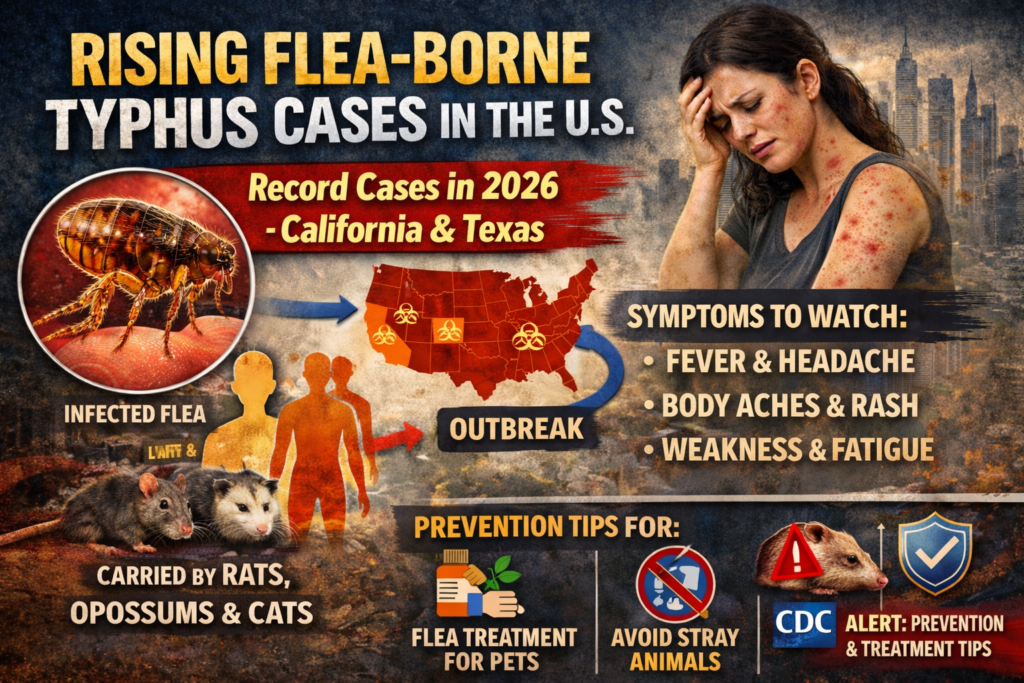
When a flea feeds on an infected animal — such as a rat, opossum, or stray cat — it ingests the Rickettsia typhi bacteria. From that point on, the flea remains infected for its entire life. When an infected flea lands on a human and bites, it simultaneously defecates on the skin. The bacteria live in flea feces. When the person instinctively scratches the bite, they rub the infectious material into the small wound — and that is the primary route of entry into the human body.
Critical transmission facts you should know:
- Flea-borne typhus does NOT spread from person to person under any circumstances.
- People are most commonly exposed in and around their own homes, when pets or wildlife carry infected fleas indoors.
- Infected animals — including your own pets — typically show no signs of illness, making the risk invisible and easy to underestimate.
- You may never feel the flea bite at all, which means exposure can happen without any awareness.
- Fleas that carry the disease are most commonly found on rats, opossums, stray cats, and free-roaming wildlife.
This invisible exposure is one of the reasons flea-borne typhus is so difficult to detect early and why the hospitalization rate remains dangerously high.
Where in the United States Is Flea-Borne Typhus Most Common?
Flea-borne typhus is not evenly distributed across the country. Three states account for the overwhelming majority of reported cases:
1. California (Highest Risk) Los Angeles County is the current epicenter of the outbreak. The 220 cases recorded in 2025 broke the previous record of 187 cases set just a year earlier in 2024. Three specific areas were identified as localized outbreak zones: Central Los Angeles City, the City of Santa Monica, and the unincorporated community of Willowbrook in South LA County. Cases have been reported across the entire county, affecting residents aged 1 to 85 years old, confirming that no age group is immune.
2. Texas (Historically High Caseload) Texas reports the highest number of flea-borne typhus cases annually at the national level. The Texas Department of State Health Services recorded over 500 cases in a single year previously, the highest national count since reporting declined in the mid-20th century. Warm temperatures across much of the state create ideal year-round conditions for flea populations to thrive.
3. Hawaii Hawaii’s tropical climate sustains robust flea and rodent populations throughout the year, making it a persistent hotspot for murine typhus transmission. Cases are reported consistently across the islands.
Public health officials note that cases likely occur in other states as well, but underreporting remains a challenge since flea-borne typhus is no longer a nationally notifiable disease.
Flea-Borne Typhus Symptoms: What to Watch For
One of the most dangerous aspects of flea-borne typhus is how closely its early symptoms resemble the flu. Many people delay seeking medical care because they assume they have a common viral illness — and that delay is what drives severe outcomes and hospitalization.
The incubation period — the time between exposure to infected fleas and the onset of symptoms — is typically 6 to 14 days. Because people rarely notice flea bites, they often have no idea they were ever exposed.
Common symptoms of flea-borne typhus include:
- High fever and chills (often the first and most consistent symptom)
- Severe headache
- Body aches and muscle pain
- Nausea and vomiting
- Abdominal pain
- Persistent cough
- Fatigue and general weakness
- Rash (develops in many but not all patients)
About the rash: The rash typically appears at the end of the first week of illness. It usually begins as a flat, spotted eruption on the trunk of the body and spreads outward toward the arms and legs. Importantly, the rash tends to spare the palms of the hands and the soles of the feet. However, the rash can vary significantly in appearance and may be absent altogether — so the absence of a rash should never be used to rule out flea-borne typhus.
Severe and late-stage symptoms: Without prompt antibiotic treatment, flea-borne typhus can progress to serious organ damage. The liver, kidneys, heart, lungs, and brain can all be affected in untreated or undertreated cases. Although deaths are rare — estimated at less than 1% of all cases — severe illness requiring intensive hospital care is not uncommon, particularly when diagnosis is delayed. Untreated fever can persist for two to three weeks.
When to seek medical care immediately: If you or a family member develops a sudden high fever, severe headache, and body aches — especially if you have had contact with animals, spent time outdoors in a known risk area, or live in Southern California, Texas, or Hawaii — seek medical attention right away. Tell your doctor about any possible flea exposure or contact with stray animals or wildlife.
Do not wait for a rash to appear. Do not wait for a laboratory test result. Early treatment is what saves lives.
What Causes the Rise in Flea-Borne Typhus Cases?
The resurgence of flea-borne typhus is not a coincidence or a fluke. It is the result of several interconnected environmental, social, and public health factors that have been building for over a decade.
1. Urban Rodent Proliferation Rats and mice are the primary animal reservoirs for Rickettsia typhi. As cities have expanded and waste management has struggled in certain urban corridors, rodent populations have grown significantly. More rats mean more infected fleas, which means more opportunities for human exposure.
2. Opossum and Wildlife Expansion Opossums are abundant carriers of infected fleas in Southern California and are increasingly found in suburban and urban neighborhoods. Unlike rodents, opossums are very difficult to control through conventional pest management strategies, and they range widely across residential areas at night.
3. Homeless Encampments Public health officials have directly linked the rise in Los Angeles County typhus cases to the growth of homeless encampments, which attract rodents and other wildlife. Conditions in and around encampments — accumulated waste, discarded food, and limited sanitation — create ideal environments for flea-host populations to multiply.
4. Free-Roaming and Stray Cats Cats are highly efficient flea carriers. Stray and free-roaming cat populations in urban areas serve as mobile bridges between infected wildlife and domestic environments, including homes where people keep pets.
5. Climate and Seasonal Factors Warmer temperatures extend the active season for fleas, which thrive in warm, humid conditions. In regions like Southern California and Texas, mild winters mean flea populations never fully die off, allowing year-round transmission risk. Cases typically peak in late summer and early fall.
6. Underdiagnosis and Limited Reporting Because flea-borne typhus was removed from the national notifiable disease list in 1987, data from many states is incomplete. Many cases are likely misdiagnosed as flu, viral infections, or other febrile illnesses — meaning the true scale of the problem across the US may be considerably larger than official numbers suggest.
How Is Flea-Borne Typhus Diagnosed?
Diagnosing flea-borne typhus is challenging because its symptoms overlap significantly with many other common illnesses. There is no rapid bedside test that can deliver an instant result, which is why clinical judgment is so important.
Clinical diagnosis: Doctors are advised to consider flea-borne typhus in any patient presenting with persistent fever, headache, and body aches who has a history of flea exposure, contact with animals such as rats, cats, or opossums, or who lives in or has recently visited an endemic area like Southern California, Texas, or Hawaii.
Laboratory testing: The most reliable confirmatory test is an indirect fluorescent antibody (IFA) test, which detects the presence of antibodies to Rickettsia typhi in the blood. However, antibodies typically do not appear until about 7 days after illness begins, meaning a test taken in the first week may return a false negative. A confirmed diagnosis usually requires two blood samples taken weeks apart showing a significant rise in antibody levels.
For early acute infection, PCR molecular testing on whole blood can detect the bacteria’s genetic material more quickly and is available through several state health laboratories including the California Department of Public Health.
The most important diagnostic principle: Treatment should never be delayed while waiting for laboratory confirmation. The CDC and state health authorities explicitly state that if flea-borne typhus is clinically suspected, antibiotic therapy should begin immediately.
Treatment: How Is Flea-Borne Typhus Treated?
The good news is that flea-borne typhus is very treatable — provided it is caught and treated early.
Doxycycline is the treatment of choice for flea-borne typhus in both adults and children of all ages, per current CDC guidelines. This antibiotic is highly effective against Rickettsia typhi and typically produces rapid improvement within 24 to 72 hours of starting therapy.
Treatment guidelines:
- Patients should be treated for at least 3 days after their fever resolves completely.
- The typical total course of treatment runs 7 to 10 days depending on clinical response.
- Treatment should begin based on clinical suspicion — never wait for laboratory results before starting antibiotics.
- When treated early, patients typically experience a milder, shorter illness and fully recover.
Without early treatment: Fever can persist for 2 to 3 weeks. The disease can progress to serious complications including liver damage, kidney failure, respiratory problems, and in rare cases, neurological impairment. Nearly 90% of patients in Los Angeles County in 2025 required hospitalization — a figure that reflects both the severity of the disease when care is delayed and the importance of early medical intervention.
There is currently no approved vaccine for flea-borne typhus.
Prevention: How to Protect Yourself and Your Family
The encouraging reality is that flea-borne typhus is largely preventable. You do not need to fear your pets or avoid the outdoors — you simply need to take a few consistent, practical steps to reduce your exposure to fleas and the animals that carry them.
Pet care and flea control:
- Use veterinarian-approved flea prevention products on all dogs and cats year-round. Options include oral medications, topical treatments, and flea collars. Ask your vet which product is most appropriate for your pet.
- Keep pets indoors as much as possible, especially at night when wildlife is most active.
- Note: Permethrin-based products should never be used on cats — they are toxic to felines.
- Check pets for fleas regularly, especially after outdoor time.
Protect your yard and home:
- Keep grass trimmed and remove brush, leaf piles, and wood debris where rodents and wildlife shelter.
- Store firewood off the ground and away from the house.
- Seal any openings in attics, crawl spaces, garages, and storage sheds to prevent rodents and wildlife from nesting inside.
- Keep trash in containers with tight-fitting lids at all times.
- Do not leave pet food or water bowls outdoors overnight — this attracts rats, opossums, and stray cats.
Personal protection outdoors:
- Use EPA-registered insect repellents that are specifically labeled for protection against fleas when spending time in wooded, grassy, or high-risk outdoor areas.
- Wear long socks and tuck pants into socks when in areas with known flea activity.
- After spending time outdoors in risk areas, check clothing and skin carefully.
Avoid wildlife contact:
- Do not feed or touch stray cats, opossums, raccoons, squirrels, or any wild animals.
- Do not attempt to handle or rescue injured wildlife without proper protective equipment — contact your local animal control instead.
- Discourage wildlife from entering your property by removing food sources and sealing entry points.
Rodent control — important sequencing note: If you are dealing with a rodent infestation in your home or yard, treat for fleas first before beginning rodent elimination. When rodents are killed or removed, their fleas immediately search for new hosts — and that new host could be you or your family. Flea control must come before or alongside rodent control, not after.
Who Is Most at Risk?
Flea-borne typhus can affect anyone of any age. Los Angeles County’s 2025 cases ranged from children as young as 1 year old to adults aged 85. However, certain groups face elevated risk:
- Pet owners whose animals spend time outdoors or in contact with wildlife
- People living in or near homeless encampments or areas with high rodent activity
- Outdoor workers including landscapers, pest control professionals, and sanitation workers
- Residents of endemic areas — particularly Southern California, South Texas, and Hawaii
- Elderly individuals and those with weakened immune systems — who are more likely to experience severe complications
- People who feed stray animals or regularly interact with wildlife
Flea-Borne Typhus vs. Other Tick and Flea Diseases: Key Differences
It is easy to confuse flea-borne typhus with other vector-borne illnesses. Here is a quick reference to understand how it differs:
Flea-Borne Typhus vs. Rocky Mountain Spotted Fever: Both are caused by Rickettsia bacteria and both are treated with doxycycline. However, Rocky Mountain Spotted Fever is tick-borne, tends to be more rapidly severe, and has a higher fatality rate if untreated. The rash in RMSF classically starts at the wrists and ankles and moves inward, opposite to the trunk-outward pattern of typhus.
Flea-Borne Typhus vs. Epidemic Typhus: Epidemic typhus is louse-borne (spread by body lice) and was responsible for millions of deaths during World Wars I and II. Flea-borne typhus is generally less severe and is not associated with person-to-person spread under any modern circumstances.
Flea-Borne Typhus vs. Plague: Both involve fleas and rodents, but plague (caused by Yersinia pestis) is far more deadly and presents very differently with swollen lymph nodes. Plague is extraordinarily rare in the modern US. Flea-borne typhus, while serious, is much more common and far more treatable.
Frequently Asked Questions (FAQ)
Q: Can I get flea-borne typhus from my indoor cat?
A: If your cat never goes outdoors and never has contact with other animals or wildlife, the risk is very low. However, if your cat has any outdoor access — even occasionally — it can pick up infected fleas and bring them inside. Year-round flea prevention for all pets is strongly recommended regardless of lifestyle.
Q: Is flea-borne typhus contagious between people?
A: No. Flea-borne typhus cannot spread from one person to another. You cannot catch it from an infected family member, caregiver, or patient. Transmission requires contact with infected fleas.
Q: If I had flea-borne typhus once, can I get it again?
A: People who recover from Rickettsia typhi infection typically develop a strong immune response. However, it is currently unknown whether this provides lifelong immunity, so ongoing prevention is still recommended.
Q: How long before symptoms appear after a flea bite?
A: Symptoms typically appear within 6 to 14 days after contact with infected fleas or flea feces, according to CDC data. The most common window is 1 to 2 weeks.
Q: Is there a vaccine for flea-borne typhus?
A: No. There is currently no approved vaccine available to prevent flea-borne typhus. Prevention relies entirely on reducing flea exposure through the measures outlined in this article.
Q: What should I do if I think I have flea-borne typhus? A: See a doctor immediately. Inform them of any possible flea exposure, contact with animals, or time spent in an endemic region. Do not wait for a rash to develop. Early antibiotic treatment with doxycycline is highly effective and dramatically reduces the risk of severe illness.
Q: Can children take doxycycline for typhus?
A: Yes. The CDC recommends doxycycline as the treatment of choice for flea-borne typhus in patients of all ages, including young children. The benefits of treatment far outweigh the risks associated with doxycycline use in pediatric typhus cases.
The Bottom Line: Take This Seriously in 2026
Flea-borne typhus is not a Third World disease. It is not a historical curiosity. It is an active, rising public health threat in the United States right now — one that sent nearly 9 out of 10 diagnosed patients to the hospital in Los Angeles County in 2025 alone.
The disease is spreading. The numbers are climbing. And the populations most at risk are growing in many American cities.
The most important things to remember are these: Know the symptoms. Act fast. Do not wait for a rash or a lab result before seeking care if typhus is suspected. And protect your home, your yard, and your pets from fleas with consistent, year-round measures.
Flea-borne typhus is preventable. It is treatable. But only if people are informed enough to take it seriously — and that starts with awareness.