
Fabrics shape our daily experience — how clothes feel, how bedding sleeps, how long items last. Silk and cotton are two of the world’s most iconic textiles, yet they differ profoundly in origin, performance, comfort, and maintenance. Understanding these differences helps you choose what’s best for your lifestyle and needs.
1. Origins & What the Fabrics Are
🟧 Cotton
- Natural plant fiber grown in warm climates.
- Comes from the seed hairs of the cotton plant (Gossypium species).
- Harvested, ginned (seed removed), spun into yarn, then woven or knit.
Key Traits:
- Cellulose-based fiber
- Breathable, soft, widely used globally
- Most common textile in the world
🟪 Silk
- Natural animal fiber produced by silkworm larvae.
- Most silk comes from the cocoon of the Bombyx mori moth.
- Silk threads are reeled, then woven.
Key Traits:
- Protein-based fiber
- Fine, lustrous, and smooth
- Traditionally associated with luxury
2. Comfort & Feel: How They Wear
| Feature | Cotton | Silk |
|---|---|---|
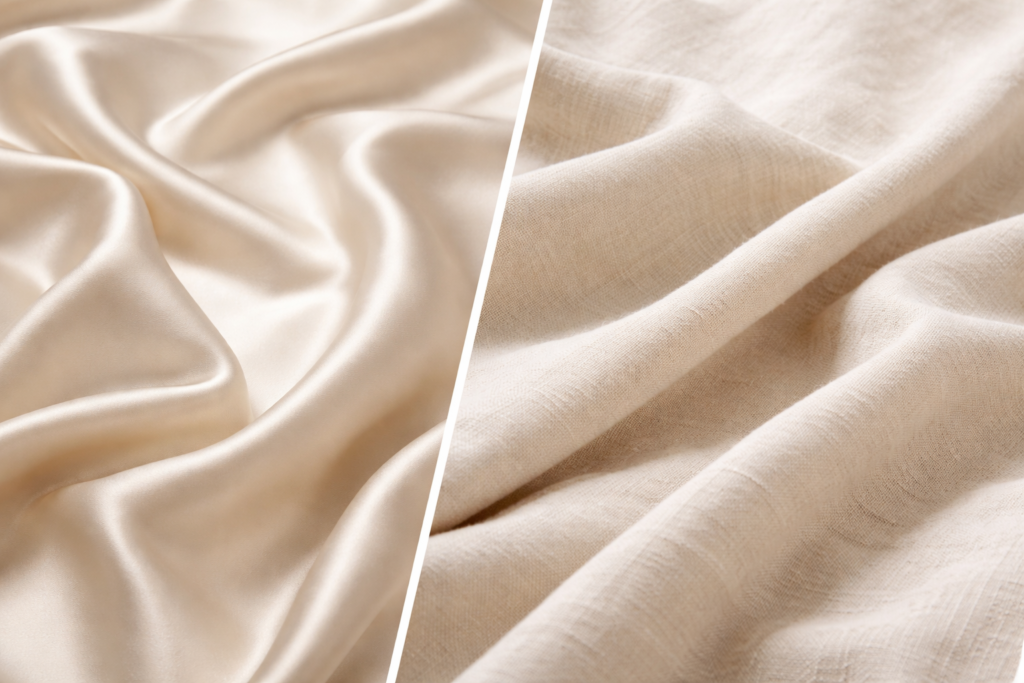
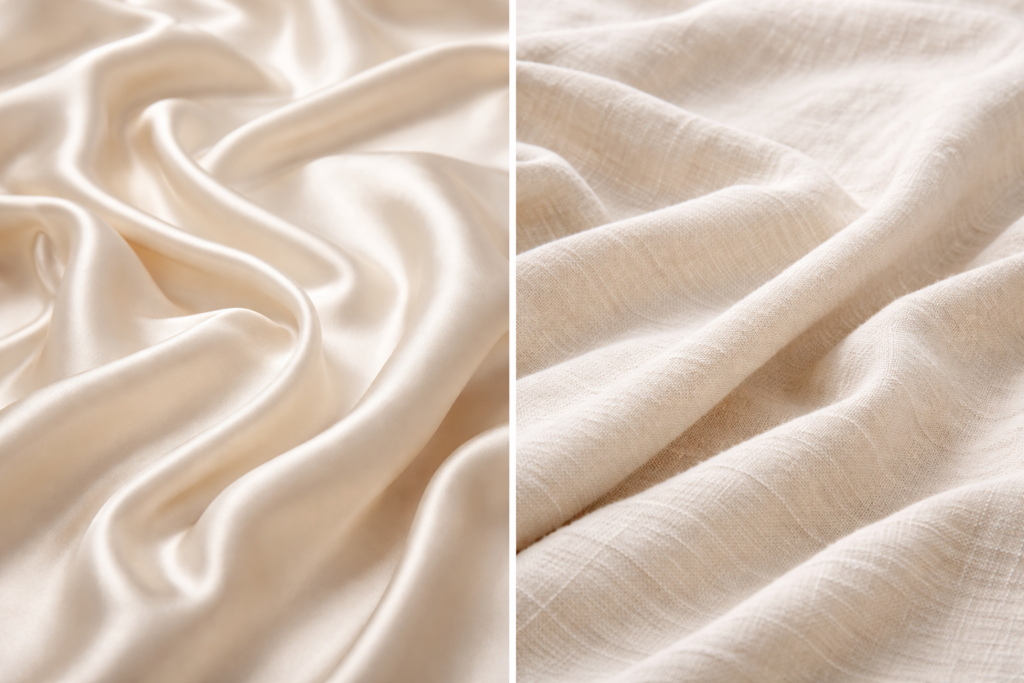
| Touch & Feel | Soft and matte | Smooth, glossy, luxurious |
| Temperature Control | Breathable, cool | Excellent thermal regulation |
| Moisture Behavior | Absorbs well | Absorbs moderately |
| Skin Sensitivity | Hypoallergenic for most | Very gentle, less irritating |
🩶 Comfort — Cotton
Cotton is breathable and airy. It absorbs moisture (sweat, humidity), which can make it feel heavier when very wet. Because of its structure, it allows good airflow — that’s why T-shirts, casual wear, and summer clothes are usually cotton.
🌫 Comfort — Silk
Silk is wonderfully smooth and feels cool to the touch. It offers natural temperature regulation — warm in cold weather, cool in heat — because protein fibers manage moisture and temperature efficiently. Silk rarely irritates even sensitive skin.
Bottom Line:
- Cotton wins for everyday breathability and casual comfort.
- Silk wins for luxury, smoothness, and temperature adaptability.
3. Performance: Drying, Durability & Strength
🧵 Durability
- Cotton: Strong when dry; weakens when wet but still durable.
- Silk: Strongest natural fiber by weight but weaker when wet and sensitive to friction.
🪶 Moisture & Drying
- Cotton absorbs up to 25× its weight in water — great for sweat, but slow to dry.
- Silk absorbs less moisture and dries faster — so it resists clamminess.
🧣 Wrinkle & Shape
- Cotton wrinkles easily.
- Silk resists wrinkles but can lose shape without proper care.
4. Cost & Value: What You Pay and Why
| Fabric | Approx. Price | Why It Costs This |
|---|---|---|
| Cotton | Low to moderate | Widely cultivated, mechanized production |
| Silk | High to luxury tier | Labor-intensive cultivation and processing |
🏷 Why Cotton Is Cheaper
- Easy to grow and mass-produce
- Automated harvesting and spinning
- Large global supply chain
💎 Why Silk Is Expensive
- Sericulture (silkworm farming) is labor-intensive
- Extracting continuous silk threads is delicate work
- Luxury branding adds premium value
Value Perspective:
Cotton wins for affordability and everyday practicality. Silk is a value-premium fabric — you pay more for texture, feel, and prestige.
5. Care & Maintenance
🧼 Cotton Care
- Machine washable (most types)
- Tolerant of detergents and agitation
- Can be tumble dried (but may shrink)
- Ironing easier than silk
Pros: Easy, forgiving, low skills needed
Cons: Shrinks if hot water or dryer used
🪡 Silk Care
- Best hand wash or gentle machine wash
- Use mild detergent
- Avoid bleach and high heat
- Dry flat or hang in shade
- Iron on low heat with cloth protection
Pros: Maintains luster if cared for
Cons: Fussy, careful surrounding required
Care Ranking (easiest → hardest):
- Comfort cotton
- Cotton blends
- Silk
6. Environmental & Sustainability Angle
🌱 Cotton
- Conventional cotton uses a lot of water, pesticides
- Organic cotton reduces chemicals but still water-intensive
- Biodegradable
🐛 Silk
- Natural and biodegradable
- Lower water footprint but ethical concerns: traditional silk production kills pupae
- Alternatives like peace silk (Ahimsa silk) avoid killing silkworms
Sustainability Tip:
Look for organic cotton, peace silk, or ethical certifications when buying.
7. Common Uses
📌 Where Cotton Shines
- Everyday T-shirts, underwear, socks
- Casual dresses
- Sheets and towels
- Baby wear
📌 Where Silk Shines
- Luxury scarves, ties
- Fine dresses, lingerie
- Premium bedding, pillowcases
- High-end fashion
8. Final Comparison at a Glance
| Category | Cotton | Silk |
|---|---|---|
| Comfort (Casual) | ⭐⭐⭐⭐ | ⭐⭐⭐ |
| Comfort (Luxury) | ⭐⭐⭐ | ⭐⭐⭐⭐ |
| Breathability | ⭐⭐⭐⭐ | ⭐⭐⭐ |
| Warmth Regulation | ⭐⭐ | ⭐⭐⭐⭐ |
| Maintenance Ease | ⭐⭐⭐⭐ | ⭐⭐ |
| Durability | ⭐⭐⭐ | ⭐⭐⭐ |
| Cost | ⭐⭐⭐⭐ | ⭐⭐ |
| Sustainability (Best Practices) | ⭐⭐⭐ | ⭐⭐ |
9. Which Should You Choose?
🧍 For Everyday, Active, Budget-Friendly
➡️ Cotton
Best for casual wear, active lifestyles, heavy usage, and low-maintenance needs.
👗 For Special Occasions, Comfort, Luxury
➡️ Silk
Best for premium wear, special items, and when comfort matters most.
🛏 For Bedding
- Cotton for cool, easy-care sheets
- Silk for luxury pillowcases and temperature regulation
10. Quick Practical Tips Before You Buy
✔ Check labels: 100% fiber vs blends matter
✔ Blends: Cotton-silk blends balance comfort and cost
✔ Care tags: Follow them religiously
✔ Allergies: Silk can be more skin-friendly
Silk vs Cotton – Frequently Asked Questions
Which fabric is more comfortable: silk or cotton?
Cotton offers breathable, everyday comfort and works well in warm climates. Silk feels smoother and more luxurious, with natural temperature-regulating properties that adapt to both warm and cool conditions.
Is silk better for sensitive skin than cotton?
Silk is often preferred for sensitive skin because its smooth fibers reduce friction and irritation. Cotton is also skin-friendly, but rougher weaves may cause mild irritation for very sensitive skin types.
Why is silk more expensive than cotton?
Silk production is labor-intensive, involving silkworm farming and delicate thread extraction. Cotton is mass-produced using mechanized processes, which makes it more affordable.
Which fabric lasts longer, silk or cotton?
Cotton generally lasts longer in everyday use because it tolerates frequent washing. Silk fibers are strong but delicate and require careful handling to maintain longevity.
Is cotton or silk better for hot weather?
Cotton is ideal for very hot and sweaty conditions due to its high breathability and moisture absorption. Silk also performs well in heat but absorbs less sweat than cotton.
Does silk require more care than cotton?
Yes. Silk needs gentle washing, mild detergents, and low heat. Cotton is easier to care for and is usually machine washable, though excessive heat may cause shrinking.
Which fabric wrinkles more easily?
Cotton wrinkles more easily, especially in pure forms. Silk naturally resists wrinkles but may lose shape if not properly cared for.
Is silk suitable for daily wear?
Silk can be worn daily for light-use items such as blouses or scarves, but cotton is more practical for everyday clothing that requires frequent washing.
Which fabric is more environmentally friendly?
Both fabrics can be sustainable if responsibly produced. Organic cotton reduces chemical use, while ethical silk options address environmental and ethical concerns.
Which fabric is better for bedding?
Cotton is best for daily bedding due to breathability and easy care. Silk is ideal for pillowcases and luxury bedding because it reduces friction on skin and hair.