
Hair damage doesn’t happen overnight. It builds silently—through friction, dryness, tension, and daily habits most women never question. One of the most overlooked causes? The fabric your hair touches every day and every night.
Silk hair protection is not a luxury trend—it is a preventive hair-care strategy rooted in material science, dermatology, and hair biology. This guide explains exactly how silk protects women’s hair, who benefits the most, and how to use it correctly for visible, long-term results.
Understanding Hair Damage: Why Fabric Matters More Than Products
Hair strands are covered with microscopic cuticles (like roof shingles). When these cuticles are disturbed, hair becomes:
- Frizzy
- Weak
- Prone to breakage
- Dull and dry
Rough or absorbent fabrics (like cotton) lift and scrape these cuticles repeatedly, especially during sleep when hair rubs constantly against surfaces.
Silk changes this equation entirely.
What Is Silk Hair Protection?
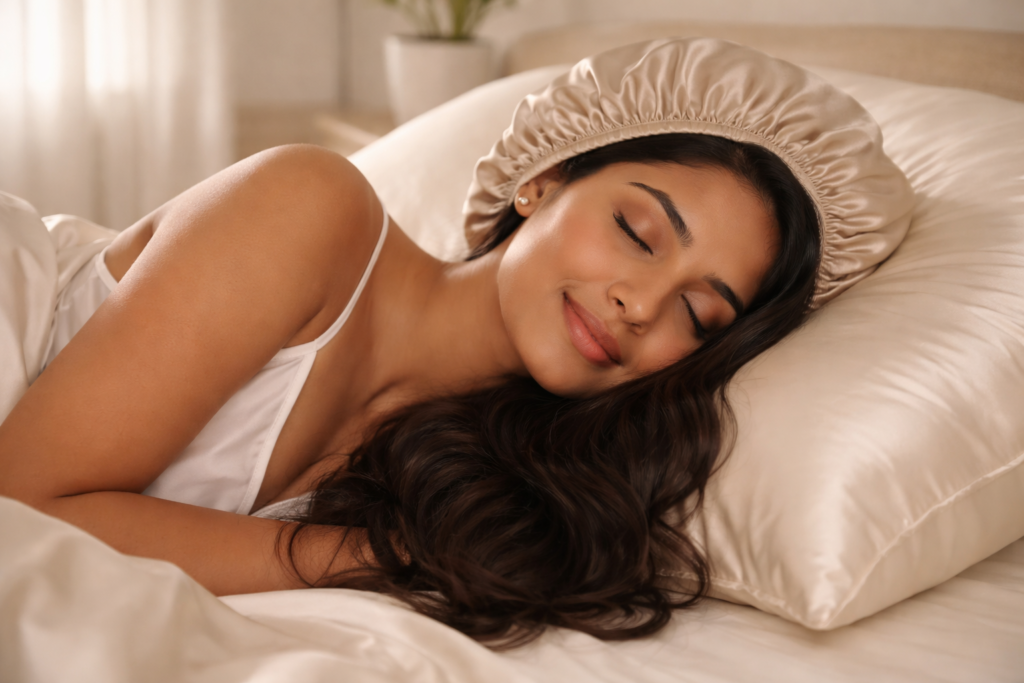
Silk hair protection refers to using natural silk-based accessories—such as pillowcases, bonnets, wraps, scarves, and scrunchies—to create a low-friction, moisture-balanced environment for hair.
Unlike synthetic fabrics, silk works with hair structure, not against it.
The Science Behind Silk and Hair Health
Silk fibers are composed of fibroin proteins, which closely resemble human hair’s keratin structure. This similarity allows silk to:
- Reduce mechanical stress on hair strands
- Prevent cuticle damage
- Maintain moisture equilibrium
Key Scientific Advantages of Silk:
- Extremely smooth surface (low friction coefficient)
- Minimal moisture absorption
- Breathable and temperature-regulating
- Naturally hypoallergenic
This combination makes silk uniquely suitable for hair protection.
Proven Benefits of Silk Hair Protection for Women
1. Significantly Reduces Hair Breakage
Friction is the leading cause of mechanical hair breakage. Silk allows hair to glide instead of snagging, which:
- Prevents mid-length breakage
- Reduces split ends
- Protects fragile or thinning hair
✔ Critical for postpartum hair loss and aging hair
2. Preserves Natural Hair Moisture
Cotton absorbs oils and water from hair. Silk does not.
This means:
- Hair stays hydrated longer
- Natural scalp oils remain balanced
- Less dependency on heavy serums and creams
✔ Ideal for dry, coarse, or chemically treated hair
3. Controls Frizz at the Cuticle Level
Frizz occurs when cuticles lift. Silk’s smooth texture keeps cuticles flat, resulting in:
- Smoother hair texture
- Reduced static electricity
- Enhanced natural shine
✔ Especially effective for humid climates
4. Protects Hairstyles Overnight
Silk wraps and bonnets help maintain:
- Blow-dried styles
- Heat-styled hair
- Braids and twists
- Natural curl definition
Less friction = less restyling damage the next day.
5. Prevents Hairline & Edge Damage
Tight elastics and rough fabrics weaken edges over time. Silk accessories:
- Reduce tension
- Minimize friction around the hairline
- Support healthier edges
✔ Essential for protective styles
6. Minimizes Tangles & Knots
Silk prevents hair strands from intertwining aggressively, making detangling:
- Faster
- Gentler
- Less painful
✔ Reduces hair fall during combing
7. Supports a Healthier Scalp Environment
Silk is naturally:
- Hypoallergenic
- Resistant to bacteria buildup
- Gentle on sensitive skin
A healthy scalp = stronger hair growth cycles.
Types of Silk Hair Protection Products (And How to Use Them)
Silk Pillowcases
Best starting point
- Immediate reduction in friction
- Benefits hair and skin simultaneously
Silk Bonnets & Wraps
Best for overnight protection
- Keeps hair contained
- Ideal for long or curly hair
Silk Scrunchies
For daily styling
- Prevents ponytail breakage
- Gentle on wet hair
Silk Scarves
Daytime protection
- Shields hair from sun, dust, and pollution
How to Choose the Right Silk (Critical Buying Guide)
Always Check:
- 100% natural silk (preferably Mulberry silk)
- Momme count: 19–25 MM
- Non-toxic dyes
Avoid:
- Polyester satin marketed as silk
- Rough, shiny synthetic fabrics
- Extremely low-priced “silk” products
Quality silk delivers results—cheap substitutes do not.
Hair-Type Specific Silk Protection Tips
Curly / Coily Hair
- Use silk bonnet + pillowcase
- Loosely wrap curls to preserve shape
Straight Hair
- Silk pillowcase is sufficient
- Use silk scrunchies for daily styling
Oily Hair
- Silk prevents oil imbalance
- Wash silk items weekly
Colored / Chemically Treated Hair
- Mandatory silk protection
- Reduces dryness and color fade
How to Care for Silk Hair Accessories
- Hand wash or gentle cycle
- Cold water only
- Mild detergent
- Air dry flat
- No wringing or twisting
Proper care extends silk lifespan and performance.
Common Myths About Silk Hair Protection
Myth: Silk is only for luxury users
Truth: It prevents costly hair damage long-term
Myth: Satin works the same
Truth: Satin reduces friction but lacks silk’s protein structure
Myth: Silk causes greasy hair
Truth: It preserves balance, not excess oil
Final Verdict: Is Silk Hair Protection Worth It?
Absolutely.
Silk hair protection is one of the simplest, safest, and most effective upgrades a woman can make to her hair routine. It works silently, consistently, and naturally—protecting hair while you sleep, rest, and style.
If your goal is long-term hair strength, shine, and damage prevention, silk is not optional—it’s essential.
Frequently Asked Questions
What makes silk better for hair protection than cotton or synthetic fabrics?
Silk has a naturally smooth fiber structure that creates minimal friction, does not absorb moisture, and helps reduce breakage, frizz, and dryness.
Can silk hair protection actually reduce hair fall?
Silk reduces hair fall caused by breakage, friction, and tangling, though it does not treat medical or hormonal hair loss.
Is silk hair protection suitable for all hair types?
Yes, silk benefits all hair types by reducing friction and protecting the hair cuticle.
How long does it take to see results from silk pillowcases or bonnets?
Smoother hair is often noticed within 1–2 weeks, with reduced breakage after 4–6 weeks of consistent use.
Is satin the same as silk for hair protection?
No. Satin is a weave, often polyester, while natural silk offers better breathability and moisture balance.
Does silk make hair oily or greasy?
No. Silk helps maintain natural oil balance by preventing excessive moisture absorption.
Can silk help protect chemically treated or colored hair?
Yes. Silk minimizes moisture loss and surface damage, helping maintain softness and color vibrancy.
Is silk hair protection effective in hot and humid climates?
Yes. Silk is breathable and temperature-regulating, making it effective in humid conditions.
How often should silk hair accessories be washed?
Wash silk items every 7–10 days, or more often if using heavy hair products or sweating.
Is silk hair protection worth the investment?
Yes. It prevents long-term damage and reduces reliance on styling products, making it cost-effective.


Good Information 👍😊
Thank you for this absolutely eye-opening article! I’ve spent years investing in expensive serums and treatments, never once considering that my cotton pillowcase was undoing all that work every single night. The explanation that ‘hair damage builds silently through friction, dryness, and daily habits most women never question’ is so true. The science behind silk’s fibroin proteins closely resembling human hair’s keratin structure, and how that reduces mechanical stress while maintaining moisture equilibrium, is fascinating. The buying guide (100% Mulberry silk, 19-25 momme count) and the hair-type specific tips are incredibly practical. Thank you for sharing this valuable information. Keep writing more content like this!
Thank you so much for this thoughtful and detailed comment! It truly means a lot to know the article resonated with you. You’re absolutely right—so many daily habits, like using a cotton pillowcase, quietly impact hair health without us even realizing it. I’m glad you found the science behind silk and the practical buying guide helpful. Your support and encouragement genuinely motivate me to keep creating well-researched, valuable content. More insightful articles are definitely on the way!