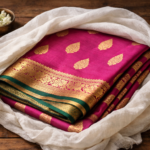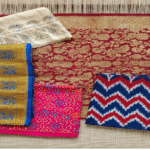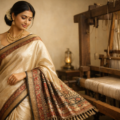
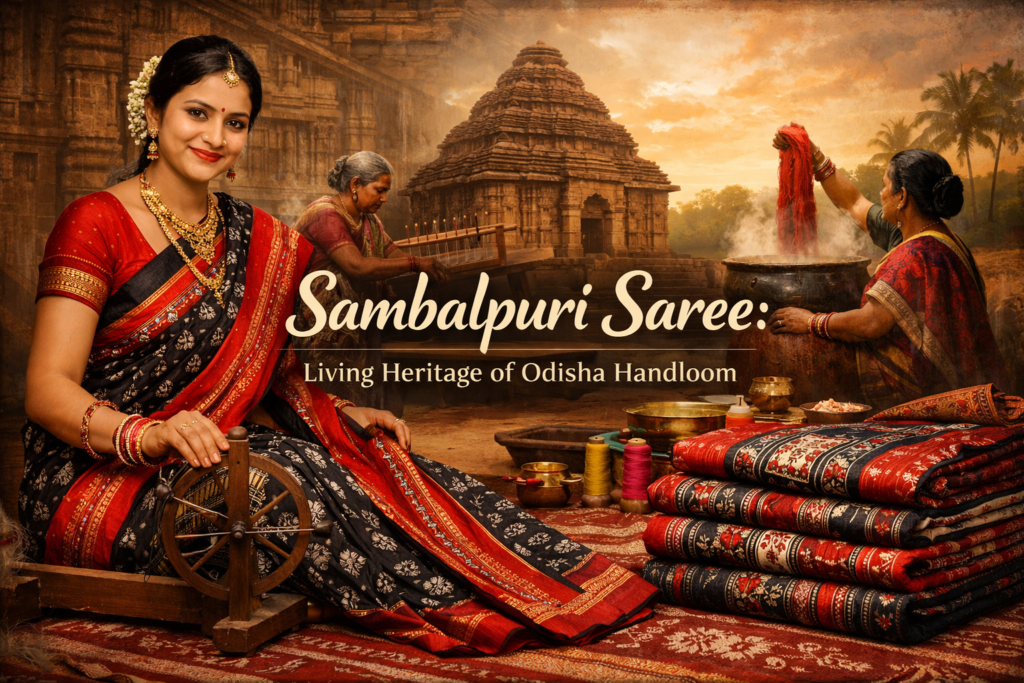
The Sambalpuri saree is one of India’s most intellectually refined and culturally significant handloom traditions. Woven in the western regions of Odisha, this saree represents a rare textile philosophy where design is imagined, engineered, and dyed before a single thread touches the loom. Every Sambalpuri saree is not only a garment but a living record of indigenous knowledge, mathematical precision, and generational craftsmanship.
Rooted deeply in Odisha’s social and spiritual life, the Sambalpuri saree continues to thrive as a symbol of identity, sustainability, and timeless elegance.
Origins Rooted in Western Odisha
Sambalpuri sarees originate from handloom clusters across Sambalpur, Bargarh, Sonepur, and surrounding districts. These regions have practiced weaving for centuries, often centered around temple culture, agrarian cycles, and community rituals. Traditionally, Sambalpuri sarees were woven for festivals, weddings, and religious ceremonies, reflecting prosperity and reverence.
The craft evolved within close-knit artisan communities, where weaving knowledge passed from parent to child. This continuity preserved not just techniques but also stories, motifs, and philosophical ideas embedded within the fabric.
Bandha Ikat: The Foundation of Sambalpuri Weaving
At the heart of every Sambalpuri saree lies the Bandha Ikat technique, one of the most demanding textile processes in the world. Unlike surface decoration, Bandha Ikat involves resist-dyeing the yarn itself.
How Bandha Ikat Works
Before weaving begins, the entire saree design is calculated and mapped. Sections of yarn are tightly tied to resist dye penetration. These yarns are dyed, untied, and re-tied multiple times to introduce different colors. Only after the final dyeing does weaving begin.
The result is astonishing precision—patterns align perfectly across the fabric, often appearing identical on both sides. Any error during tying or dyeing can permanently distort the design, making Bandha Ikat a true test of mastery.
A Language of Motifs and Symbols
Sambalpuri sarees are known for bold, structured motifs that carry deep symbolic meaning rather than decorative excess.
- Chakra (Wheel): Represents cosmic order, movement, and balance
- Shankha (Conch Shell): Symbol of purity and auspicious beginnings
- Floral Geometry: Signifies growth, renewal, and harmony
- Temple Borders: Reflect Odisha’s sacred architecture
- Tribal Patterns: Express community life and connection with nature
These motifs are woven directly into the fabric, ensuring permanence and authenticity.
Fabric Choices Designed for Climate and Comfort
Sambalpuri sarees are traditionally woven using natural fibers carefully selected for Odisha’s climate and long-term wear.
- Pure Cotton Sambalpuri Sarees offer breathability and structure, ideal for daily and professional use
- Pure Silk Sambalpuri Sarees provide richness and ceremonial elegance
- Cotton-Silk Blends balance comfort with festive appeal
The weave density ensures durability while allowing the fabric to soften beautifully with age.
Color Philosophy and Natural Dye Tradition
Color in Sambalpuri sarees is intentional and symbolic. Traditionally, artisans relied on natural and vegetable dyes, resulting in deep, lasting hues that age gracefully.
Classic Sambalpuri colors include deep red, maroon, jet black, indigo blue, mustard yellow, and earthy green. These shades are chosen for cultural resonance rather than seasonal trends, giving the sarees a timeless aesthetic.
GI Tag and Authenticity
Sambalpuri sarees are protected under India’s Geographical Indication (GI) status, confirming their unique origin and method of production. Authentic Sambalpuri sarees display clear motifs on both sides, slight handwoven irregularities, and a soft yet sturdy texture.
They are never machine-printed or mass-produced, making each piece unique.
Time, Skill, and Human Commitment
Depending on complexity, a Sambalpuri saree can take anywhere from two weeks to several months to complete. The process involves yarn preparation, design calculation, multiple dye cycles, and careful weaving on traditional looms.
This time investment gives Sambalpuri sarees their character, depth, and individuality.
Sambalpuri Sarees in the Modern World
Despite their traditional roots, Sambalpuri sarees fit seamlessly into contemporary wardrobes. Their structured patterns pair well with minimalist blouses and modern draping styles. They are suitable for cultural events, office wear, weddings, and festive occasions, offering versatility without compromising heritage.
Care and Preservation
To preserve a Sambalpuri saree, silk versions should be dry cleaned, while cotton sarees can be gently hand washed in cold water. Storing them wrapped in cotton cloth protects the fabric and colors over time.
With proper care, a Sambalpuri saree often becomes an heirloom passed down through generations.
Why Sambalpuri Sarees Matter Today
In an era dominated by fast fashion, Sambalpuri sarees stand for sustainability, ethical production, and cultural preservation. Purchasing one supports artisan livelihoods and keeps an ancient craft alive.
A Living Heritage Woven in Threads
The Sambalpuri saree is not designed for a season—it is created for a lifetime. Each thread carries the intellect of the weaver, the discipline of tradition, and the soul of Odisha’s handloom culture.
To wear a Sambalpuri saree is to wear living heritage—woven with intention, preserved by skill, and celebrated across generations.
Frequently Asked Questions
What makes a Sambalpuri saree unique?
Sambalpuri sarees are created using the Bandha Ikat technique, where designs are formed on the yarn before weaving. This ensures long-lasting motifs that appear clearly on both sides of the fabric.
How can I identify an authentic Sambalpuri saree?
Authentic Sambalpuri sarees show precise motifs on both sides, a breathable handwoven texture, and slight natural irregularities that reflect artisan craftsmanship rather than machine production.
Are Sambalpuri sarees suitable for daily wear?
Yes. Cotton Sambalpuri sarees are lightweight, durable, and breathable, making them ideal for everyday and office wear, while silk versions are best for festive and ceremonial occasions.
How long does it take to weave a Sambalpuri saree?
Depending on the complexity, a Sambalpuri saree may take anywhere from two weeks to several months. The process includes yarn preparation, resist dyeing, and meticulous hand weaving.
What blouse pairs best with a Sambalpuri saree?
Plain or minimally textured blouses in cotton, silk, or raw silk work best. Solid colors allow the intricate Ikat patterns of the saree to stand out naturally.
How should Sambalpuri sarees be cared for?
Silk Sambalpuri sarees should be dry cleaned, while cotton versions can be gently hand washed in cold water. Store them wrapped in cotton fabric and away from direct sunlight.