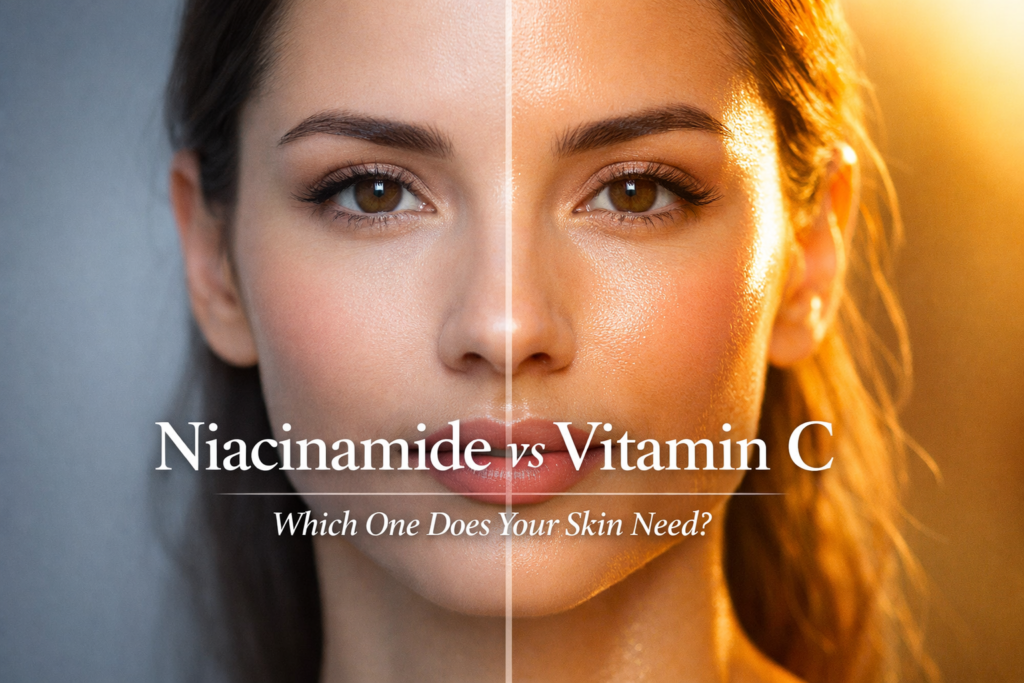
Walk into any skincare store or scroll through your feed, and you’ll see two ingredients everywhere: Niacinamide and Vitamin C.
They’re often treated like must-haves. Almost every brand has them. Every influencer talks about them. And yet—most people are still confused.
👉 Do you need both?
👉 Which one works better?
👉 Or are you just wasting money using the wrong one?
If you’ve ever felt stuck choosing between the two, you’re not alone.
Let’s break it down—not in a complicated, textbook way—but in a way that actually helps you decide what your skin needs.
Before We Compare: Understand This One Thing
Most skincare mistakes happen because people choose products based on trends, not their skin.
Here’s the truth:
👉 Niacinamide and Vitamin C don’t compete—they solve different problems.
So instead of asking “Which is better?”, the real question is:
👉 “What is my skin trying to fix right now?”
Once you know that, the answer becomes simple.
✨ What is Niacinamide (And Why Everyone Loves It)?
Niacinamide is a form of Vitamin B3, but don’t let the “vitamin” label fool you—it’s one of the most versatile and beginner-friendly ingredients in skincare.
What makes it special is that it doesn’t aggressively change your skin. Instead, it improves how your skin functions over time.
Think of it like this:
👉 Niacinamide doesn’t transform your skin overnight—it trains it to behave better.
🔍 What Niacinamide Actually Does
- Controls Oil Production
If your face gets shiny within a few hours, niacinamide helps regulate that without drying your skin. - Minimizes the Look of Pores
It doesn’t shrink pores (nothing really does), but it makes them look tighter and less noticeable. - Reduces Redness & Inflammation
Great for acne, irritation, or sensitive skin conditions. - Strengthens Skin Barrier
This is huge. A strong barrier = less irritation, better hydration, and healthier skin overall. - Fades Acne Marks Slowly
Not as fast as Vitamin C, but much gentler.
What It Feels Like in Real Life
After a few weeks of using Niacinamide, most people notice:
- Their skin feels more balanced
- Breakouts reduce
- Oil is less intense
- Skin becomes easier to manage
👉 It’s not dramatic—but it’s reliable.
What is Vitamin C (And Why It’s So Popular)?
Vitamin C is one of the most talked-about skincare ingredients—and for good reason.
It’s a powerful antioxidant, meaning it protects your skin from environmental damage like pollution and UV exposure.
But what people really love it for is one thing:
👉 The glow.
What Vitamin C Actually Does
- Brightens Skin Tone
It helps your skin look fresher, more awake, and radiant. - Fades Pigmentation & Dark Spots
One of the best ingredients for uneven skin tone. - Boosts Collagen Production
Helps reduce fine lines and improves skin firmness over time. - Protects Against Sun Damage
(But still—always use sunscreen.)
💡 What It Feels Like in Real Life
With consistent use, Vitamin C can:
- Make your skin look brighter within weeks
- Reduce dullness
- Give a more even complexion
- Add a subtle glow that looks natural
👉 It’s more noticeable than Niacinamide—but also more active.
Niacinamide vs Vitamin C: The Real Difference
Let’s simplify everything:
| Category | Niacinamide | Vitamin C |
|---|---|---|
| Main Purpose | Balance & repair | Brighten & protect |
| Best For | Oily, acne-prone skin | Dull, pigmented skin |
| Skin Type | All (especially sensitive) | Normal to dry (can irritate sensitive skin) |
| Speed of Results | Slow & steady | Faster visible results |
| Irritation Risk | Very low | Moderate (if strong) |
How to Choose Based on YOUR Skin
This is the most important part—because your skin is unique.
👉 Choose Niacinamide if:
- Your skin gets oily quickly
- You struggle with acne or breakouts
- Your skin is sensitive or easily irritated
- You want something safe and beginner-friendly
👉 It’s your “fix the basics first” ingredient.
👉 Choose Vitamin C if:
- Your skin looks dull or tired
- You have dark spots or uneven tone
- You want brighter, glowing skin
- You’re starting anti-aging care
👉 It’s your “level up your glow” ingredient.
Can You Use Niacinamide and Vitamin C Together?
Short answer: Yes.
Old skincare advice said you shouldn’t mix them—but modern research and formulations have moved past that.
The key is not whether you use both, but how you use them.
Best Way to Use Both (Without Confusion)
Morning Routine ☀️
- Cleanser
- Vitamin C Serum
- Moisturizer
- Sunscreen
Night Routine 🌙
- Cleanser
- Niacinamide Serum
- Moisturizer
👉 This keeps things simple and effective.
Can You Layer Them Together?
Yes, but keep it minimal:
- Apply Vitamin C first
- Wait a minute
- Then apply Niacinamide
If your skin is sensitive, don’t layer—just separate them into morning and night.
Common Mistakes That Ruin Results
Even the best ingredients won’t work if used incorrectly.
Here’s what to avoid:
❌ Using Too Many Actives
Mixing multiple serums at once can damage your skin barrier.
👉 Stick to 1–2 key ingredients.
❌ Skipping Sunscreen
This is the biggest mistake.
👉 Without sunscreen, Vitamin C won’t protect you properly—and pigmentation can get worse.
❌ Choosing High Concentrations Too Early
- Niacinamide: Start with 5%
- Vitamin C: Start with 10–15%
👉 More isn’t always better.
❌ Expecting Instant Results
Real skincare takes time.
- Niacinamide → 3–6 weeks
- Vitamin C → 4–8 weeks
Consistency matters more than anything.
Beginner-Friendly Routine (Simple & Effective)
If you’re just starting, don’t overcomplicate things.
🌞 Morning:
- Gentle cleanser
- Vitamin C serum
- Lightweight moisturizer
- Sunscreen (SPF 30+)
🌙 Night:
- Cleanser
- Niacinamide serum
- Moisturizer
👉 That’s it. No 10-step routine needed.
🔥 Pro Tips That Make a Real Difference
- Store Vitamin C in a cool, dark place (it oxidizes quickly)
- If it turns dark orange/brown → stop using it
- Niacinamide works well with almost everything
- Always patch test new products
Let’s Make This Personal (Engagement Boost)
Instead of guessing what works, ask yourself:
- Is my skin more oily or dry?
- Am I dealing with acne or dullness?
- Do I want to fix problems or enhance glow?
👉 Your answers decide your routine—not trends.
(Honest & Simple)
There’s no “winner” between Niacinamide and Vitamin C.
They’re not competitors—they’re teammates.
- Niacinamide = balance, control, repair
- Vitamin C = brightness, glow, protection
👉 If your skin feels out of control → start with Niacinamide
👉 If your skin looks dull → go for Vitamin C
👉 If you want the best results → use both smartly
📌 Closing Thought
Good skincare isn’t about following hype.
It’s about understanding your skin and giving it what it actually needs.
Start simple. Stay consistent. And don’t chase trends.
👉 Because the best routine is the one you can stick to.
Frequently Asked Questions
Can I use Niacinamide and Vitamin C together daily
Yes, you can use both daily if your skin tolerates them well. A simple way is to apply Vitamin C in the morning for protection and brightness, and Niacinamide at night to help repair and balance your skin.
Which serum is better for acne Niacinamide or Vitamin C
Niacinamide is usually better for acne-prone skin because it helps control oil production, reduces inflammation, and supports the skin barrier. Vitamin C can help with acne marks, but it is not the first choice for active breakouts.
How long does it take to see results from these serums
Niacinamide typically shows visible improvement in about three to six weeks with consistent use. Vitamin C may start brightening the skin within four to eight weeks, depending on the formulation and your skin type.
Can beginners start with Vitamin C serum
Yes, beginners can start with Vitamin C, but it is safer to begin with a lower concentration to avoid irritation. Many people prefer starting with Niacinamide first because it is gentler and easier for the skin to adjust to.
Is Niacinamide safe for sensitive skin
Niacinamide is considered very gentle and is generally safe for sensitive skin. It can even help reduce redness and strengthen the skin barrier, making your skin less reactive over time.
Do I need sunscreen when using Niacinamide or Vitamin C
Yes, sunscreen is essential. Vitamin C helps protect your skin, but it does not replace sunscreen. Using SPF daily ensures better results and prevents further skin damage.