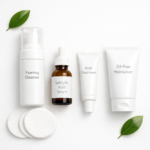

Your skin faces something every morning that most global skincare guides ignore — the Indian climate.
Whether it is the heavy humidity of Mumbai, the dry heat of Delhi, the dust of Jharkhand, or the pollution of Bengaluru, your skin is dealing with challenges that a generic five-step routine simply was not built for. Add to that the unique characteristics of Indian skin — deeper melanin, higher tendency toward pigmentation, and sensitivity to sun damage — and it becomes clear that your morning routine needs to be built specifically for you.
This guide does exactly that. A complete, step-by-step morning skincare routine for Indian skin across all three types — oily, dry, and combination — with the right products, the right order, and the reasons behind every step.
Before You Start — Know Your Skin Type
Building the wrong routine for your skin type is the most common skincare mistake. Here is a simple way to identify yours before buying a single product.
Wash your face with plain water. Pat dry. Wait one hour without applying anything. Then check:
- If your entire face feels oily and shiny — you have oily skin
- If your face feels tight, rough, or uncomfortable — you have dry skin
- If your forehead, nose, and chin feel oily but your cheeks feel normal or slightly dry — you have combination skin
One important note for Indian readers: in high-humidity cities, dry skin often looks oily because of sweat. Do not treat oily symptoms when the actual problem is dehydration. The test above, done indoors with AC off, gives you the most accurate reading.
The Morning Skincare Routine — Step by Step
Step 1 — Cleanse
This is where your routine begins. Overnight, your skin accumulates sweat, sebum, dead skin cells, and whatever is on your pillowcase. A proper cleanse removes all of this and prepares your skin to actually absorb what comes next.
For oily skin: Use a gel-based or foaming cleanser. Look for ingredients like salicylic acid, niacinamide, or tea tree. These control excess oil without stripping your skin’s natural moisture barrier.
For dry skin: Use a creamy or milky cleanser. Avoid foaming cleansers entirely — they are too harsh and will leave dry skin feeling even tighter. Look for glycerin, ceramides, or aloe vera on the ingredient list.
For combination skin: A gentle gel cleanser works best. It addresses the oily T-zone without drying out the cheeks and jaw.
One rule that applies to every skin type: use lukewarm water, never hot. Hot water strips your skin’s natural oils and worsens both oiliness and dryness over time.
Step 2 — Toner (Optional but Useful)
Toner is the most misunderstood step in skincare. Many people skip it, and many others use the wrong kind. Here is what it actually does: it rebalances your skin’s pH after cleansing, removes any last traces of cleanser or impurities, and prepares your skin to absorb serums more effectively.
For oily skin: Look for toners with niacinamide, witch hazel, or green tea. These help control oil production and visibly reduce pore size with consistent use. Always choose alcohol-free — alcohol-based toners cause more oil production in the long run.
For dry skin: Look for toners with glycerin, rose water, or hyaluronic acid. These add a first layer of hydration immediately after cleansing.
For combination skin: A balanced hydrating toner with niacinamide works well across both zones.
Step 3 — Vitamin C Serum
This is the most important active ingredient for Indian skin in the morning, and here is why.
Indian skin is particularly vulnerable to two things: sun-induced pigmentation and pollution damage. Vitamin C directly addresses both. It neutralises the free radicals caused by pollution and UV exposure, it brightens uneven skin tone, and it gradually fades dark spots and hyperpigmentation — one of the most common concerns for Indian women and men.
Apply 2 to 3 drops on slightly damp skin and let it absorb for a full minute before moving to the next step.
One honest note: some Vitamin C serums leave a very faint yellow tint on skin immediately after application. This is completely normal — it is the serum itself oxidising on contact with air. It fades within minutes and is not a reaction.
Recommended Indian brands: Minimalist 10% Vitamin C, Dot and Key Vitamin C Serum, Plum 15% Vitamin C
For very sensitive skin: Start with a lower concentration (5 to 10%) and build up slowly. Apply every alternate day for the first two weeks.
Step 4 — Moisturiser
This is the step most people with oily skin skip, and it is exactly why their skin produces so much oil.
When oily skin does not receive external moisture, it senses dryness and overcompensates by producing more sebum. The result is that skipping moisturiser actually makes oily skin oilier. The solution is not to skip the step — it is to choose the right texture.
For oily skin: Choose a lightweight gel or water-based moisturiser that absorbs instantly and leaves no greasy residue. Look for hyaluronic acid, aloe vera, or ceramides on the label.
For dry skin: Choose a richer cream formula with ceramides, shea butter, or squalane. In Indian winters, especially in North India, you may want to layer a few drops of facial oil on top of your moisturiser to seal everything in.
For combination skin: Apply a gel moisturiser all over, and if your cheeks still feel tight, add a small amount of a richer cream only to those areas.
Step 5 — Eye Cream (Optional)
The skin around your eyes is significantly thinner than the rest of your face, which makes it the first area to show signs of dehydration, fatigue, and ageing. If dark circles or puffiness are concerns for you — and for most Indian women, they are — a lightweight eye cream or caffeine serum used every morning will make a visible difference over time.
Apply with your ring finger using a gentle tapping motion, never rubbing. The ring finger applies the least pressure, which matters because the eye area is delicate.
Step 6 — Sunscreen (Non-Negotiable)
If you do every other step but skip this one, you have wasted your time. Sunscreen is the single most impactful skincare product you will ever use — not just for preventing tan, but for preventing pigmentation, premature ageing, and long-term skin damage.
For Indian skin specifically, this step cannot be optional. The Indian sun is intense almost year-round, and UV rays are the number one trigger for the hyperpigmentation and uneven tone that most Indian women struggle with.
Use SPF 50 or higher. Use broad-spectrum protection (this means protection against both UVA and UVB rays). Apply generously — a common mistake is using too little, which dramatically reduces effectiveness.
For oily skin: Choose a matte or gel-formula sunscreen. Many Indian brands have reformulated their SPF products for exactly this concern. Minimalist Sunscreen SPF 50, Re’equil Matte Sunscreen, and Neutrogena Ultra Sheer are solid options.
For dry skin: Choose a hydrating sunscreen with a dewy or serum finish. Many modern formulas combine SPF with hyaluronic acid or vitamin E.
For combination skin: A lightweight fluid sunscreen that dries to a satin (not matte, not dewy) finish works best.
Reapply every 2 to 3 hours if you are spending time outdoors.
The Complete Morning Routine at a Glance
| Step | Oily Skin | Dry Skin | Combination Skin |
|---|---|---|---|
| Cleanse | Gel or foaming | Creamy or milky | Gentle gel |
| Toner | Niacinamide or witch hazel | Glycerin or rose water | Niacinamide |
| Serum | Vitamin C | Vitamin C | Vitamin C |
| Moisturiser | Lightweight gel | Rich cream | Gel all over, cream on dry areas |
| Sunscreen | Matte, SPF 50+ | Hydrating, SPF 50+ | Fluid satin, SPF 50+ |
The Right Order to Layer Products
This is where many people go wrong. Applying products in the wrong order means the active ingredients cannot penetrate properly and you are wasting both money and time.
Always layer from thinnest to thickest:
Cleanser → Toner → Serum → Moisturiser → Sunscreen
Sunscreen always goes last in the morning. It needs to sit on top of everything else to form an effective protective barrier. Applying moisturiser over sunscreen breaks this barrier and reduces SPF effectiveness.
Ingredients That Should Not Be Mixed in the Morning
Some active ingredients react badly when layered together. Here are the combinations to avoid in your morning routine:
Vitamin C and niacinamide — There is some debate about this combination. Older research suggested they cancelled each other out, but newer studies indicate they can be used together safely. If you are cautious, use niacinamide in your toner and Vitamin C as your serum — this thin layer between them is usually enough.
Vitamin C and benzoyl peroxide — These cancel each other out entirely and can cause skin sensitivity. Use Vitamin C in the morning and benzoyl peroxide (if you use it for acne) only at night.
Retinol — This ingredient has no place in a morning routine. It makes skin more sensitive to UV damage and must always be used at night.
Seasonal Adjustments for Indian Climate
Your skin’s needs change with the season, and in India the seasonal swings are dramatic.
Summer and monsoon: Switch to lighter textures across every step. Use a gel moisturiser, a fluid sunscreen, and consider skipping the toner if your skin feels sufficiently balanced. A clay mask once a week helps manage excess oil buildup during humid months.
Winter (North India especially): Add extra hydration at every step. Use a slightly richer moisturiser, consider adding a hyaluronic acid serum between your Vitamin C and moisturiser, and choose a hydrating sunscreen rather than a matte one.
Year-round rule for all climates: Never skip sunscreen. Even in winter, even on cloudy days, UV rays penetrate through clouds and cause cumulative damage over time.
Common Morning Skincare Mistakes for Indian Skin
Using hot water to wash your face. Hot water strips your natural oils, worsens dryness, and triggers more oil production in oily skin. Always use lukewarm or cool water.
Skipping moisturiser because skin is oily. As explained above, this makes oiliness worse, not better.
Not giving serums time to absorb. Each product needs at least 30 to 60 seconds to absorb before you layer the next one. Rushing through steps means products mix on the surface rather than penetrating into skin.
Using too many active ingredients at once. More products do not mean better skin. Start with the basics — cleanser, one serum, moisturiser, sunscreen — and only add more once your skin has adjusted.
Applying too little sunscreen. The standard recommendation is half a teaspoon for the face alone. Most people apply a fraction of this, which means their actual SPF protection is far lower than what is printed on the bottle.
Best Affordable Indian Skincare Products for This Routine
| Step | Budget Pick | Mid-Range Pick |
|---|---|---|
| Cleanser (oily) | Himalaya Purifying Neem Face Wash | Minimalist Salicylic Acid Face Wash |
| Cleanser (dry) | Cetaphil Gentle Skin Cleanser | Simple Kind to Skin Moisturising Cleanser |
| Toner | Dot and Key Pore Clarifying Toner | Minimalist Niacinamide 5% Toner |
| Vitamin C Serum | Mamaearth Skin Illuminate Vitamin C Serum | Minimalist 10% Vitamin C + E + Ferulic Acid |
| Moisturiser (oily) | Plum Green Tea Mattifying Moisturiser | Neutrogena Hydro Boost Water Gel |
| Moisturiser (dry) | Vaseline Intensive Care Body Lotion | CeraVe Moisturising Cream |
| Sunscreen | Re’equil Oxybenzone Free Sunscreen | Minimalist SPF 50 Sunscreen |
Frequently Asked Questions
How long should a morning skincare routine take?
A proper morning routine should take between 5 and 10 minutes. The most important factor is not time but consistency — a simple 5-minute routine done every day will give better results than an elaborate routine done twice a week.
Do I need a toner?
Toner is helpful but not essential. If your cleanser is gentle and your skin feels balanced after washing, you can skip the toner. If your skin feels tight or dull after cleansing, adding a toner will help.
Can I use the same routine in summer and winter?
The same steps work year-round, but the product textures should change. Switch to lighter gels and fluids in summer, and richer creams and serums in winter.
Is Vitamin C safe for sensitive Indian skin?
Yes, but start with a lower concentration (5%) and use it every alternate day for the first month. Build up gradually to daily use and higher concentrations.
Do men need a different morning skincare routine?
The steps are the same for men and women. Men who shave in the morning should apply toner and serum after shaving and before moisturiser. Choose a lighter moisturiser if shaving balm is already being used.
What is the minimum routine if I am short on time?
Three steps that you must never skip: cleanser, moisturiser, and sunscreen. These three alone will protect and maintain your skin. Everything else adds value but is not essential.
Your morning skincare routine is not about using the most products — it is about using the right ones in the right order for your specific skin type and climate. Indian skin has unique needs, and a routine built around those needs will always outperform a generic one copied from a global beauty blog.
Start with the basics. Be consistent. Give your skin at least six weeks before judging results. Skincare is a slow process, but the right morning routine, done daily, will change how your skin looks and feels across every season.