What Is the Skin Microbiome?
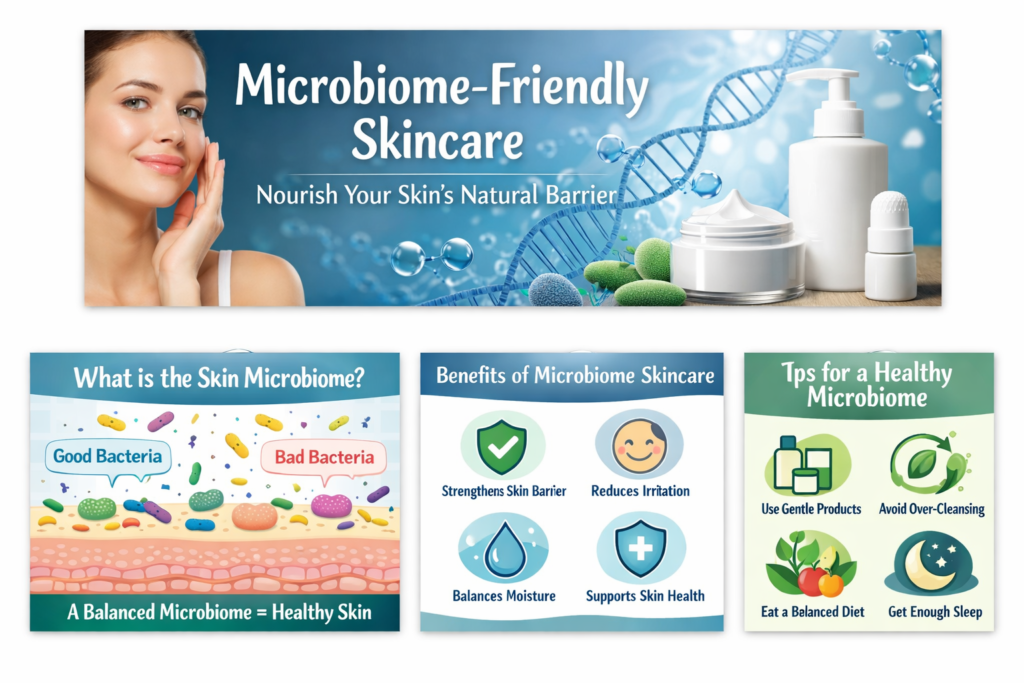
The skin microbiome is a living ecosystem of billions of microorganisms—mainly bacteria, fungi, and viruses—that naturally exist on the surface of healthy skin. Rather than being harmful, most of these microbes play a protective role. They help defend against pathogens, support the skin barrier, regulate inflammation, and contribute to overall skin balance.
When the microbiome is disrupted—by harsh cleansers, over‑exfoliation, pollution, stress, or antibiotics—skin can become dry, sensitive, acne‑prone, or inflamed. Microbiome‑friendly skincare is designed to protect and support this ecosystem instead of stripping it away.
What Does “Microbiome‑Friendly” Mean in Skincare?
Microbiome‑friendly skincare refers to products and routines that:
- Respect the skin’s natural pH (typically around 4.5–5.5)
- Avoid harsh surfactants and unnecessary antibacterial ingredients
- Support beneficial microbes rather than eliminating all bacteria
- Strengthen the skin barrier
These products aim for balance—not sterility.
Key Benefits of Microbiome‑Friendly Skincare
1. Stronger Skin Barrier
A healthy microbiome works closely with the skin barrier to reduce water loss and protect against environmental stressors.
2. Reduced Sensitivity and Inflammation
Balanced skin flora can help calm redness, irritation, eczema‑like symptoms, and reactive skin.
3. Clearer, Healthier‑Looking Skin
Supporting good bacteria can help regulate acne‑causing microbes and reduce breakouts without over‑drying.
4. Better Long‑Term Skin Health
Instead of short‑term fixes, microbiome‑friendly skincare focuses on resilience and long‑term balance.
Common Microbiome‑Supporting Ingredients
Prebiotics
Prebiotics are ingredients that feed beneficial skin bacteria.
Examples:
- Inulin
- Alpha‑glucan oligosaccharide
- Oat extract
- Beta‑glucan
Probiotics (and Probiotic‑Derived Ingredients)
Most skincare uses non‑live probiotic components (often called postbiotics or lysates) that help support skin balance.
Examples:
- Lactobacillus ferment
- Bifida ferment lysate
- Lactococcus ferment
Barrier‑Supporting Ingredients
A strong barrier helps the microbiome thrive.
Examples:
- Ceramides
- Squalane
- Niacinamide (in appropriate concentrations)
- Fatty acids
Ingredients That Can Disrupt the Microbiome
While not always harmful, frequent or unnecessary use of the following may disturb microbial balance:
- Sulfates (e.g., SLS, SLES)
- High‑alcohol formulations
- Strong antibacterial agents (e.g., triclosan)
- Overuse of exfoliating acids or scrubs
- Excessive fragrance
Balance and moderation are key.
How to Build a Microbiome‑Friendly Skincare Routine
Step 1: Gentle Cleansing
Use low‑foam, pH‑balanced cleansers that clean without stripping natural oils and microbes.
Step 2: Minimal, Purposeful Treatments
Avoid layering too many actives. Choose targeted products that support barrier repair and hydration.
Step 3: Hydration and Barrier Repair
Moisturizers with ceramides, humectants, and microbiome‑supporting ingredients help maintain balance.
Step 4: Sun Protection
UV exposure can disrupt the microbiome. Daily sunscreen supports overall skin health.
Who Should Use Microbiome‑Friendly Skincare?
Microbiome‑friendly products are suitable for:
- Sensitive or reactive skin
- Acne‑prone skin
- Dry or compromised skin barriers
- Post‑procedure skin
- Anyone seeking gentle, long‑term skin health
They are not limited to one skin type—balanced skin benefits everyone.
Microbiome‑Friendly Skincare Myths
Myth: Bacteria on skin are bad. Truth: Most skin bacteria are beneficial and necessary.
Myth: You need antibacterial products for clear skin. Truth: Over‑sanitizing skin often worsens imbalance.
Myth: Probiotic skincare contains live bacteria. Truth: Most products use safe, stable probiotic‑derived ingredients.
Final Thoughts
Microbiome‑friendly skincare represents a shift from aggressive treatments to skin‑respecting care. By supporting the skin’s natural ecosystem, these products help create stronger, calmer, and more resilient skin over time.
Healthy skin is not about eliminating bacteria—it’s about balance.
Frequently Asked Questions
How does microbiome skincare support skin health?
Microbiome skincare helps maintain a balanced skin environment by supporting beneficial microorganisms and strengthening the skin barrier, improving overall comfort and resilience.
Is microbiome-friendly skincare suitable for daily use?
Yes. These products are designed for everyday use because they focus on gentle care, hydration, and barrier support rather than aggressive treatments.
Can microbiome skincare be used with other skincare products?
Microbiome skincare can be combined with other products, but limiting harsh actives and over-exfoliation helps maintain better skin balance.
Does microbiome skincare work for oily and dry skin?
Yes. A balanced skin microbiome benefits all skin types by helping regulate oil levels, hydration, and overall skin comfort.
What makes microbiome skincare different from traditional skincare?
Unlike traditional skincare that may focus on eliminating bacteria, microbiome skincare prioritizes balance and supports the skin’s natural ecosystem.