
Silk clothing represents one of the most luxurious investments a wardrobe can hold. Whether it is a flowing silk blouse, an elegant silk saree, a delicate silk scarf, or a pair of silk pajamas, these garments carry a timeless quality that synthetic fabrics simply cannot replicate. But alongside their beauty comes a reputation for being notoriously difficult to care for — a reputation that sends many silk owners straight to the dry cleaner for every single wash, spending hundreds of dollars annually on professional cleaning that is often entirely unnecessary.
The truth is that washing and caring for silk clothes at home is entirely achievable — and when done correctly, home care can preserve silk’s beauty just as effectively as professional dry cleaning. The key lies in understanding what silk is, how it responds to water, heat, and detergent, and which specific techniques protect rather than damage its delicate fiber structure.
This complete guide walks you through everything you need to know about washing, drying, storing, and maintaining silk clothes at home — saving you money, preserving your garments, and giving you genuine confidence every time you care for your silk pieces.
Understanding Silk Before You Wash It
Silk is a natural protein fiber produced by silkworms. Its primary structural protein — fibroin — gives silk its characteristic strength, smoothness, and lustrous appearance. However, this protein structure also makes silk sensitive to several common laundry conditions that synthetic fabrics handle effortlessly.
What damages silk:
High temperatures break down silk’s protein bonds — causing shrinkage, texture changes, and permanent loss of sheen. Alkaline detergents disrupt silk’s naturally slightly acidic pH — causing fiber swelling, dullness, and structural weakening. Chlorine bleach destroys silk completely — dissolving its protein structure irreversibly. Mechanical agitation from washing machine drum action creates friction that damages the cuticle surface of silk fibers — causing pilling, snags, and loss of smoothness. Direct sunlight exposure causes UV degradation — fading colors and weakening fibers over time.
Always check the care label first:
Before washing any silk garment, read the care label carefully. Labels marked dry clean only should be respected — particularly for heavily structured silk garments, those with complex embellishments, or those with interfacing that may not survive water exposure. However, many silk garments labeled dry clean only can safely be hand washed at home when appropriate technique is used — the dry clean recommendation is frequently a conservative manufacturer precaution rather than an absolute requirement.
What You Need Before You Start
Assembling the right supplies before washing makes the process smooth and protects your silk throughout.
Essential supplies:
A clean sink or basin — large enough to submerge the garment fully without cramming. A pH-neutral or silk-specific liquid detergent — products formulated for delicate fabrics with a neutral pH between 6 and 7. Options include Woolite Delicates, The Laundress Delicate Wash, or baby shampoo as an accessible alternative. Clean white towels — for blotting and rolling the garment after washing. A drying rack or clean flat surface for air drying. A clothes steamer or iron with a silk setting for finishing.
What to avoid:
Regular laundry detergent — typically alkaline and far too harsh for silk fibers. Fabric softener — coats silk fibers with a waxy residue that dulls their natural sheen over time. Bleach of any kind — destroys silk protein structure completely. Hot water — causes immediate shrinkage and fiber damage.
Step-by-Step Guide to Hand Washing Silk at Home
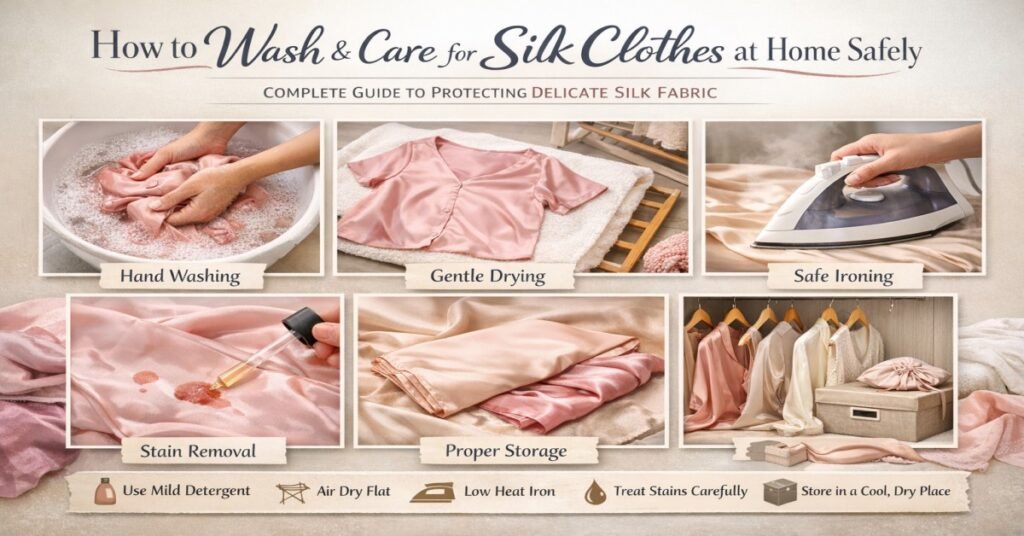
Hand washing is the safest and most recommended method for cleaning silk clothes at home. It gives you complete control over water temperature, agitation level, and detergent concentration — the three variables that most directly determine whether your silk emerges beautifully clean or damaged.
Step 1: Test for Color Fastness
Before submerging your entire silk garment in water, test whether the dye is colorfast — particularly important for brightly colored, dark, or printed silk pieces. Dampen a small inconspicuous area of the fabric — the inside of a seam or a hidden corner — with cool water and press a white cloth against it for thirty seconds. If color transfers to the white cloth, the dye is not colorfast and the garment requires professional dry cleaning rather than home washing.
Step 2: Prepare the Wash Basin
Fill a clean sink or basin with cool to lukewarm water — the ideal temperature is between 20 and 30 degrees Celsius. Never use hot water on silk under any circumstances. Add a small amount of your chosen delicate detergent — approximately one teaspoon per basin of water. Swirl the water gently to distribute the detergent evenly before adding your garment.
Step 3: Submerge and Gently Agitate
Place the silk garment into the prepared water. Gently submerge it fully and use your hands to move the fabric softly through the water — a gentle swishing motion rather than rubbing, wringing, or scrubbing. Focus on any soiled areas by gently pressing the fabric against itself — never rubbing, which creates friction that damages silk fibers and can permanently mark the fabric surface.
Allow the garment to soak for a maximum of three to five minutes. Extended soaking weakens silk fiber bonds and can cause color bleed in less colorfast garments. Never leave silk soaking unattended or overnight.
Step 4: Rinse Thoroughly
Lift the garment from the wash water and empty the basin. Refill with fresh cool water and gently move the garment through it to rinse out the detergent. Repeat this rinsing process two to three times until the water runs completely clear and no detergent residue remains.
Incomplete rinsing leaves detergent residue on the silk fibers — causing stiffness, dullness, and accelerated fiber degradation over time. Thorough rinsing is as important as the washing itself.
The vinegar rinse technique:
For an optional final rinse that helps restore silk’s natural pH and enhances its natural sheen, add one tablespoon of white vinegar to the final rinse water. The mild acidity of the vinegar lowers the water pH toward silk’s optimal range — helping cuticle scales lie flat and producing a noticeably smoother, shinier result. The vinegar smell dissipates completely as the garment dries.
Step 5: Remove Excess Water Correctly
Never wring or twist silk to remove water — this mechanical action distorts the fabric structure, creates permanent creases, and can stretch the garment out of shape irreversibly. Instead, lift the garment carefully from the rinse water — supporting its full weight to prevent stretching — and gently press it against the side of the basin to encourage excess water to drain naturally.
Lay the garment flat on a clean dry white towel. Fold the towel over the garment and gently roll the towel and garment together into a cylinder — the towel absorbs a significant proportion of the remaining water through gentle pressure without any mechanical distortion of the silk fibers. Unroll after one minute and remove the garment.
Can You Machine Wash Silk?
Machine washing silk is possible for certain garments — but only under very specific conditions and never as a first-choice approach for valuable or delicate pieces.
If you choose to machine wash a silk garment, use only a machine with a dedicated delicate or hand wash cycle that uses very low agitation and cool water. Place the silk garment inside a mesh laundry bag — this reduces direct drum contact and significantly lowers friction damage risk. Use a silk-specific or pH-neutral delicate detergent at the minimum recommended quantity. Select the shortest available cycle duration.
Never machine wash heavily embellished silk, structured silk garments, silk with special finishes, or any silk piece of significant monetary or sentimental value. The risk-to-benefit ratio does not favor machine washing for these items — hand washing or professional care is always the superior choice.

How to Dry Silk Clothes Correctly
Drying is where many well-intentioned home silk care attempts go wrong. The wrong drying method can undo everything achieved through careful washing.
Air drying is the only appropriate method for silk:
Never tumble dry silk under any circumstances. The combination of heat, mechanical agitation, and extended friction inside a tumble dryer causes irreversible damage — shrinkage, loss of sheen, texture distortion, and fiber degradation.
After removing excess water with the towel rolling technique, lay the silk garment flat on a clean dry towel or a mesh drying rack — never hang silk while it is wet. Wet silk is extremely heavy relative to its fiber strength, and hanging causes the garment to stretch permanently out of shape as gravity pulls the water-heavy fabric downward.
Dry in a well-ventilated indoor area away from direct sunlight — UV exposure fades silk dyes and weakens the protein fibers. A shaded outdoor area with good air circulation is acceptable on mild days, but direct sun exposure must be avoided.
Reshape the garment gently while still damp — smoothing seams, sleeves, and hems back into their correct positions. This ensures the garment dries in its proper shape without requiring excessive ironing later.
How to Iron and Steam Silk
Silk wrinkles relatively easily — but ironing and steaming silk requires specific technique to avoid the shine marks, scorch marks, and water spotting that incorrect ironing creates.
Ironing silk:
Iron silk while it is still slightly damp — not fully dry. Use the lowest heat setting on your iron — typically labeled silk or delicate. Always iron on the reverse side of the fabric — never apply the iron directly to the right side of silk, which causes shine marks that are difficult or impossible to remove. Place a clean white pressing cloth between the iron and the silk for additional protection.
Move the iron continuously — never allow it to rest stationary on silk even for a few seconds. Use smooth, gliding strokes following the direction of the fabric weave.
Steaming silk:
A handheld clothes steamer is actually the preferred finishing tool for silk — superior to ironing in many situations because it removes wrinkles through gentle steam exposure without direct contact with the fabric surface. Hold the steamer a few centimeters from the silk surface and allow the steam to relax the fibers — then gently smooth with your hand.
Never hold the steamer stationary in one place or allow concentrated steam to saturate a single spot — this can create water marks on certain silk weaves.
How to Remove Common Stains from Silk
Stain treatment on silk requires immediate action and a gentle touch. The longer a stain sets, the more difficult it becomes to remove without damaging the fabric.
General stain approach:
Blot the stain immediately with a clean white cloth — absorbing as much of the staining substance as possible without spreading it. Never rub a fresh stain — rubbing drives it deeper into the fiber and spreads it across a larger area.
For water-based stains (juice, wine, coffee): Blot immediately then treat with cool water and a tiny amount of delicate detergent using gentle pressing motions. Rinse with cool water and allow to air dry.
For oil-based stains (food oils, makeup, body lotion): Apply a very small amount of talcum powder or cornstarch to the stain — allow it to sit for fifteen to twenty minutes to absorb the oil — then brush away gently before treating with a minimal amount of delicate detergent diluted in cool water.
For perspiration stains: Treat promptly with a solution of one part white vinegar to three parts cool water — apply gently, allow to sit for five minutes, then rinse thoroughly with cool water.
When in doubt about stain treatment on valuable silk pieces, consult a professional cleaner rather than risking further damage through home treatment attempts.
Storing Silk Clothes Properly
Correct storage is as important as correct washing for maintaining silk’s beauty and longevity over time.
Store silk in breathable cotton or muslin garment bags — never in plastic bags or airtight containers. Plastic traps moisture that encourages mildew growth and prevents air circulation that silk needs to maintain its natural properties.
Fold silk garments along their natural seam lines and place acid-free tissue paper between fold layers to prevent permanent crease marks from forming during storage. For hanging storage, use padded hangers that support the garment’s full shoulder width — wire hangers create pressure points that permanently distort silk shoulders and necklines.
Store silk away from direct light, heat sources, and moisture. A cool, dark wardrobe or drawer is ideal. Cedar blocks placed nearby deter moths naturally without the chemical residue of mothballs — which can damage silk fibers and leave lingering odors.
Frequently Asked Questions (FAQs)
FAQ 1: Can I use regular shampoo to wash silk at home? A gentle baby shampoo with a neutral pH can be used as an emergency alternative to dedicated silk detergent. Avoid regular hair shampoos which often contain sulfates and conditioning agents that can coat and dull silk fibers.
FAQ 2: Why did my silk garment shrink after washing? Silk shrinkage occurs when water temperature is too high or when the garment is exposed to heat during drying. Always use cool to lukewarm water for washing and air dry flat — never tumble dry or hang wet silk.
FAQ 3: How often should silk clothes be washed? Silk does not need washing after every single wear. Airing silk garments between wears — hanging in a well-ventilated space for several hours — refreshes them effectively. Wash only when visibly soiled or after extended wear against skin.
FAQ 4: Can I use fabric softener on silk? No. Fabric softener should never be used on silk. It coats the natural protein fibers with a waxy residue that dulls silk’s characteristic sheen and degrades the fiber structure with repeated use. The white vinegar rinse technique is a safe, natural alternative that enhances softness without residue.
FAQ 5: How do I remove the musty smell from stored silk? Air the garment outdoors in a shaded, well-ventilated area for several hours. If the smell persists, lightly mist with a solution of equal parts water and white vinegar and allow to air dry completely in shade. Store subsequently with cedar blocks to prevent recurrence.
FAQ 6: Is dry cleaning always better than home washing for silk? Not necessarily. Many silk garments wash beautifully at home when correct technique is used. Dry cleaning is recommended for heavily structured silk pieces, garments with complex embellishments, and items labeled dry clean only. For simple silk blouses, scarves, and lightweight garments, careful home hand washing is often equally effective and significantly less expensive over time.