Soap is a daily-use product, yet most people underestimate how strongly its quality affects skin health, moisture balance, and long-term comfort. One of the most reliable indicators of soap quality is TFM (Total Fatty Matter).
Understanding the difference between high TFM soaps and low TFM soaps can help you avoid dryness, irritation, and poor cleansing performance — while choosing a soap that truly benefits your skin.
This detailed guide explains what TFM means, how it impacts soap performance, and which type of soap is best for you.
🧼 Understanding TFM (Total Fatty Matter) in Detail
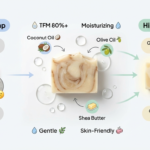
Total Fatty Matter (TFM) represents the actual cleansing and nourishing portion of a soap. It includes fatty acids derived from oils and fats that react with alkali during soap making.
In simple words:
- High TFM → More skin-loving fatty acids
- Low TFM → More fillers, less nourishment
TFM does not include:
- Water
- Fillers like talc or starch
- Synthetic hardeners
📌 The higher the TFM, the closer the soap is to being pure, effective, and skin-friendly.
🧪 Why TFM Directly Affects Skin Health
Human skin has a natural lipid barrier that protects it from moisture loss and external irritants. High TFM soaps support this barrier, while low TFM soaps often weaken it.
| 🧴 Soap Type | Impact on Skin Barrier |
|---|---|
| High TFM Soap | Protects and nourishes |
| Low TFM Soap | Can strip natural oils |
Over time, repeated use of low TFM soaps may lead to:
- Chronic dryness
- Sensitivity
- Rough or flaky skin
📊 TFM Grades in Soaps (Industry Standard)
| 🏷️ TFM Level | 🧼 Soap Grade | 🧠 Quality Meaning |
|---|---|---|
| 60% – 75% | Grade 1 | Premium bathing soap |
| 50% – 59% | Grade 2 | Average personal soap |
| 40% – 49% | Grade 3 | Low-quality bathing soap |
| Below 40% | Non-toilet soap | Not recommended for skin |
👉 Dermatologists and skincare experts generally recommend Grade 1 soaps for regular bathing.
⚖️ High TFM vs Low TFM Soaps: Deep Comparison
🧴 1. Effect on Skin Moisture
- High TFM soaps contain more fatty acids that help lock in moisture, leaving skin soft after bathing.
- Low TFM soaps remove oils aggressively, often causing a tight, stretched feeling after use.
✔ Winner: High TFM Soap
🫧 2. Lather Quality & Experience
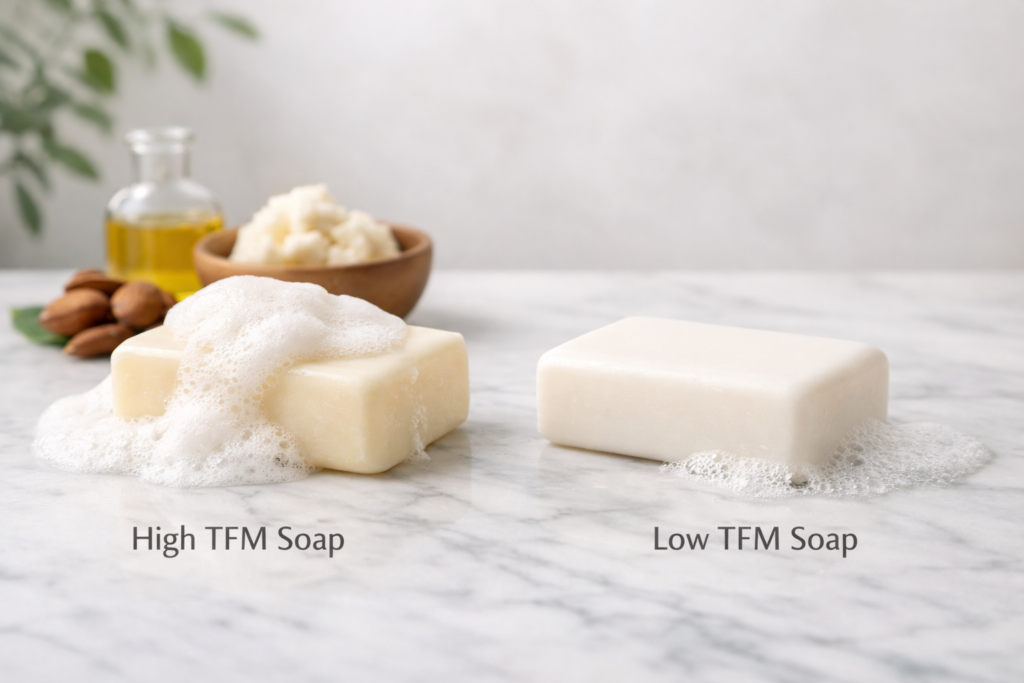
Contrary to popular belief, more foam does not mean better soap.
| Feature | High TFM | Low TFM |
|---|---|---|
| Foam Texture | Creamy & dense | Thin & airy |
| Foam Stability | Long-lasting | Disappears quickly |
| Feel on Skin | Smooth glide | Rough friction |
✔ Winner: High TFM Soap
🧼 3. Cleansing Efficiency
- High TFM soaps clean gently while maintaining skin balance.
- Low TFM soaps may over-clean, removing both dirt and essential skin oils.
✔ Winner: High TFM Soap
⏳ 4. Soap Durability & Usage Life
High TFM soaps:
- Melt slowly
- Retain shape longer
- Offer better value over time
Low TFM soaps:
- Dissolve quickly
- Crack or soften easily
- Need frequent replacement
✔ Winner: High TFM Soap
🌿 5. Ingredient Quality
| Aspect | High TFM | Low TFM |
|---|---|---|
| Oil Content | Higher | Lower |
| Fillers | Minimal | High |
| Skin Nutrition | Rich | Poor |
✔ Winner: High TFM Soap
🌿 Advantages of High TFM Soaps (Expanded)
High TFM soaps are preferred because they:
- Maintain skin softness even after frequent use
- Support the skin’s natural pH balance
- Reduce irritation for sensitive or aging skin
- Are suitable for all seasons
- Provide a luxury bathing experience
They are often found in:
- Ayurvedic soaps
- Herbal formulations
- Baby care products
- Premium bathing bars
⚠️ Disadvantages of Low TFM Soaps (In Detail)
Low TFM soaps may seem economical but can cause:
- Persistent dryness
- Uneven skin texture
- Reduced comfort after bathing
- Increased need for moisturizers
- Faster soap consumption
💡 These soaps are often better suited for cleaning purposes rather than skin care.
👩⚕️ Soap Selection Based on Skin Type
| 🧴 Skin Type | Best TFM Range | Reason |
|---|---|---|
| Dry Skin | 65% – 75% | Prevents moisture loss |
| Sensitive Skin | 60%+ | Minimizes irritation |
| Normal Skin | 55% – 65% | Balanced care |
| Oily Skin | 50% – 60% | Effective yet mild |
| Children / Elderly | 65%+ | Extra gentle care |
💰 Why High TFM Soaps Are More Expensive
High TFM soaps cost more because they:
- Use higher oil content
- Require longer manufacturing time
- Avoid cheap fillers
- Deliver better long-term skin benefits
📌 In reality, they often turn out more economical over time due to slower usage and fewer skin problems.
🛒 How to Identify High TFM Soap While Shopping
✔ Look for TFM percentage mentioned on the pack
✔ Prefer Grade 1 or premium soap labeling
✔ Check ingredient list for natural oils
✔ Avoid soaps with excessive chalky residue
🧠 Final Conclusion: Which Soap Is Better?
If your goal is healthy skin, comfort, and long-lasting performance, High TFM soaps are the superior choice. Low TFM soaps may appear affordable, but they compromise skin health and durability.
✨ For daily bathing, investing in a high TFM soap is a smart, skin-friendly decision.
Frequently Asked Questions on High TFM vs Low TFM Soaps
What does TFM mean in soap?
TFM stands for Total Fatty Matter. It represents the percentage of fatty acids present in a soap, which are responsible for cleansing, moisturizing, and protecting the skin.
Which is better: high TFM soap or low TFM soap?
High TFM soaps are considered better because they contain more nourishing fatty acids, offer gentler cleansing, produce richer lather, and help maintain the skin’s natural moisture.
Is high TFM soap suitable for daily bathing?
Yes, high TFM soaps are ideal for daily use as they clean the skin without stripping away natural oils, making them suitable for long-term skin health.
Can low TFM soaps cause skin dryness?
Frequent use of low TFM soaps may lead to dryness, tightness, or irritation because they contain fewer fatty acids and more fillers that can disturb the skin’s moisture balance.
What TFM percentage is best for bathing soaps?
A TFM level of 60% or higher is considered ideal for bathing soaps, especially for people with dry, sensitive, or normal skin.
Do high TFM soaps last longer than low TFM soaps?
Yes, high TFM soaps are denser and dissolve more slowly in water, which means they generally last longer compared to low TFM soaps.