Silk is one of the most cherished fabrics in the world, admired for its natural sheen, softness, and timeless appeal. In India especially, silk holds cultural, economic, and emotional value. However, many buyers remain confused between handloom silk and powerloom silk, often assuming that all silk fabrics are the same.
In reality, the difference between handloom and powerloom silk goes far beyond price. It involves weaving techniques, craftsmanship, durability, environmental impact, authenticity, and cultural heritage. This in-depth guide explains everything you need to know so you can make a confident and informed choice.
Understanding Silk Fabric Before Comparing Looms
Silk is a natural protein fiber obtained from silkworm cocoons. While the raw silk may be similar, the method of weaving determines the final quality, appearance, and value of the fabric.
The two most common weaving methods are:
- Handloom weaving
- Powerloom weaving
Each method creates a distinctly different type of silk fabric.
What Is Handloom Silk?
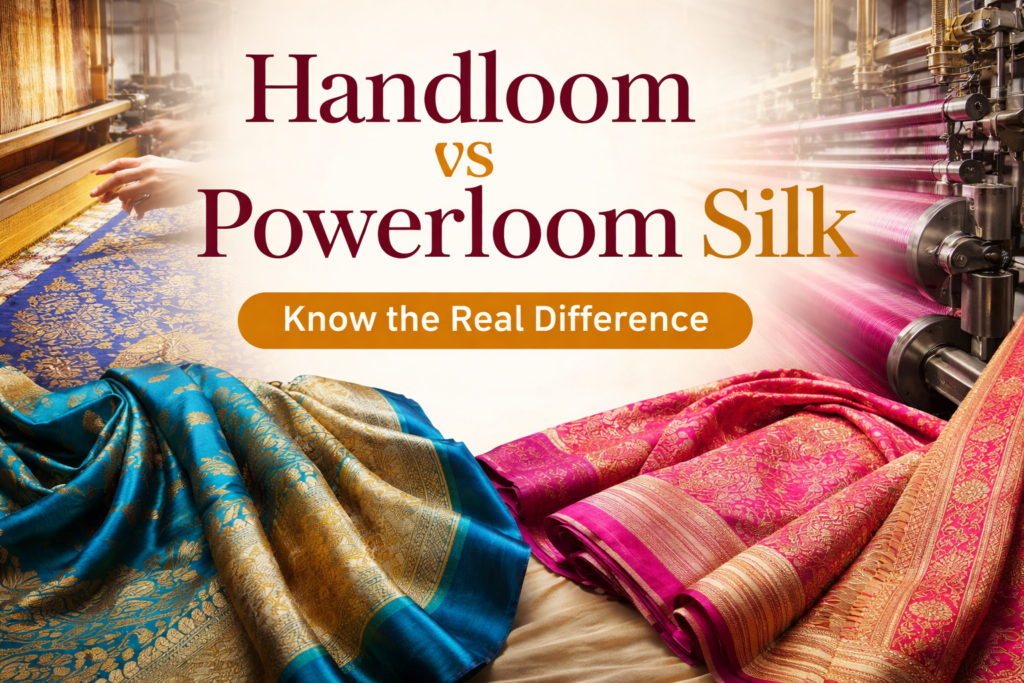
Handloom silk is woven on manually operated looms without the use of electricity. Every step of the weaving process—from setting the warp threads to inserting the weft—is controlled by skilled artisans.
This traditional method has been passed down through generations and remains central to India’s textile identity.
How Handloom Silk Is Made
- Raw silk threads are dyed naturally or chemically
- Threads are carefully set on a hand-operated loom
- The weaver interlaces threads slowly and precisely
- Complex motifs are created using manual pattern control
This process can take weeks or even months for a single saree.
Famous Handloom Silk Varieties
- Banarasi Silk
- Kanchipuram Silk
- Chanderi Silk
- Tussar Silk
- Bhagalpuri Silk
- Patola Silk
Each region has its own weaving style, motifs, and identity.
What Is Powerloom Silk?
Powerloom silk is woven using mechanized looms powered by electricity. These machines can produce fabric continuously with minimal human intervention.
Powerloom silk became popular due to rising demand and the need for faster, cost-effective production.
How Powerloom Silk Is Made
- Silk or silk-blend threads are loaded into the machine
- Pre-programmed designs control weaving
- Fabric is produced rapidly in bulk
- Chemical finishing is often applied for uniform shine
Powerloom silk is widely used in commercial textile manufacturing.
Handloom vs Powerloom Silk: In-Depth Comparison
1. Weaving Technique
Handloom silk relies entirely on human skill, while powerloom silk depends on machines. This fundamental difference affects every other aspect of the fabric.
2. Fabric Texture and Feel
Handloom silk has a natural softness and breathable texture. It drapes beautifully and adapts to body movement.
Powerloom silk often feels stiffer and more structured, especially when synthetic blends are used.
3. Design Precision vs Character
Handloom silk designs may show slight irregularities, which are signs of authenticity.
Powerloom silk designs are perfectly symmetrical and identical, lacking individuality.
4. Thread Strength and Longevity
Handloom weaving applies gentle tension on silk threads, preserving their strength.
Powerloom machines use high-speed tension, which can weaken fibers over time.
5. Production Speed
Handloom silk production is slow and limited.
Powerloom silk production is fast and large-scale.
Price Difference: Why Handloom Silk Costs More
Handloom silk is priced higher because:
- Skilled artisan labor is involved
- Production takes longer
- Designs are exclusive
- Quality is superior
Powerloom silk is cheaper due to:
- Machine-based mass production
- Lower labor costs
- Faster turnaround
Higher price in handloom silk reflects value, not just cost.
How to Identify Handloom Silk vs Powerloom Silk
Visual Inspection
- Handloom silk shows slight unevenness
- Powerloom silk looks perfectly uniform
Reverse Side Check
- Handloom sarees often show loose threads or unfinished ends
- Powerloom sarees appear identical on both sides
Touch Test
- Handloom silk feels warmer and softer
- Powerloom silk feels cooler and stiffer
Certification Marks
- Handloom Mark of India
- GI (Geographical Indication) Tag
Environmental Impact: Handloom vs Powerloom Silk
Handloom Silk
- Minimal electricity usage
- Lower carbon footprint
- Sustainable and eco-friendly
- Supports slow fashion
Powerloom Silk
- High energy consumption
- Greater environmental impact
- Chemical processing is common
From a sustainability perspective, handloom silk is the clear winner.
Social and Economic Impact
Handloom silk supports:
- Rural employment
- Traditional artisans
- Women weavers
- Cultural preservation
Powerloom silk reduces dependence on manual labor but often replaces traditional livelihoods.
Choosing handloom silk directly contributes to artisan welfare and heritage survival.
Use Cases: When to Choose Which Silk
Best Occasions for Handloom Silk
- Weddings and festivals
- Formal ceremonies
- Heirloom collections
- Luxury gifting
Best Occasions for Powerloom Silk
- Daily wear
- Office functions
- Budget-friendly events
- Fashion experimentation
Common Myths About Handloom and Powerloom Silk
Myth: All expensive silk is handloom
Truth: Price alone doesn’t guarantee authenticity
Myth: Powerloom silk is fake
Truth: It is real silk but machine woven
Myth: Handloom silk is outdated
Truth: It is timeless and increasingly valued in sustainable fashion
Final Conclusion: Handloom vs Powerloom Silk
The real difference between handloom and powerloom silk lies in tradition versus technology. Handloom silk carries history, craftsmanship, and individuality. Powerloom silk offers affordability, consistency, and accessibility.
Understanding this difference ensures you invest wisely and choose silk that aligns with your values, needs, and budget.
Frequently Asked Questions
What is the main difference between handloom silk and powerloom silk?
The primary difference lies in the weaving method. Handloom silk is woven manually by artisans without electricity, while powerloom silk is produced using machine-operated looms for faster and bulk production.
Is handloom silk better than powerloom silk?
Handloom silk is valued for its craftsmanship, durability, and unique texture. Powerloom silk, however, is more affordable and suitable for regular or budget-friendly use.
How can I identify genuine handloom silk?
Genuine handloom silk often shows slight weaving irregularities, feels softer to touch, and may carry a Handloom Mark or GI tag indicating authenticity.
Why is handloom silk more expensive?
Handloom silk is costlier because it requires skilled labor, longer weaving time, limited production, and intricate designs created entirely by hand.
Does powerloom silk use real silk threads?
Yes, powerloom silk can be made using pure silk, silk blends, or synthetic fibers. The key difference is the weaving process, not always the raw material.
Which silk is better for weddings and special occasions?
Handloom silk is preferred for weddings and festivals due to its rich texture, elegant drape, and traditional appeal that enhances ceremonial wear.
Is handloom silk more durable than powerloom silk?
In many cases, yes. Handloom silk lasts longer because the threads are woven gently, whereas powerloom silk may weaken over time due to high-speed machine tension.
Is powerloom silk suitable for daily wear?
Powerloom silk is ideal for daily or occasional wear as it is affordable, easy to maintain, and available in a wide variety of designs and colors.
Does buying handloom silk support artisans?
Yes, purchasing handloom silk directly supports traditional weavers, promotes rural employment, and helps preserve India’s textile heritage.
Can handloom and powerloom silk look similar?
They can appear similar at first glance, especially online. However, differences in texture, drape, and weaving quality become noticeable upon closer inspection.