

Every dermatologist in India tells every patient the same thing, regardless of what they walk in for. Wear sunscreen. Every single day. No excuses.
And yet, most people either skip it entirely or grab whatever is cheapest at the chemist without reading a single ingredient. Given that India’s UV index stays dangerously high for 8 to 10 months a year, that is a choice your skin ends up paying for over time — through tanning, dark spots, pigmentation, melasma, and premature aging that no brightening serum can fully undo.
If you have been wondering what dermatologists actually recommend in 2026 — not what brands sponsor, not what influencers are paid to post, but what skin specialists actually tell their patients to use — this guide is for you.
We have broken it down by skin type, skin concern, and budget so you can find exactly what works for you.
Why Indian Skin Needs a Different Kind of Sunscreen
Most sunscreens sold globally are designed for lighter skin tones in cooler, less humid climates. Indian skin is different in a few important ways.
Indian skin typically falls in the Fitzpatrick Type IV to VI range, which means higher natural melanin levels. Melanin does provide some built-in protection against sunburn — roughly equivalent to an SPF of 4 to 13 — but it offers almost no protection against UVA rays.
UVA rays are the deeper-penetrating rays. They pass through clouds, through glass windows, and even through the walls of an average Indian home during peak afternoon sun. These are the rays responsible for collagen breakdown, melasma, uneven skin tone, and early signs of aging. You cannot see UVA damage happening, but it accumulates every single day.
Add to that India’s tropical heat, high humidity levels across most of the country, and year-round pollution in urban areas, and you have a climate that puts intense daily demand on your skin barrier. A sunscreen that is lightweight and non-greasy enough to actually wear every day becomes essential — not optional.
Understanding SPF and PA Ratings Before You Buy
Before jumping into product recommendations, it helps to know what you are actually reading on the label.
SPF measures protection against UVB rays — the rays that cause sunburn and surface-level damage. SPF 30 blocks approximately 97% of UVB rays, while SPF 50 blocks around 98%. That 1% difference sounds small but matters significantly for melanin-rich Indian skin, which triggers pigmentation production easily under UV stress.
PA rating measures protection against UVA rays. The scale runs from PA+ to PA++++, with four plus signs indicating the strongest protection available. This is the rating most Indian shoppers overlook, and it is arguably the more important one for our skin type.
For Indian conditions in 2026, dermatologists recommend a minimum of SPF 50 with PA++++ for face use. This combination provides the broadest possible defense against both types of UV damage while keeping you protected through humidity and outdoor exposure.
What Type of Sunscreen Works Best for Indian Skin?
There are three main categories.
Mineral sunscreens contain zinc oxide or titanium dioxide. They sit on top of the skin and physically reflect UV rays. They are the first choice for sensitive, reactive, post-procedure, or pregnant skin because they are gentle and work immediately on application. The downside for Indian skin is that they can sometimes leave a white cast, though newer formulations have significantly improved on this.
Chemical sunscreens absorb UV rays and convert them to heat before releasing them from the skin. They tend to be lighter in texture and invisible on all skin tones, making them far more wearable in India’s climate. The catch is that some chemical filters can irritate sensitive skin.
Hybrid sunscreens combine both mineral and chemical filters to get the best of both worlds — broad UV coverage with a cosmetically elegant finish. In 2026, this is the category most Indian dermatologists default to recommending for daily use. The textures have become genuinely lightweight, and the protection is comprehensive.
Best Sunscreens for Indian Skin in 2026 – By Skin Type

1. Best Sunscreen for Oily and Acne-Prone Skin
Oily and acne-prone skin needs a sunscreen that does not clog pores, does not add shine, and does not make existing breakouts worse. The two features to look for are non-comedogenic formulation and a gel or fluid texture that absorbs quickly without leaving a residue.
What to look for in the formula: Niacinamide controls oil and reduces visible pores. Salicylic acid or centella asiatica helps calm active acne. Silica creates a mattifying finish.
Minimalist SPF 50 PA++++ Sunscreen Fluid is one of the most accessible hybrid options available in India that genuinely delivers on its PA rating. It is lightweight, leaves no white cast, and sits comfortably under makeup. Dermatologists appreciate it because it does not compromise on the PA rating despite being priced for everyday use.
The Deconstruct Ultra Matte Sunscreen SPF 50 PA++++ is another strong option in this category. It is formulated with four newer-generation UV filters for photostable protection even during long outdoor exposure hours.
Apply a coin-sized amount after moisturiser, wait 30 seconds for it to dry, and reapply every two hours during outdoor activity.
2. Best Sunscreen for Dry Skin
Dry skin needs a sunscreen that protects without stripping remaining moisture. Cream-based or serum-textured formulas work far better here than gels, because they deliver hydration alongside UV protection.
What to look for in the formula: Hyaluronic acid for moisture binding. Ceramides to repair and strengthen the skin barrier. Glycerin or squalane for surface hydration.
The Derma Co 1% Hyaluronic Sunscreen SPF 50 PA++++ Aqua Gel is a consistently recommended option for dry and combination skin. It combines SPF protection with hyaluronic acid to keep skin plump and hydrated through the day. The aqua gel texture absorbs without tackiness, making it suitable even through humid Indian summers.
Dr. Sheth’s Haldi and Hyaluronic Acid Sunscreen SPF 50+ PA++++ takes a skin treatment approach, combining hyaluronic acid’s moisture-binding ability with the anti-inflammatory properties of haldi extract. This is a thoughtful formulation for dry skin that also deals with occasional sensitivity or redness.
3. Best Sunscreen for Sensitive Skin
Sensitive skin reacts badly to alcohol, artificial fragrances, parabens, and certain chemical UV filters like oxybenzone. The safest category here is mineral-first or hybrid formulas with a very short and clean ingredient list.
What to look for in the formula: Zinc oxide as the primary UV filter. No added fragrance. Soothing actives like centella asiatica, oat extract, or ceramides.
Cetaphil Sun SPF 50+ Light Gel is a long-standing favourite in Indian dermatology clinics for exactly this reason. It is fragrance-free, non-comedogenic, and clinically tested for reactive skin. It is often the first recommendation for patients who have reacted badly to other formulations. The texture is light enough to be comfortable through summer while being gentle enough for post-procedure or compromised skin.
La Roche-Posay Anthelios SPF 50+ is the premium recommendation in this category. It is photostable, carries a full PA++++ rating, and holds its finish even in Indian humidity. It is a reliable choice for mature, sensitive, or sun-damaged skin that needs maximum protection without irritation.
Avoid any sunscreen that lists alcohol (denatured alcohol or ethanol) in the first five ingredients if you have reactive skin. These are almost always responsible for stinging, dryness, and barrier disruption.
4. Best Sunscreen for Pigmentation and Dark Spots
For skin dealing with active melasma, tanning, post-acne marks, or general hyperpigmentation, the sunscreen needs to do more than protect. Look for formulas that contain ingredients known to interrupt the melanin production process while simultaneously blocking the UV trigger.
What to look for in the formula: Niacinamide, vitamin C, alpha arbutin, or iron oxides alongside SPF. Iron oxides in particular are important because they block visible light, which can worsen melasma even after UV rays are filtered.
Bioderma Photoderm Max SPF 50+ is consistently recommended in Indian dermatology for hyperpigmentation concerns. It provides broad-spectrum protection with a formulation stable enough to stay effective during India’s intense sun exposure hours.
Dr. Sheth’s Ceramide and Vitamin C Sunscreen SPF 50+ PA++++ takes a dual-action approach — the ceramide complex repairs the lipid barrier that UV rays break down daily, while the vitamin C works to fade existing dark spots. The finish is completely invisible on Indian skin tones, making it very wearable.
Pair any of these with a vitamin C serum applied underneath for a compounded brightening and protective effect.
5. Best Budget Sunscreen for Indian Skin
Not everyone can or wants to spend on premium skincare every month. The good news is that the Indian market in 2026 has genuinely effective options at every price point.
Minimalist SPF 50 PA++++ remains the most recommended budget hybrid sunscreen that delivers on the PA rating — the benchmark most budget options fail to meet. It is widely available, affordable, and has become a staple recommendation from dermatologists who want patients to actually use sunscreen daily rather than ration an expensive bottle.
Dot and Key Waterlight Gel Sunscreen SPF 50 PA+++ is another accessible option with a water-gel texture that absorbs cleanly and suits oily to combination skin particularly well in humid climates.

How to Apply Sunscreen Correctly – The Step Most People Get Wrong
Getting the right sunscreen means nothing if you apply too little of it. This is one of the most common and costly mistakes dermatologists see.
For the face and neck alone, you need approximately half a teaspoon — around two to three fingers’ worth of product. Most people apply a fraction of this, which means they are getting far less protection than the SPF number on the bottle suggests.
Apply sunscreen as the last step of your morning skincare routine, after moisturiser and before makeup. Let it sit for a minute before adding any base product on top. During outdoor activity, reapply every two hours. After swimming or heavy sweating, reapply immediately regardless of how long it has been.
One question dermatologists hear constantly: do I need sunscreen indoors? Yes. UVA rays penetrate through glass windows and are present even on overcast days. If you sit near a window at work or spend long hours in front of a laptop screen, daily SPF application remains necessary.
Ingredients to Avoid in Your Sunscreen
A few ingredients commonly found in cheaper or older sunscreen formulations can cause problems for Indian skin specifically.
Oxybenzone is a chemical UV filter that commonly triggers sensitivity and is best avoided if your skin is reactive or if you are pregnant. Alcohol high on the ingredient list dehydrates the skin and compromises the barrier function. Artificial fragrance is a leading cause of contact dermatitis on the face. Heavy silicones in thick cream formulas can trap sweat and worsen breakouts in humid Indian summers.
If your current sunscreen is causing any of these reactions, the formula — not sunscreen itself — is the problem. Switching to a fragrance-free, non-comedogenic option almost always resolves the issue.
The Right Morning Routine to Maximise Your Sunscreen’s Effect
Sunscreen works best as part of a complete morning routine rather than a standalone step. Here is the correct order for Indian skin.
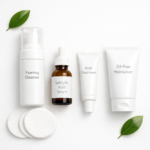
Start with a gentle cleanser suited to your skin type. Follow with a hydrating toner if your skin is dry or combination. Apply any active serums — vitamin C for brightening, niacinamide for oil control — and let them absorb fully. Apply a lightweight moisturiser, let it settle for 60 seconds, and then apply sunscreen as the final protective layer. Makeup, if used, goes on top after sunscreen.
This layering sequence ensures each product performs at its best rather than competing with the others. Rushing through the routine and layering products before they absorb reduces the efficacy of every ingredient in the lineup.
Frequently Asked Questions
1. Can I skip sunscreen on cloudy days?
No. Up to 80% of UV rays pass through cloud cover. Cloudy weather reduces visible brightness but does not meaningfully reduce UV exposure.
2. Should I use a higher SPF than 50?
SPF 50 and SPF 70 offer virtually identical UVB protection in real-world use. A more meaningful investment is choosing a formula with PA++++ rather than going above SPF 50.
3. Can oily skin use sunscreen without getting greasy?
Yes, provided you choose a gel-based or water-fluid formula that is labelled non-comedogenic. Avoid cream or lotion textures if your skin produces excess oil.
4. Is mineral sunscreen better than chemical sunscreen?
For sensitive or reactive skin, mineral is generally safer. For most Indian skin types seeking a wearable daily formula, hybrid sunscreens offer the best balance of protection and cosmetic finish.
5. How soon after applying sunscreen can I go into the sun?
Mineral sunscreens work immediately. Chemical and hybrid sunscreens need approximately 15 to 20 minutes to become fully effective after application.
6. Does sunscreen expire?
Yes. Most sunscreens carry a shelf life of 12 to 24 months. An expired sunscreen may feel the same on the skin but has degraded UV filters that no longer provide the protection shown on the label.
Final Word
Sunscreen is not a luxury step. It is the single most evidence-backed action you can take for your skin’s long-term health, regardless of your skin type, budget, or daily schedule.
For Indian skin in 2026, the non-negotiable standard remains SPF 50 with PA++++. Beyond that, the best sunscreen is the one you will actually apply every morning, in the right quantity, and reapply during the day. Formula texture matters because consistency is everything — a lighter sunscreen you use daily outperforms a clinically superior formula that sits unused because it feels heavy or leaves a white cast.
Start with one product matched to your skin type from the recommendations above. Give it four weeks of daily use before judging results. Your future skin will notice the difference.