Acne-prone skin requires more than just occasional treatment—it needs a consistent, barrier-friendly, and science-backed skincare routine. Whether you experience blackheads, whiteheads, hormonal acne, or inflammatory breakouts, following the right daily routine can significantly reduce acne, prevent scarring, and restore healthy skin balance.
This guide explains a complete morning and night skincare routine for acne-prone skin, ingredient recommendations, common mistakes to avoid, and expert tips for long-term clarity.
Understanding Acne-Prone Skin
Acne develops when excess oil (sebum), dead skin cells, and bacteria clog pores. Contributing factors include:
- Hormonal fluctuations
- Genetics
- Stress and lifestyle habits
- Incorrect skincare products
- Compromised skin barrier
Acne-prone skin is often oily yet dehydrated, sensitive, and easily irritated—making product choice and routine order crucial.
Morning Skincare Routine for Acne-Prone Skin
1. Gentle Cleanser (Non-Stripping)
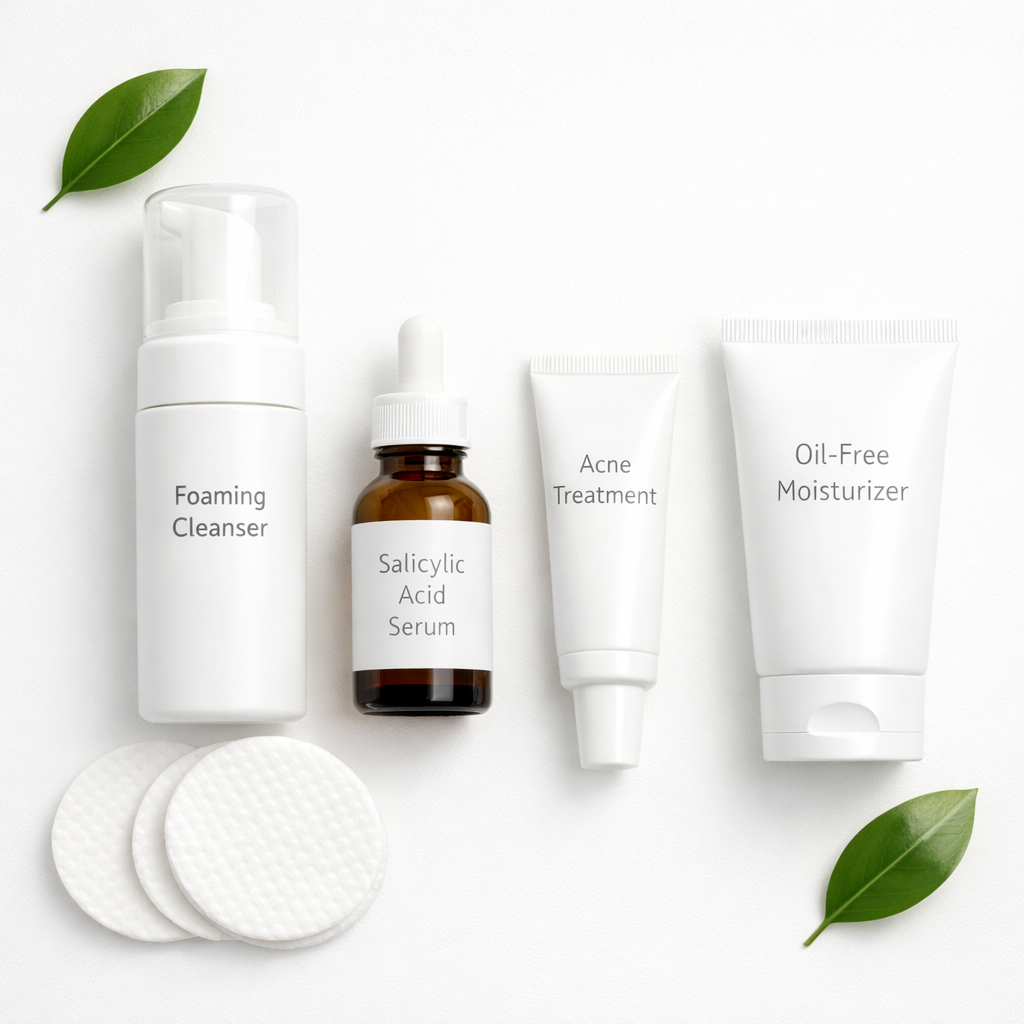
Start your day with a mild, sulfate-free cleanser that removes overnight oil without drying the skin.
Look for ingredients:
- Salicylic acid (0.5–2%)
- Zinc PCA
- Green tea extract
Avoid: Harsh soaps, alcohol-based cleansers, and scrubs.
2. Balancing Toner (Optional but Beneficial)
A toner helps rebalance skin pH and prepares the skin for treatment products.
Best toner ingredients:
- Niacinamide
- Witch hazel (alcohol-free)
- Centella asiatica
3. Lightweight Acne Treatment Serum
Use targeted actives in low concentrations to control breakouts without irritation.
Ideal morning actives:
- Niacinamide (controls oil + reduces redness)
- Azelaic acid (brightens acne marks)
- Tea tree extract (antibacterial)
4. Oil-Free Moisturizer (Yes, Moisturizer Is Essential)
Skipping moisturizer can increase oil production and worsen acne.
Choose:
- Gel or lotion texture
- Non-comedogenic
- Ceramides or hyaluronic acid
5. Broad-Spectrum Sunscreen (Mandatory)
Sun exposure worsens acne marks and delays healing.
Best sunscreen for acne-prone skin:
- SPF 30 or higher
- Gel or water-based formula
- Zinc oxide or modern chemical filters
Night Skincare Routine for Acne-Prone Skin
1. Two‑Step Face Wash for Sunscreen & Makeup
- First cleanse: Micellar water or oil cleanser (non-comedogenic)
- Second cleanse: Gentle foaming cleanser
2. Exfoliation (2–3 Times Weekly)
Chemical exfoliation keeps pores clear without micro-tears.
Best exfoliants:
- Salicylic acid (BHA)
- Lactic acid or mandelic acid (AHA for sensitive acne)
Avoid: Physical scrubs and daily exfoliation.
3. Treatment Products (Use One at a Time)
Nighttime is ideal for stronger acne treatments.
Common acne actives:
- Retinol (improves acne + texture)
- Benzoyl peroxide (spot treatment)
- Adapalene (for persistent acne)
Start slowly to avoid purging and irritation.
4. Barrier-Repair Moisturizer
Acne treatments can weaken the skin barrier.
Look for:
- Ceramides
- Panthenol
- Squalane
Healthy skin heals acne faster.
Weekly Care for Acne-Prone Skin
- Clay mask (1–2 times weekly): Absorbs excess oil
- Soothing mask: Aloe vera, centella, or oat extract
- Change pillowcases weekly
- Clean makeup brushes regularly
Lifestyle Tips That Support Clear Skin
- Drink enough water daily
- Reduce high-glycemic and dairy foods if acne is severe
- Manage stress and get quality sleep
- Avoid touching or picking acne
Skincare works best when supported by healthy habits.
Common Mistakes to Avoid
- Over-cleansing or over-exfoliating
- Using too many actives together
- Skipping sunscreen
- Believing “drying acne is good”
- Frequently switching products
Consistency matters more than product quantity.
How Long Does It Take to See Results?
- Oil control: 1–2 weeks
- Fewer breakouts: 3–4 weeks
- Acne marks fading: 6–8 weeks
Patience and routine discipline are key.
Final Thoughts
The best skincare routine for acne-prone skin is simple, gentle, and consistent. Focus on maintaining a healthy skin barrier while targeting acne with proven ingredients. With the right approach, acne-prone skin can become clear, balanced, and resilient over time.
Frequently Asked Questions
Can acne-prone skin use moisturizer every day?
Yes, daily moisturizing is essential for acne-prone skin. A lightweight, non-comedogenic moisturizer helps maintain the skin barrier and prevents excess oil production that can trigger breakouts.
How often should I cleanse acne-prone skin?
Cleansing twice a day—morning and night—is ideal. Over-cleansing can strip natural oils and worsen acne, so always use a gentle, sulfate-free cleanser.
Which ingredients work best for acne-prone skin?
Salicylic acid helps unclog pores, niacinamide controls oil and redness, azelaic acid improves acne marks, and retinoids support long-term acne control. Introduce active ingredients gradually.
Is sunscreen necessary if I have acne-prone skin?
Yes, sunscreen is crucial. Sun exposure can darken acne marks and slow skin healing. Choose a gel-based, oil-free sunscreen with SPF 30 or higher that won’t clog pores.
How long does it take to see results from an acne skincare routine?
Reduced oil and fewer breakouts may appear within 3–4 weeks, while acne marks and texture improvement usually take 6–8 weeks with consistent skincare use.