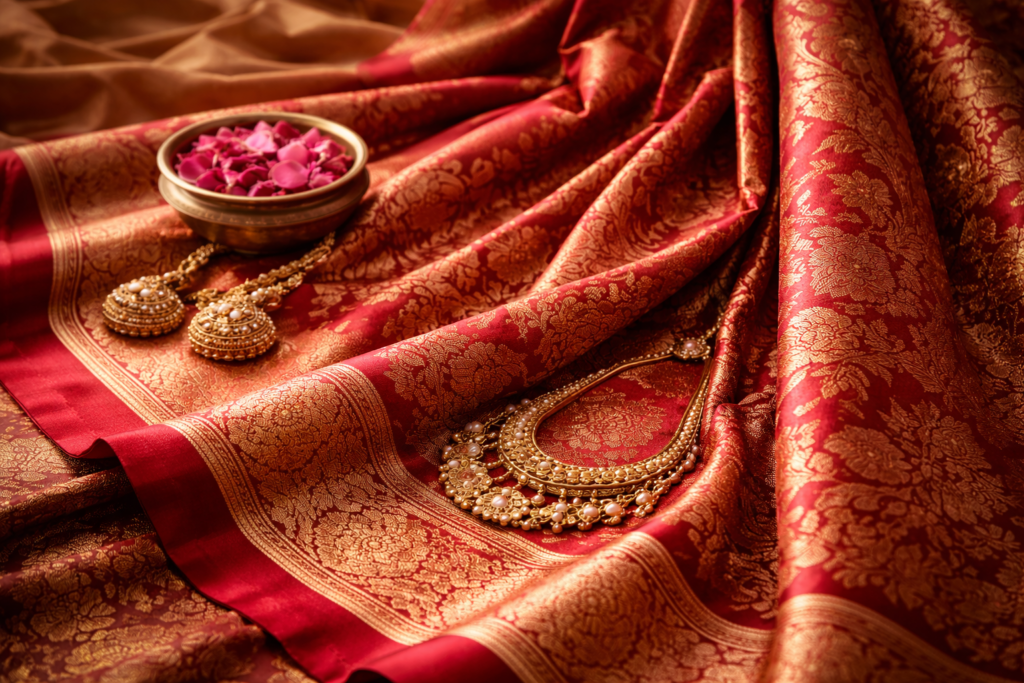
Banarasi silk is one of India’s most celebrated and luxurious textiles, admired for its intricate craftsmanship, cultural depth, and royal elegance. Woven in the ancient city of Varanasi, Banarasi silk represents centuries of artistic excellence, skilled handloom weaving, and a deep connection between tradition and identity. Even today, a Banarasi silk saree is considered a symbol of prestige, heritage, and timeless beauty.
The Deep Historical Roots of Banarasi Silk
The story of Banarasi silk is closely intertwined with the cultural evolution of India itself.
Ancient Beginnings
Historical records suggest that fine silk weaving existed in Varanasi as early as the 3rd century BCE. References to luxurious silk garments from this region appear in ancient Hindu scriptures, Buddhist texts, and travel accounts of foreign scholars.
The Mughal Golden Age
Banarasi silk flourished significantly during the Mughal era. Mughal emperors valued refined textiles and encouraged artisans to develop elaborate designs inspired by:
- Persian gardens
- Floral vines
- Symmetrical geometric layouts
- Royal court aesthetics
This era introduced heavy zari work, complex motifs, and superior weaving precision—features that still define Banarasi silk today.
Survival Through Colonial Challenges
During British rule, machine-made textiles flooded Indian markets, leading to a decline in handloom weaving. Despite this, Banarasi silk survived through small weaving families who preserved their skills across generations.
In recognition of its heritage value, Banarasi silk later received Geographical Indication (GI) status, ensuring protection of its authenticity and origin.
Why Banarasi Silk Is Considered a Luxury Fabric
Banarasi silk stands apart due to its rare combination of material quality, labor intensity, and artistic detail.
Defining Characteristics
- Use of premium mulberry silk yarn
- Rich zari woven directly into the fabric
- Dense and long-lasting weave
- Intricate hand-drawn designs
- Luxurious weight and royal drape
Unlike printed or embroidered fabrics, Banarasi designs are woven into the saree itself, making each piece unique and durable.
The Traditional Weaving Process of Banarasi Silk (Step-by-Step)
Creating a Banarasi silk saree is a slow, meticulous process that can take weeks or even months.
1. Silk Selection and Dyeing
High-quality mulberry silk threads are carefully selected and dyed using vibrant colors. Traditional hues include red, maroon, emerald green, royal blue, and ivory.
2. Zari Preparation
Authentic zari is made by:
- Drawing fine silver wires
- Coating them with gold
- Wrapping them around silk threads
This gives Banarasi silk its iconic golden shimmer.
3. Design Planning (Naksha)
Designs are manually drawn on graph paper and converted into weaving instructions. Traditionally, punch cards were used; today, some artisans use digital jacquard systems while maintaining handloom weaving.
4. Handloom Weaving
Weaving is done on hand-operated looms where:
- 2–4 artisans may work together
- Thousands of threads are interlaced
- Each motif is woven row by row
A single heavy Banarasi saree can take 1 to 6 months to complete.
Major Types of Banarasi Silk Sarees
Banarasi silk is not a single fabric but a family of weaving styles.
| Type | Fabric Base | Key Features |
|---|---|---|
| Katan Silk | Pure twisted silk | Smooth texture, classic zari motifs |
| Kora (Organza) | Crisp silk | Lightweight body with rich zari |
| Georgette Banarasi | Silk georgette | Soft, flowing, modern appeal |
| Shattir Silk | Fine silk | Lustrous surface and dense patterns |
| Tanchoi | Silk with extra weft | No zari, colorful woven designs |
| Jangla | Silk base | Heavy floral jaal across the saree |
| Jamdani Banarasi | Fine silk | Handwoven motifs appear floating |
Traditional Motifs and Design Language
Banarasi silk motifs are deeply symbolic and often inspired by nature and architecture.
Common Motifs
- Floral creepers and vines
- Paisley (kalga and bel)
- Lotus flowers
- Mango patterns
- Peacock and leaf motifs
- Mughal arches and domes
These motifs are usually arranged in borders, pallus, and all-over patterns (jaal).
Cultural and Bridal Importance of Banarasi Silk
Banarasi silk holds immense emotional and cultural value, especially in Indian weddings.
Bridal Significance
- Considered auspicious for weddings
- Symbol of prosperity and marital bliss
- Often passed down as heirlooms
- Essential in North Indian bridal trousseaus
In many families, a Banarasi saree is worn only on the most significant life occasions.
How to Identify an Authentic Banarasi Silk Saree
Due to its high value, Banarasi silk is often imitated. Here’s how to identify the real one.
Authenticity Checks
- Look for the GI Tag of Banaras
- Genuine zari feels smooth, not plasticky
- Reverse side shows unfinished threads
- Fabric feels rich and slightly heavy
- Handloom sarees show minor irregularities
- Presence of Handloom Mark
Machine-made sarees often look too perfect and lack depth.
Banarasi Silk in Contemporary Fashion
Modern designers are reinventing Banarasi silk for today’s lifestyle.
Modern Adaptations
- Lightweight Banarasi sarees
- Banarasi silk lehengas
- Banarasi dupattas with western outfits
- Designer blouses and jackets
- Luxury home décor accents
Pastels, minimalist zari, and fusion silhouettes are attracting younger buyers.
Sustainability and Artisan Livelihood
Banarasi silk weaving supports thousands of artisan families in Varanasi.
Why It’s Sustainable
- Handloom-based production
- Low energy consumption
- Natural fibers
- Skill-based employment
Choosing authentic Banarasi silk helps preserve a dying craft and sustains traditional livelihoods.
Care and Preservation of Banarasi Silk
With proper care, Banarasi silk can last for generations.
Care Tips
- Always dry clean
- Store in muslin or cotton cloth
- Avoid plastic covers
- Keep away from sunlight and moisture
- Refold every few months to protect zari
Why Banarasi Silk Never Goes Out of Style
Trends change, but Banarasi silk remains timeless because it represents:
- Cultural continuity
- Handcrafted luxury
- Artistic storytelling
- Emotional value
In an era dominated by fast fashion, Banarasi silk stands as a symbol of patience, heritage, and human creativity.
Banarasi silk is not merely a textile—it is a woven expression of India’s history, artistry, and soul. Every Banarasi saree carries the legacy of skilled hands, centuries-old traditions, and unmatched craftsmanship. Owning one is not just a fashion choice; it is an investment in culture and heritage.
Banarasi Silk FAQs
What is Banarasi Silk?
Banarasi silk is a traditional Indian silk fabric woven in Varanasi, known for its luxurious texture, intricate zari patterns, and vibrant colors. It is widely used for sarees, lehengas, and bridal wear.
How did Banarasi Silk originate?
Banarasi silk originated over 2,000 years ago in Varanasi. Its distinctive style developed during the Mughal era when Persian motifs and weaving techniques were combined with Indian designs to create rich, ornate patterns.
What are the types of Banarasi Silk?
Common types include Katan Silk, Kora/Organza Silk, Georgette Banarasi, Shattir Silk, and Tanchoi. Each type varies in fabric, weight, and zari pattern complexity.
What motifs are commonly found in Banarasi Silk?
Popular motifs include paisleys, floral creepers, lotus, mango, peacock patterns, and Mughal architectural designs such as arches and domes.
How can I identify an authentic Banarasi Silk saree?
Look for the GI Tag, check that zari is soft and slightly raised, examine the reverse side for minor imperfections, and feel the fabric for richness and weight.
How long does it take to weave a Banarasi Silk saree?
Depending on the complexity, a handwoven Banarasi saree can take 15 days to 6 months to complete, as each motif is carefully woven row by row.
Can Banarasi Silk be used for modern outfits?
Yes! Banarasi silk is now used in bridal lehengas, designer gowns, stoles, blouses, jackets, and even luxury home décor items.
How should I care for Banarasi Silk?
Always dry clean, store in muslin or cotton cloth, avoid plastic covers, keep away from sunlight and moisture, and refold occasionally to prevent zari damage.
Why is Banarasi Silk so expensive?
Banarasi silk is handcrafted, uses premium silk and gold/silver zari threads, and takes skilled artisans weeks or months to complete, making it a luxury textile.
What makes Banarasi Silk culturally significant?
It symbolizes tradition, prosperity, and craftsmanship. Often worn during weddings, festivals, and special occasions, it is considered an heirloom in many families.