A strong immune system is not created by a single food, medicine, or supplement. It is built slowly through daily habits that support the body’s natural defense mechanisms. In modern life, irregular sleep, processed food, stress, and sedentary routines weaken immunity, leading to frequent illness and low energy.
This comprehensive guide explains how immunity works and which daily habits truly strengthen it—naturally, safely, and sustainably.
Understanding the Immune System (Simple Explanation)
The immune system is a complex network of:
- White blood cells
- Antibodies
- Lymphatic vessels
- Gut bacteria
- Organs like the spleen and thymus
Its job is to identify harmful invaders and eliminate them without damaging healthy cells.
Immunity depends on:
- Nutrient availability
- Hormonal balance
- Sleep cycles
- Stress levels
- Gut health
This is why daily lifestyle habits matter more than short-term treatments.
1. Morning Routine Habits That Activate Immunity
Wake Up at a Consistent Time
A fixed wake-up time stabilizes circadian rhythm, which directly influences immune response.
Morning Hydration
- Drink 1–2 glasses of warm water
- Helps activate digestion and lymph flow
- Flushes metabolic waste
Optional additions:
- Lemon (Vitamin C)
- Honey (antioxidant support)
2. Build Immunity Through Daily Nutrition
Why Diet Is the Foundation of Immunity
Every immune cell is made from nutrients obtained through food. Poor nutrition leads to weak immune signaling.
Daily Immunity-Supporting Food Groups
Fruits & Vegetables
- Provide vitamins, antioxidants, and fiber
- Support gut and cellular immunity
Best choices:
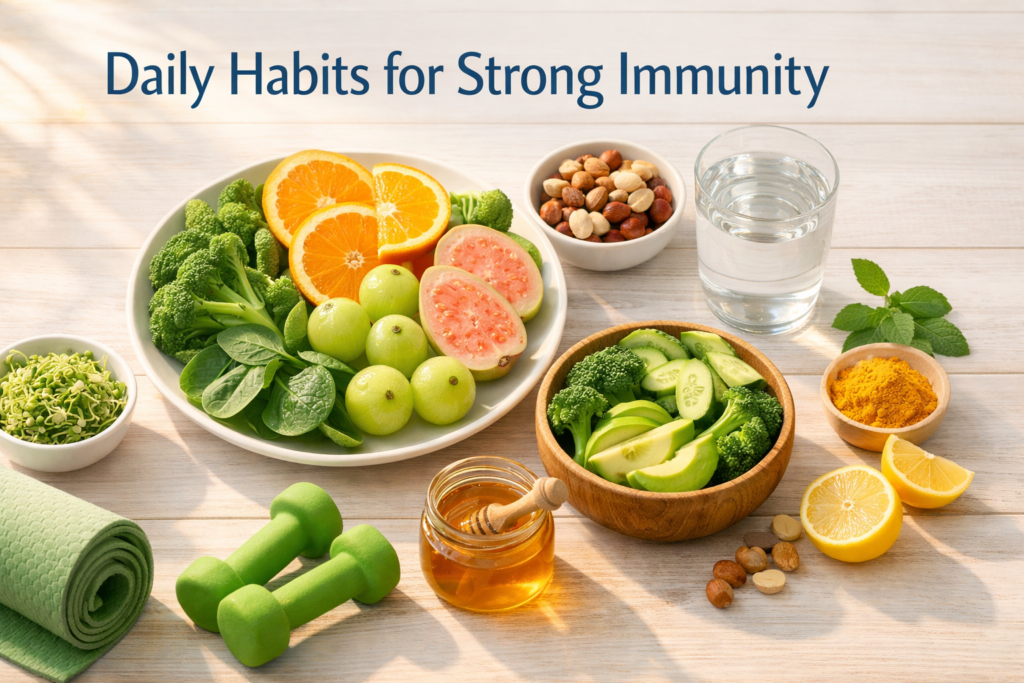
- Amla, orange, guava
- Spinach, carrot, beetroot
- Seasonal vegetables
Protein Intake (Often Ignored)
Protein is essential for antibody production.
Indian protein sources:
- Dal, chana, rajma
- Milk, curd, paneer
- Eggs (if consumed)
Healthy Fats
Support anti-inflammatory processes.
Sources:
- Nuts and seeds
- Ghee in moderation
- Cold-pressed oils
3. Strengthen Immunity with Proper Gut Health
Over 70% of immune activity is connected to gut bacteria.
Daily Gut-Friendly Habits:
- Consume curd or buttermilk
- Eat fiber-rich foods
- Avoid excessive antibiotics
- Chew food slowly
A healthy gut trains the immune system to respond correctly.
4. Importance of Daily Physical Activity
Movement increases circulation, allowing immune cells to reach infection sites faster.
Best daily activities:
- Walking 30 minutes
- Yoga and pranayama
- Stretching and mobility exercises
Avoid extreme workouts during illness, as they may suppress immunity.
5. Sleep: The Most Powerful Immune Booster
During sleep:
- Immune memory cells are created
- Inflammation is regulated
- Hormones are balanced
Ideal sleep habits:
- 7–8 hours nightly
- Fixed sleep schedule
- Dark, cool sleeping environment
- No screens before bed
Poor sleep weakens immunity faster than poor diet.
6. Manage Stress to Protect Immune Function
Chronic stress increases cortisol, which suppresses immune cell activity.
Daily stress-reduction practices:
- Deep breathing
- Meditation or prayer
- Limiting social media
- Spending time in nature
Mental calmness supports physical immunity.
7. Sunlight & Vitamin D for Immune Regulation
Vitamin D controls immune response and inflammation.
Best practice:
- Morning sunlight for 15–20 minutes
- Natural exposure to arms and face
Deficiency is linked to frequent infections.
8. Daily Hygiene Practices That Prevent Immune Overload
Preventing infection reduces unnecessary immune strain.
Essential habits:
- Hand washing
- Oral hygiene
- Clean phone screens
- Clean drinking water
Clean surroundings protect immune resources.
9. Avoid Immunity-Damaging Habits
Certain habits directly weaken immune defenses.
Limit or avoid:
- Smoking
- Excess alcohol
- Late-night meals
- Excess sugar
Replacing these with healthier alternatives improves immunity gradually.
10. Mental Health, Positivity & Social Connection
Positive emotional health improves immune communication.
Daily practices:
- Maintain relationships
- Practice gratitude
- Engage in hobbies
- Reduce loneliness
Mental well-being strengthens physical health.
11. Maintain Healthy Weight & Metabolism
Both obesity and under-nutrition disrupt immune balance.
Daily habits:
- Regular meals
- Avoid crash diets
- Balanced calorie intake
Stable metabolism supports immune regulation.
12. Consistency: The Secret to Long-Term Immunity
Immunity is built through:
- Small daily habits
- Long-term consistency
- Balanced lifestyle
Extreme routines fail; sustainable habits succeed.
Strong immunity is not about avoiding illness completely—it is about recovering faster, staying energetic, and preventing complications. By following these daily habits, you create an internal environment where the immune system functions efficiently for years.
This approach is safe, natural, affordable, and suitable for all age groups.
Frequently Asked Questions
How can daily habits improve immunity naturally?
Daily habits such as balanced nutrition, quality sleep, regular physical activity, stress control, and proper hygiene help the immune system function efficiently. When these habits are followed consistently, the body produces and maintains strong immune cells that protect against infections and illness over time.
How long does it take to see results from immunity-boosting habits?
Most people begin to notice better energy levels and fewer minor illnesses within 4 to 8 weeks of following healthy daily habits. Long-term immunity improvement depends on consistency rather than quick changes.
Can immunity be strong without taking supplements?
Yes. In many cases, immunity can be strengthened naturally through a nutritious diet, adequate sleep, regular movement, sunlight exposure, and stress management. Supplements may be helpful only when there is a nutritional deficiency or medical need.
Which daily habit has the biggest impact on immunity?
Quality sleep and proper nutrition have the strongest impact on immune health. Without enough sleep or balanced meals, other healthy habits become less effective in supporting immunity.
Does mental stress really affect the immune system?
Yes. Long-term stress increases stress hormones that suppress immune response, making the body more vulnerable to illness. Managing stress through relaxation, meditation, and positive routines helps maintain a healthy immune balance.
Are these immunity-boosting habits suitable for all age groups?
Yes. These daily habits are safe and beneficial for children, adults, and elderly individuals. Simple lifestyle practices support immunity at every stage of life when adjusted according to age and health condition.