Silk is not merely a textile—it is a living story spun from nature, patience, tradition, and artistry. Across centuries and civilizations, silk has remained a symbol of refinement, wealth, purity, and power. Its journey begins not in royal palaces or designer ateliers, but in the silent transformation of a tiny silkworm. From this humble beginning emerges one of the most luxurious materials ever known to humanity.
The transformation of silk is a rare blend of biology, craftsmanship, culture, and human ingenuity. Every thread carries a history of discipline, care, and generations of inherited knowledge. This is the extraordinary journey of silk—from silkworm to royal wardrobe.
1. The Birth of Silk: Nature’s Miracle Fiber
Silk originates from a natural biological process that has remained unchanged for thousands of years. The silkworm, primarily fed on mulberry leaves, undergoes a life cycle that results in the production of one of the world’s strongest natural fibers.
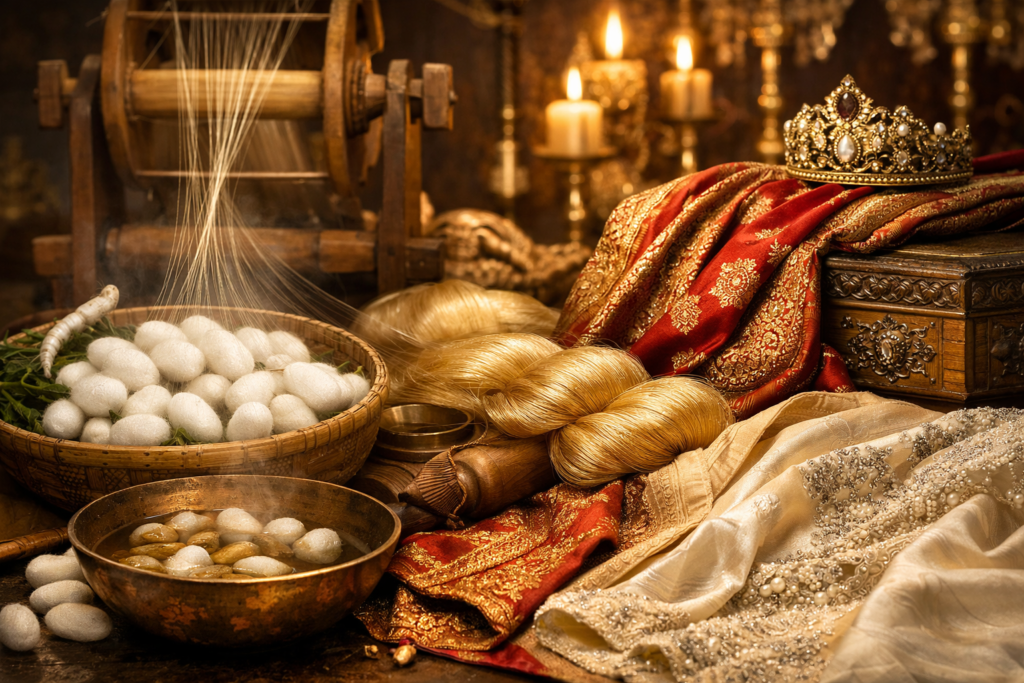
When the silkworm reaches maturity, it begins to spin a cocoon around itself using a protein-based liquid secreted from its glands. This liquid hardens on contact with air and forms a continuous filament. A single cocoon can contain hundreds of meters of silk thread, making it one of nature’s most efficient fiber-producing systems.
This natural process is not forced or artificial—it is a perfect example of harmony between life and material creation.
2. Sericulture: The Science and Art of Silk Farming
The controlled cultivation of silkworms is known as sericulture. This is not simple farming—it is a highly specialized practice that demands precision, discipline, and deep knowledge of environmental conditions.
Sericulture involves:
| Phase | Process |
|---|---|
| Egg Preservation | Eggs are stored in climate-controlled environments |
| Hatching | Larvae emerge and begin feeding |
| Feeding Stage | Continuous feeding on mulberry leaves |
| Growth Cycle | Rapid physical development |
| Cocoon Spinning | Formation of silk cocoon |
| Harvesting | Timely collection of cocoons |
Even minor changes in temperature, humidity, or hygiene can affect silk quality. This makes silk production one of the most delicate and technically demanding natural fiber industries in the world.
3. Cocoon to Thread: The Reeling Process
Once cocoons are ready, they go through the reeling process, where silk filaments are carefully unwound. The cocoon is softened using warm water, allowing the silk strands to be gently released without breaking.
Multiple filaments are combined to create a single silk yarn strong enough for weaving. This stage transforms fragile natural fibers into structured, usable thread while preserving silk’s signature shine and softness.
This step requires both mechanical precision and human expertise, as even slight mishandling can damage the silk’s natural quality.
4. Weaving: Turning Threads into Fabric
The weaving stage is where silk begins to take its visible form. Skilled weavers interlace silk threads into fabric using traditional handlooms or modern weaving technologies.
Different weaving methods produce different textures:
- Soft flowing silks for draping garments
- Structured silks for ceremonial wear
- Lightweight silks for comfort clothing
- Richly textured silks for luxury designs
This stage determines how silk will feel, move, and behave when worn.
5. Dyeing and Finishing: Giving Silk Its Identity
Raw silk is naturally pale and luminous, but it gains personality during dyeing and finishing. Artisans use natural pigments, plant-based dyes, and modern color technologies to create vibrant and long-lasting shades.
Finishing treatments enhance:
- Softness
- Durability
- Shine
- Color depth
- Fabric strength
- Skin comfort
This stage gives silk its final character and prepares it for fashion, décor, and luxury applications.
6. The Rise of Silk in Royal Culture
Historically, silk was not accessible to everyone. It was reserved for royalty, nobility, and elite classes. In ancient societies, silk symbolized:
- Authority
- Divine connection
- Wealth
- Prestige
- Social hierarchy
Royal families used silk for ceremonial garments, palace furnishings, and diplomatic gifts. Silk became a visual language of power and elegance.
Even today, silk retains this royal symbolism in weddings, religious rituals, and luxury fashion.
7. Cultural and Spiritual Significance of Silk
Silk holds deep emotional and spiritual meaning across cultures. It is often associated with:
- Purity
- Prosperity
- Blessings
- New beginnings
- Sacred ceremonies
In many traditions, silk garments are worn during life’s most meaningful moments—birth, marriage, festivals, and rituals—making silk more than clothing; it becomes part of human identity and heritage.
8. Silk and Artisan Communities
Silk production sustains millions of artisan families across generations. Entire communities depend on sericulture, weaving, dyeing, and embroidery.
These artisans preserve ancient techniques while adapting to modern demands. Their craftsmanship is not industrial—it is cultural preservation in motion.
Supporting silk also means supporting heritage economies and traditional skills.
9. Modern Silk: Tradition Blended with Innovation
Today’s silk industry combines tradition with technology. Ethical silk farming, sustainable production methods, and eco-friendly dyeing processes are reshaping the future of silk.
Silk is now used in:
- Luxury fashion
- Home furnishings
- High-end interiors
- Accessories
- Contemporary lifestyle products
Despite modernization, silk’s soul remains unchanged—natural, elegant, and timeless.
10. Why Silk Remains the Ultimate Luxury Fabric
Silk stands apart from all other textiles because it offers a rare combination of:
- Natural shine
- Breathability
- Strength
- Comfort
- Elegance
- Durability
- Versatility
It adapts to seasons, cultures, and styles without losing its identity.
Silk does not follow trends—it defines timelessness.
Conclusion: From Nature to Nobility
The journey of silk—from the quiet spinning of a silkworm to the grandeur of royal wardrobes—is a story of transformation, patience, and beauty. Every silk garment carries within it the work of nature, the skill of artisans, and the legacy of civilizations.
Silk is not just worn on the body—it is worn in history, culture, and memory.
To wear silk is to wear a story that began in nature and evolved into royalty.
Frequently Asked Questions
What is silk made from?
Silk is made from natural protein fibers produced by silkworms when they spin protective cocoons.
Why is silk considered a luxury fabric?
Silk is considered luxurious because it is rare, labor-intensive to produce, and naturally smooth, shiny, and breathable.
What is sericulture?
Sericulture is the controlled process of farming silkworms to produce silk fibers.
How long does silk production take?
Silk production usually takes several weeks, from silkworm growth and cocoon formation to weaving and finishing.
Where is silk commonly used?
Silk is commonly used in sarees, clothing, accessories, home décor, and other luxury textile products.