
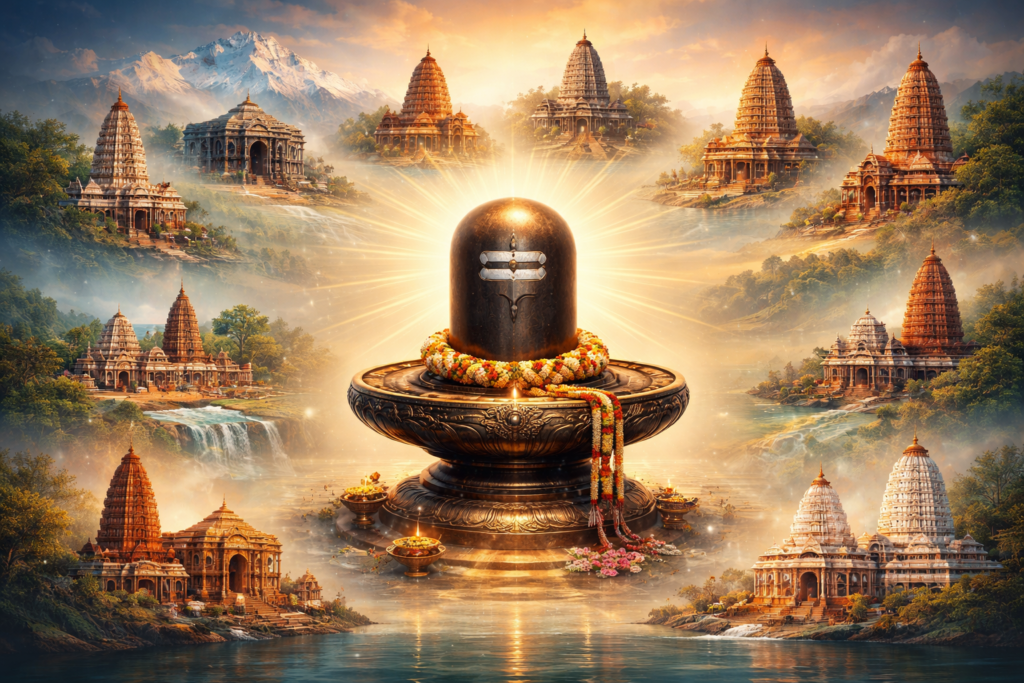
The Jyotirlingas are the most sacred manifestations of Lord Shiva, representing the infinite cosmic light (Jyoti) without beginning or end. According to Shaivite tradition, there are 12 Jyotirlingas spread across India, each symbolizing a powerful spiritual center where Shiva revealed Himself in radiant form. Visiting these temples is considered a profound spiritual journey that cleanses karma, strengthens devotion, and deepens inner awareness.
This complete guide offers original, non-copyrighted, and high‑value content covering mythology, locations, spiritual significance, travel insights, and practical tips for pilgrims and readers.
What Is a Jyotirlinga?
The word Jyotirlinga comes from two Sanskrit terms:
- Jyoti – Divine light
- Linga – Symbol of creation and cosmic energy
A Jyotirlinga is not just a stone representation of Shiva; it signifies the limitless, formless reality of the universe. Scriptures such as the Shiva Purana describe a divine event where Lord Shiva appeared as a pillar of infinite light to resolve a cosmic dispute, establishing these sacred sites.
Importance of the 12 Jyotirlingas
- Represent the highest spiritual frequency of Lord Shiva
- Each Jyotirlinga has a unique legend and energy
- Pilgrimage is believed to remove obstacles, fear, and ignorance
- Symbolize unity of creation, preservation, and destruction
Complete List of the 12 Jyotirlinga Temples
1. Somnath Jyotirlinga – Gujarat
Location: Prabhas Patan, near Veraval
Somnath means “Lord of the Moon.” According to legend, the Moon God regained his lost brilliance after worshipping Shiva here. The temple stands as a symbol of resilience, having been rebuilt several times after destruction.
Spiritual significance: Renewal, healing, and emotional balance
2. Mallikarjuna Jyotirlinga – Andhra Pradesh
Location: Srisailam, Nallamala Hills
This Jyotirlinga represents the divine union of Shiva and Parvati. Surrounded by forests and hills, it is one of the most serene Shiva shrines.
Spiritual significance: Harmony in relationships and spiritual growth
3. Mahakaleshwar Jyotirlinga – Madhya Pradesh
Location: Ujjain
Mahakaleshwar is the only Jyotirlinga where the linga is Swayambhu (self-manifested) and faces south, symbolizing control over time and death.
Spiritual significance: Liberation from fear, protection, and moksha
4. Omkareshwar Jyotirlinga – Madhya Pradesh
Location: Mandhata Island, Narmada River
The island naturally forms the sacred symbol ॐ (Om). The temple represents the balance between material and spiritual life.
Spiritual significance: Inner peace, clarity, and balance
5. Kedarnath Jyotirlinga – Uttarakhand
Location: Garhwal Himalayas
Located at high altitude, Kedarnath is one of the most spiritually intense Jyotirlingas. It is linked to the Pandavas seeking forgiveness after the Mahabharata war.
Spiritual significance: Karma cleansing and spiritual liberation
6. Bhimashankar Jyotirlinga – Maharashtra
Location: Sahyadri Hills
Associated with the slaying of demon Bhima, this temple is surrounded by dense forests and wildlife sanctuaries.
Spiritual significance: Strength, courage, and protection
7. Kashi Vishwanath Jyotirlinga – Uttar Pradesh
Location: Varanasi
One of the oldest living cities in the world, Kashi is believed to grant moksha upon death. Lord Shiva is worshipped here as the supreme teacher.
Spiritual significance: Liberation, wisdom, and transcendence
8. Trimbakeshwar Jyotirlinga – Maharashtra
Location: Nashik
This Jyotirlinga uniquely represents Brahma, Vishnu, and Mahesh together. It is also the origin point of the sacred Godavari River.
Spiritual significance: Ancestral healing and spiritual purification
9. Vaidyanath Jyotirlinga – Jharkhand
Location: Deoghar
Vaidyanath means “Divine Physician.” This temple is deeply connected with healing and devotion.
Spiritual significance: Physical and mental well‑being
10. Nageshwar Jyotirlinga – Gujarat
Location: Near Dwarka
Nageshwar protects devotees from poisons, fear, and negative energies. The massive Shiva statue nearby enhances its spiritual aura.
Spiritual significance: Protection and fearlessness
11. Rameshwaram Jyotirlinga – Tamil Nadu
Location: Rameswaram Island
Built by Lord Rama before crossing to Lanka, this temple emphasizes devotion, repentance, and righteousness.
Spiritual significance: Dharma, forgiveness, and purity
12. Grishneshwar Jyotirlinga – Maharashtra
Location: Ellora, near Aurangabad
The smallest Jyotirlinga temple, yet spiritually powerful. It symbolizes humility and devotion.
Spiritual significance: Faith, compassion, and spiritual completeness
Best Time to Visit Jyotirlinga Temples
- October to March: Ideal weather for most locations
- Shravan Month: Highly auspicious for Shiva worship
- Mahashivratri: Grand celebrations across all temples
Pilgrimage Tips for Devotees
- Wear modest, traditional clothing
- Follow temple rituals respectfully
- Visit early morning for peaceful darshan
- Combine nearby spiritual sites for a complete experience
Spiritual Benefits of Jyotirlinga Darshan
- Deepens devotion and inner awareness
- Helps overcome fear, ego, and attachments
- Enhances discipline, humility, and gratitude
- Creates a powerful spiritual connection with Shiva
The 12 Jyotirlinga temples are not merely religious landmarks; they are living centers of cosmic energy and spiritual awakening. Each shrine offers a unique path toward self‑realization and divine connection. Whether visited physically or revered through devotion, Jyotirlingas continue to guide seekers toward truth, balance, and liberation.
Frequently Asked Questions About Jyotirlinga Temples
What is the spiritual meaning of Jyotirlinga in Hinduism?
A Jyotirlinga represents Lord Shiva as an infinite pillar of divine light, symbolizing the eternal and formless nature of the universe. It signifies supreme consciousness and is believed to radiate powerful spiritual energy that helps devotees progress toward inner awakening.
How many Jyotirlingas are there and where are they located?
There are twelve Jyotirlingas mentioned in ancient Shaivite scriptures, located across India in sacred regions such as the Himalayas, riverbanks, forests, and coastal areas. Each temple holds unique mythological and spiritual importance.
Is it necessary to visit all 12 Jyotirlingas?
Visiting all twelve Jyotirlingas is not mandatory. Even sincere darshan of a single Jyotirlinga with devotion is believed to bring spiritual merit. Completing all twelve is considered a rare and deeply transformative pilgrimage.
What is the best time to visit Jyotirlinga temples?
The best time to visit is from October to March when weather conditions are favorable. The Shravan month and Mahashivratri are highly auspicious, though temples experience heavy crowds during these periods.
Are there specific rituals to follow at Jyotirlinga temples?
Devotees commonly follow rituals such as early morning darshan, abhishekam with water or milk, chanting Shiva mantras, and observing fasting or silence. Maintaining temple discipline and modest attire is encouraged.
What spiritual benefits are believed to come from Jyotirlinga darshan?
Jyotirlinga darshan is believed to help remove negative karma, reduce fear,