Dry skin is a year-round concern, but its needs change significantly with the seasons. While summer brings heat, humidity, and sweat, winter exposes skin to cold winds, low humidity, and indoor heating. Using the same moisturizer all year can leave dry skin either under-hydrated or uncomfortably greasy.
This detailed guide explains how dry skin behaves in summer and winter, which moisturizer types work best in each season, key ingredients to look for, and how to build a seasonal moisturizing routine for healthy, comfortable skin all year long.
Understanding Dry Skin: Why Seasons Matter
Dry skin happens when the skin’s protective barrier isn’t able to hold onto enough water.. This may be due to genetics, aging, environmental factors, or skincare habits. The outermost layer of the skin (the stratum corneum) relies on natural lipids, ceramides, and water to stay soft and flexible.
Seasonal changes directly affect this barrier:
- Summer increases water loss through sweat and sun exposure
- Winter strips moisture due to cold air and indoor heating
- Season transitions can confuse the skin, causing irritation and flakiness
Because of this, dry skin needs different textures and ingredients depending on the climate.
Best Moisturizers for Dry Skin in Summer
Why Dry Skin Still Needs Moisturizer in Summer
Many people skip moisturizer in summer, assuming heat and humidity are enough. In reality, UV exposure, frequent cleansing, air conditioning, and dehydration can make dry skin worse during warmer months.
The goal in summer is hydration without heaviness.
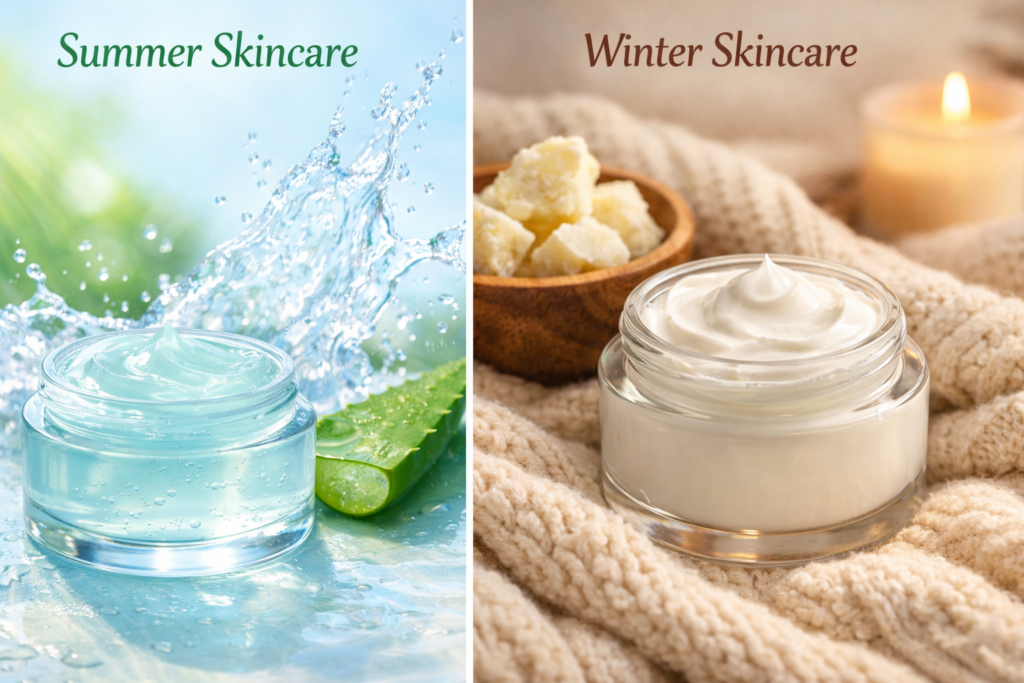
Ideal Summer Moisturizer Texture for Dry Skin
- Gel moisturizers
- Lightweight lotions
- Water-based or gel-cream formulas
- Fast-absorbing, non-sticky textures
These textures hydrate the skin without clogging pores or feeling greasy.
Best Ingredients for Summer Moisturizers (Dry Skin)
1. Hyaluronic Acid
A powerful humectant that attracts and holds water in the skin, keeping it plump and hydrated without oiliness.
2. Glycerin
Draws moisture from the environment into the skin and improves softness.
3. Aloe Vera
Soothes irritation, calms redness, and provides light hydration—ideal for sun-exposed skin.
4. Niacinamide (Vitamin B3)
Strengthens the skin barrier, reduces water loss, and improves skin texture.
5. Squalane (Lightweight)
Mimics natural skin oils while remaining breathable and non-greasy.
Ingredients to Avoid in Summer (for Dry Skin)
- Heavy mineral oils during daytime
- Thick waxes that trap sweat
- High alcohol content
- Overly fragranced products
These can feel suffocating and worsen irritation in heat.
How to Use Moisturizer in Summer (Dry Skin)
- Cleanse with a gentle, non-foaming cleanser
- Apply moisturizer on slightly damp skin
- Use a lightweight sunscreen on top (daytime)
- Reapply moisturizer at night if skin feels tight
💡 Pro Tip: Using a hydrating serum under a gel moisturizer can boost hydration without adding weight.
Best Moisturizers for Dry Skin in Winter
Why Winter Is Hard on Dry Skin
Winter is the most challenging season for dry skin. Cold winds, low humidity, hot showers, and indoor heating strip natural oils from the skin, leading to:
- Tightness
- Flaking
- Itching
- Redness
- Cracked or rough patches
Winter moisturizers should focus on repairing the skin barrier and preventing moisture loss.
Ideal Winter Moisturizer Texture for Dry Skin
- Rich creams
- Thick lotions
- Balms or ointments (for very dry skin)
- Occlusive night creams
These textures form a protective layer that locks moisture into the skin.
Best Ingredients for Winter Moisturizers (Dry Skin)
1. Ceramides
Essential lipids that repair and strengthen the skin barrier, reducing dryness and sensitivity.
2. Shea Butter
Deeply nourishes and softens rough, flaky skin.
3. Cocoa Butter
Forms a protective layer that prevents moisture loss.
4. Natural Oils (Jojoba, Almond, Olive)
Replenish lost lipids and improve skin elasticity.
5. Panthenol (Pro-Vitamin B5)
Soothes irritation and supports barrier repair.
6. Occlusives (Petrolatum, Dimethicone)
Seal moisture inside the skin, especially useful for nighttime care.
How to Use Moisturizer in Winter (Dry Skin)
- Cleanse with a cream-based or hydrating cleanser
- Apply moisturizer immediately after washing
- Use a thicker layer at night
- Reapply during the day if skin feels tight
💡 Pro Tip: For extremely dry areas (hands, elbows, feet), layer a balm over your moisturizer at night.
Summer vs Winter Moisturizers: Quick Comparison
| Feature | Summer | Winter |
|---|---|---|
| Texture | Gel, lotion | Cream, balm |
| Focus | Hydration | Moisture retention |
| Key Ingredients | Hyaluronic acid, glycerin | Ceramides, butters |
| Feel | Lightweight | Rich and protective |
| Best Use | Daytime & hot weather | Cold weather & night care |
Seasonal Transition Care (Spring & Autumn)
During seasonal changes, skin often becomes confused and sensitive. A light cream or gel-cream works best during these periods.
- Use moderate hydration
- Avoid frequent product switching
- Focus on barrier-strengthening ingredients
How to Choose the Right Moisturizer for Your Dry Skin
Ask yourself:
- Does my skin feel tight after washing?
- Does it flake more in winter?
- Does it feel greasy but still dry in summer?
Choose your moisturizer based on texture + ingredients, not just the label.
For Mild Dry Skin
- Summer: Gel-cream
- Winter: Medium cream
For Very Dry Skin
- Summer: Lotion + hydrating serum
- Winter: Rich cream or balm
For Sensitive Dry Skin
- Fragrance-free formulas
- Minimal ingredients
- Ceramides and soothing agents
Common Moisturizing Mistakes to Avoid
- Skipping moisturizer in summer
- Using harsh cleansers with dry skin
- Applying moisturizer on dry skin instead of damp skin
- Using the same product year-round
- Over-exfoliating dry skin
Building a Year-Round Moisturizing Routine
Morning (All Seasons):
- Gentle cleanse
- Appropriate seasonal moisturizer
- Sunscreen
Night:
- Cleanse
- Richer moisturizer (especially in winter)
Weekly Care:
- Gentle exfoliation (1x/week)
- Hydrating masks when needed
Final Thoughts
Dry skin needs consistent care, but it also needs season-specific adjustments. Lightweight, hydrating formulas work best in summer, while rich, barrier-repair creams are essential in winter.
By choosing the right moisturizer for each season and understanding your skin’s changing needs, you can maintain soft, comfortable, and healthy skin all year long.
Frequently Asked Questions
Should people with dry skin change their moisturizer according to the season?
Yes, changing your moisturizer with the seasons is important for dry skin. Summer usually calls for lightweight, hydrating formulas that absorb quickly, while winter requires richer creams that protect the skin barrier and prevent moisture loss. Seasonal changes in temperature and humidity affect how much moisture your skin can retain, so adjusting your moisturizer helps keep skin balanced and comfortable year-round.
Can dry skin skip moisturizer during summer if the weather is humid?
No, dry skin should not skip moisturizer even in humid weather. Heat, sun exposure, air conditioning, and frequent cleansing can still dehydrate the skin. A lightweight gel or lotion moisturizer helps maintain hydration without feeling greasy and prevents dryness caused by environmental stress.
How often should dry skin be moisturized in winter?
Dry skin should be moisturized at least twice daily in winter—once in the morning and once at night. In very cold or dry conditions, reapplying during the day may be necessary, especially after washing your face or hands. Applying moisturizer immediately after cleansing helps lock in moisture more effectively.
What moisturizer ingredients are best for dry skin in summer?
In summer, dry skin benefits from ingredients that provide hydration without heaviness. Hyaluronic acid, glycerin, aloe vera, and lightweight squalane help attract and retain moisture while keeping the skin feeling fresh and comfortable. These ingredients support hydration without clogging pores or causing a greasy feel.
What ingredients should dry skin look for in winter moisturizers?
Winter moisturizers for dry skin should focus on barrier repair and moisture retention. Ingredients like ceramides, shea butter, cocoa butter, natural oils, and panthenol help strengthen the skin barrier, reduce flakiness, and protect against moisture loss caused by cold air and indoor heating.
Is it okay to use the same moisturizer day and night for dry skin?
While it is possible, using different textures can be more effective. During the day, a lighter moisturizer layered under sunscreen is usually more comfortable, especially in summer. At night, a richer cream allows the skin to repair itself and retain moisture while you sleep, particularly in winter.