
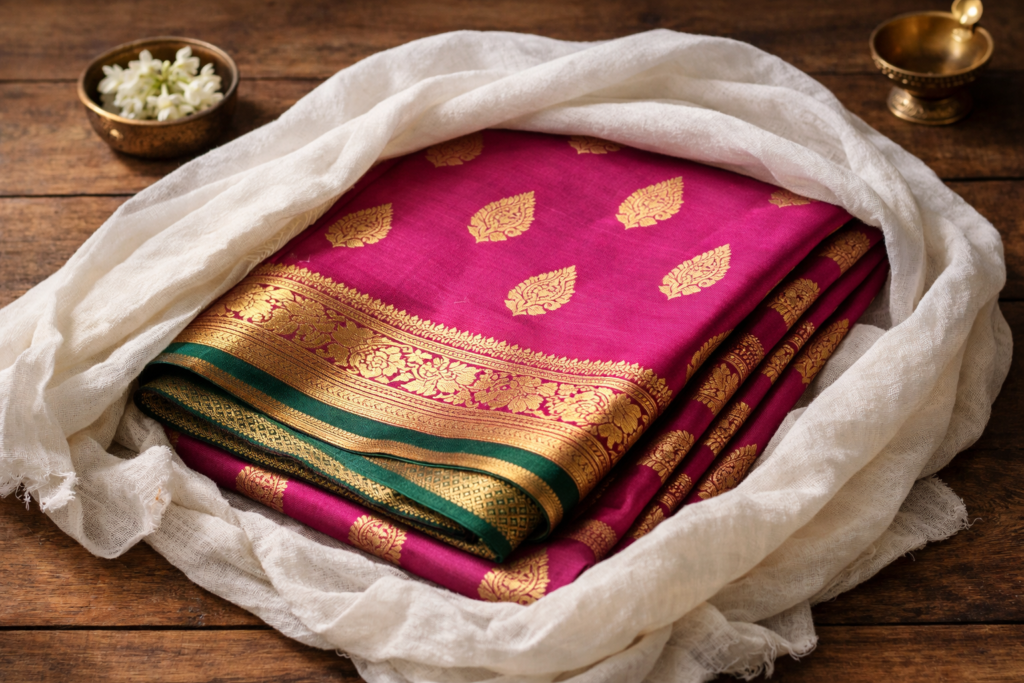
Silk sarees represent centuries of Indian craftsmanship, cultural identity, and luxury. From the intricate zari of Banarasi silks to the rich texture of Kanchipuram weaves, each silk saree requires mindful care. Unlike everyday fabrics, silk is a living fiber—sensitive to heat, moisture, friction, and chemicals.
This comprehensive guide offers professional-level home care techniques, ensuring your silk sarees retain their beauty, strength, and heirloom value for generations.
1. Understanding Silk: Why Special Care Is Essential
Silk is a protein-based fiber, mainly made up of fibroin. Its molecular structure gives silk its shine and softness but also makes it vulnerable to:
- Heat damage
- Moisture retention
- Color bleeding
- Zari oxidation
- Fabric weakening due to friction
Zari threads, traditionally made of silver or gold-coated copper, can tarnish when exposed to air, humidity, or chemicals.
Understanding this fabric science helps prevent irreversible damage.
2. Washing Silk Sarees at Home: Detailed Best Practices
When Home Washing Is NOT Recommended
- New silk sarees (first 2–3 cleans)
- Bridal or temple silk sarees
- Antique or heirloom sarees
- Heavy zari or embroidery designs
For these, professional dry cleaning is the safest option.
Safe Hand-Washing Method (Only When Required)
If washing at home is unavoidable:
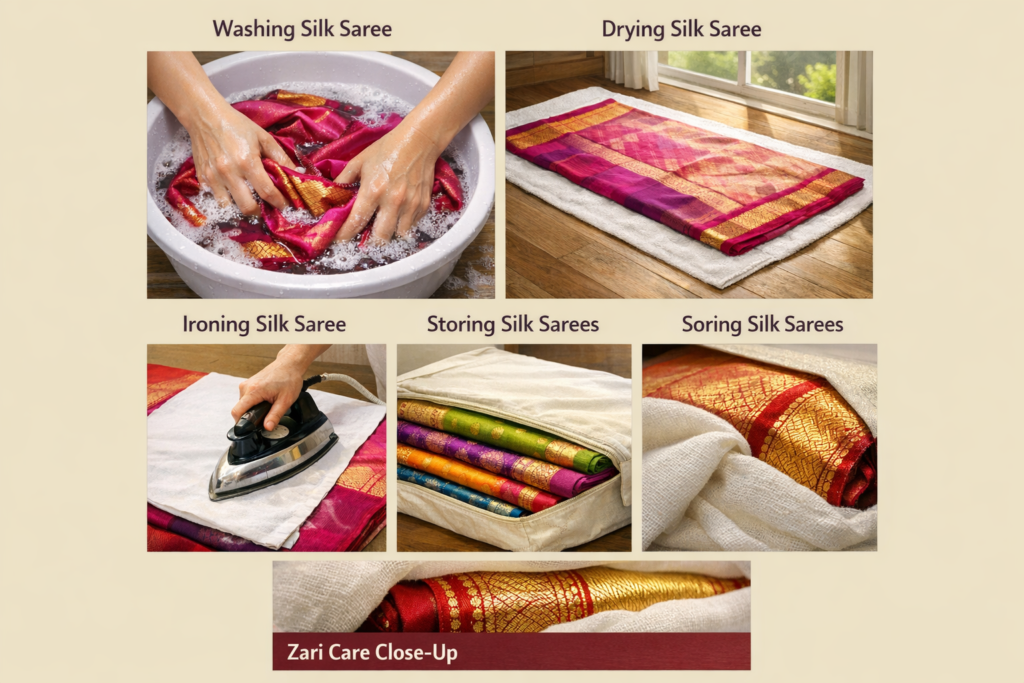
Step-by-Step Process
- Fill a bucket with cold water
- Add a few drops of pH-neutral liquid detergent
- Turn the saree inside out
- Gently dip and swirl for 1–2 minutes
- Avoid soaking completely
- Rinse immediately in cold water
🚫 Never use soap bars, washing powder, bleach, or stain removers
3. Color Protection and Dye Preservation
Silk dyes are delicate and prone to bleeding.
Traditional Color-Locking Techniques
- Add white vinegar or rock salt to the final rinse
- Rinse quickly to prevent prolonged water exposure
- Avoid mixing silk sarees of different colors
This method preserves brightness and prevents fading.
4. Drying Silk Sarees the Correct Way
Improper drying can permanently weaken silk fibers.
Safe Drying Techniques
✔ Always dry in shade
✔ Spread flat on a cotton towel
✔ Alternatively, hang using padded hangers
✔ Ensure air circulation
🚫 Avoid sunlight, hair dryers, radiators, or tumble drying
5. Ironing, Steaming, and Wrinkle Removal
Ironing Silk Safely
- Iron when slightly damp
- Use low heat / silk mode
- Iron from the reverse side
- Place a cotton cloth between iron and fabric
Steaming Advantages
- No direct heat contact
- Preserves zari shine
- Prevents fiber breakage
Steaming is ideal for heavily woven sarees.
6. Advanced Storage Techniques for Silk Sarees
Correct Folding Methods
- Follow original folds
- Insert unbleached cotton or muslin cloth between layers
- Wrap zari borders separately
Storage Environment
- Use cotton saree bags
- Keep in cool, dry, dark spaces
- Avoid plastic and vacuum sealing
Refolding Schedule
Refold every 3–6 months to:
- Prevent permanent creases
- Avoid fabric stress
- Allow airflow
7. Protecting Silk Sarees from Insects and Humidity
Silk attracts silverfish, moths, and mold.
Natural Repellents
- Neem leaves
- Cloves
- Bay leaves
- Vetiver roots
Wrap repellents in muslin—never place directly on silk.
🚫 Avoid naphthalene balls—they cause fiber damage and odor retention.
8. Zari Care and Oxidation Prevention
Zari is highly sensitive to moisture and chemicals.
✔ Keep zari dry at all times
✔ Avoid perfume near borders
✔ Wrap zari portions separately
✔ Do not fold tightly over zari areas
For dull zari, consult a professional—never polish at home.
9. Stain Removal: What You Can and Cannot Do
Minor Stains
- Dab gently with cold water
- Use diluted mild detergent only if necessary
- Blot, do not rub
Major Stains (Oil, Ink, Makeup)
- Do not experiment
- Immediate professional dry cleaning recommended
10. Wearing Practices That Extend Silk Saree Life
- Apply perfume and makeup before draping
- Avoid continuous wear in humid weather
- Remove immediately after function
- Avoid rough surfaces and sharp jewelry
11. Seasonal Silk Saree Care Guide
Summer
- Air sarees frequently
- Protect from sweat and humidity
Monsoon
- Use silica gel packets in storage
- Increase refolding frequency
Winter
- Ensure dryness before storage
- Avoid heavy layering pressure
12. Long-Term Heirloom Preservation Tips
- Store separately from synthetic fabrics
- Maintain inventory and rotation
- Document saree origin and care history
- Periodically dry clean even if unused
With proper care, silk sarees can last 50+ years.
13. Common Mistakes That Damage Silk Sarees
❌ Using detergent powders
❌ Drying in sunlight
❌ Hanging long-term
❌ Storing in plastic
❌ Direct contact with perfumes
Avoiding these mistakes dramatically increases saree lifespan.
Maintaining silk sarees at home requires patience, gentleness, and respect for the fabric. Proper washing, drying, storage, and handling ensure your sarees remain lustrous, strong, and timeless. A well-preserved silk saree is not just clothing—it is a legacy.
How to Maintain Silk Saree at Home – FAQs
How do I maintain a silk saree at home?
To maintain a silk saree at home, handle it gently, avoid frequent washing, dry it only in shade, iron on low heat, and store it in breathable cotton cloth. Proper folding and regular refolding help preserve the fabric and zari work for years.
Can silk sarees be washed at home?
Silk sarees can be washed at home occasionally using cold water and a mild liquid detergent. Hand wash gently without soaking, scrubbing, or twisting. Heavily zari, bridal, or antique silk sarees should always be dry cleaned.
What is the best way to wash a silk saree?
The best way to wash a silk saree is quick hand washing in cold water with a silk-friendly detergent. Dip and swirl gently for one to two minutes and rinse immediately. Avoid soap bars, hot water, and washing machines.
How do I iron a silk saree safely at home?
Iron silk sarees on low heat or silk mode while the fabric is slightly damp. Always iron from the reverse side and place a thin cotton cloth between the iron and the saree to prevent heat damage.
How should silk sarees be stored at home?
Silk sarees should be stored folded neatly in cotton or muslin cloth. Avoid plastic covers, as they trap moisture. Zari borders should be wrapped separately to prevent friction and tarnishing.
How often should silk sarees be refolded during storage?
Silk sarees should be refolded every three to six months. Refolding prevents permanent creases, fabric stress, and weakening of silk fibers over long periods of storage.
How can I protect silk sarees from insects and moisture?
Protect silk sarees from insects by using natural repellents such as neem leaves or cloves wrapped in muslin cloth. Store them in a cool, dry place and avoid damp environments.
How should zari work on silk sarees be maintained?
Zari work should be kept dry and away from perfumes, deodorants, and moisture. Wrap zari sections in cotton cloth during storage and avoid tight folding to prevent dullness and cracking.
How long can a silk saree last with proper care?
With proper maintenance, silk sarees can last 30 to 50 years or longer. Gentle washing, correct storage, regular refolding, and careful handling help preserve silk sarees as heirlooms.